Calm Under Pressure
Hotel Crisis Response and Service Recovery
ROLE
Independent Researcher
Crisis Response Strategist
Service Design Lead
DURATION
July 2025 – November 2025
SKILLS
Handbook Prototyping
Information Visualization
OUTPUT
Risk heatmap
Service-recovery guidelines
Project Overview
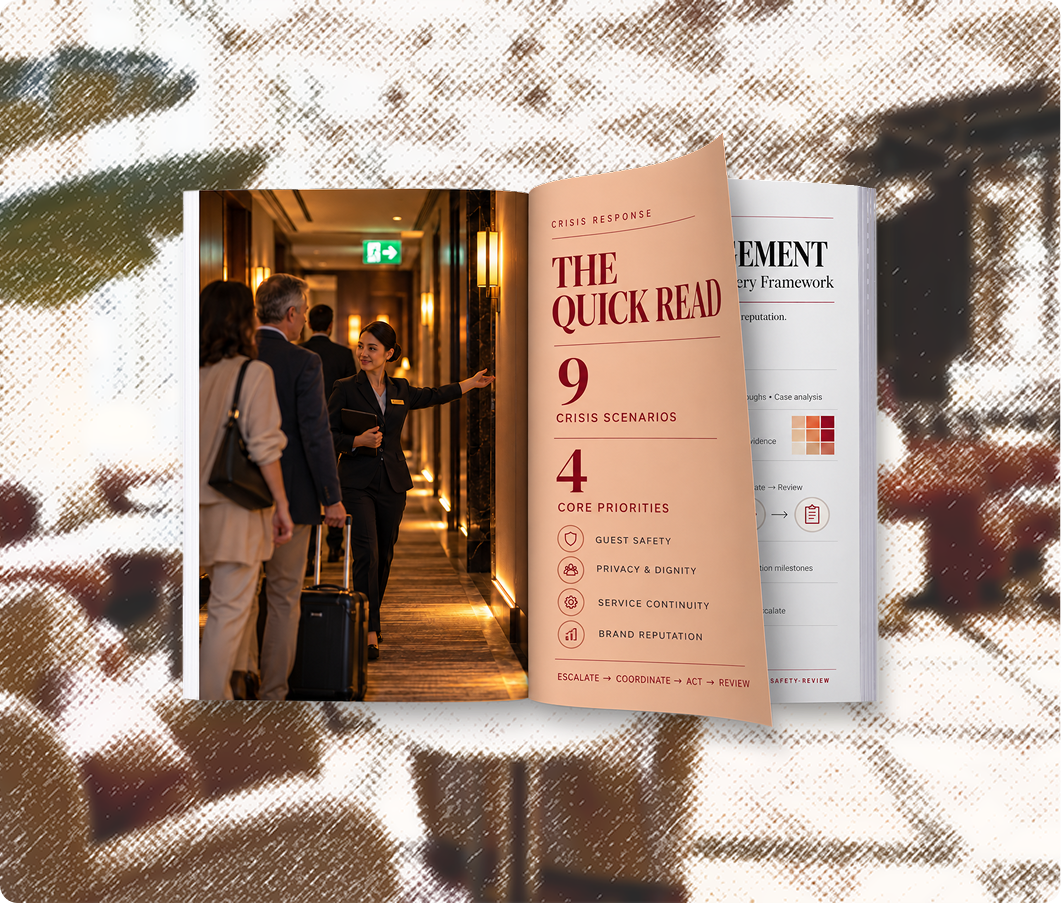
This project explores crisis management in high-end hotels, focusing on guest safety, privacy, service continuity, and reputation. It combines
proposed research methods, risk mapping, a coordination framework, and a conference blackout simulation. The final handbook prototype
translates these ideas into practical guidance for hotel review and testing.
Background
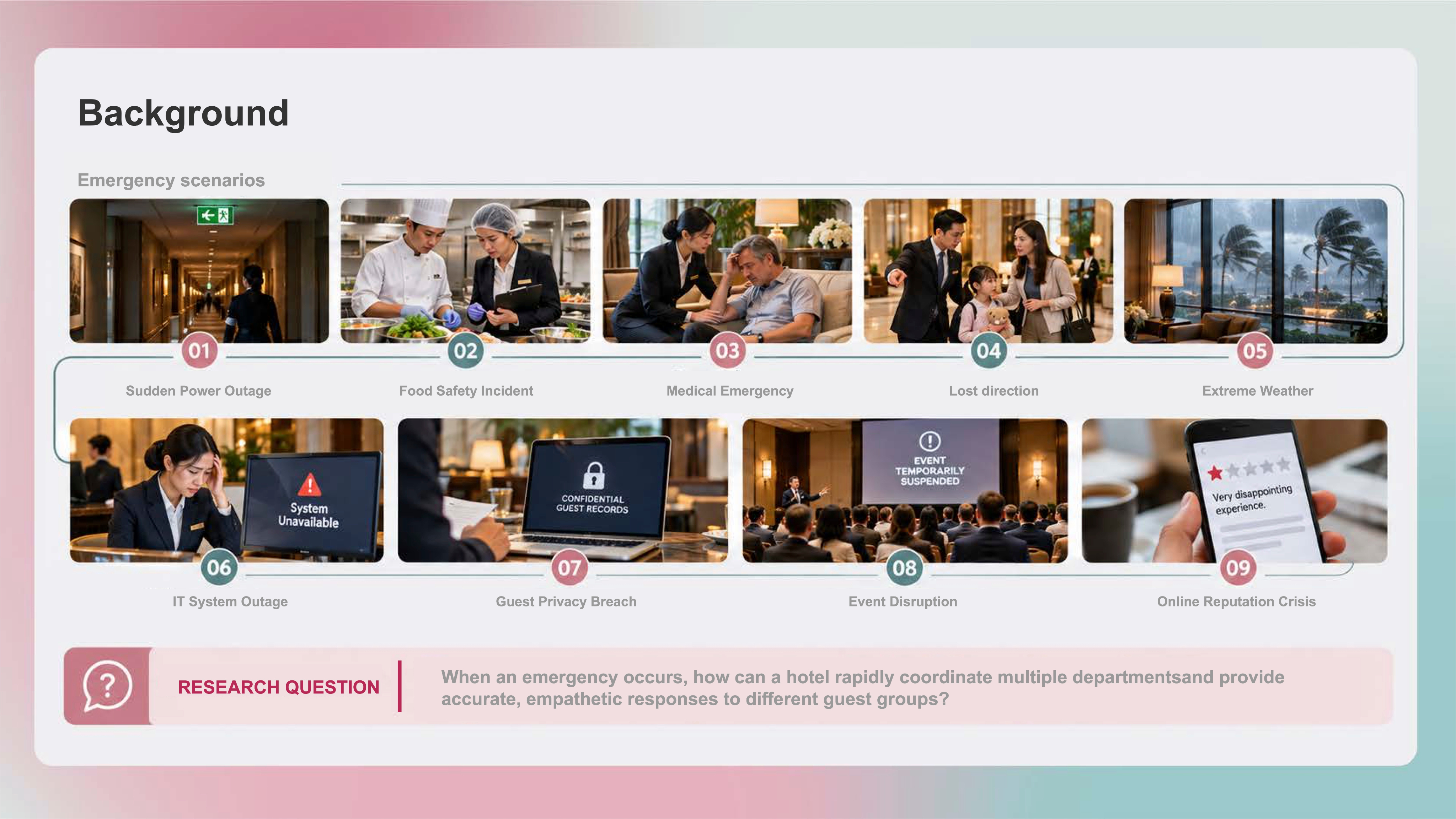
How can hotels coordinate departments and communicate with empathy during emergencies? Nine potential crises introduce the challenge,
guided by four priorities: guest safety, privacy and dignity, service continuity, and brand reputation.
Research Methods
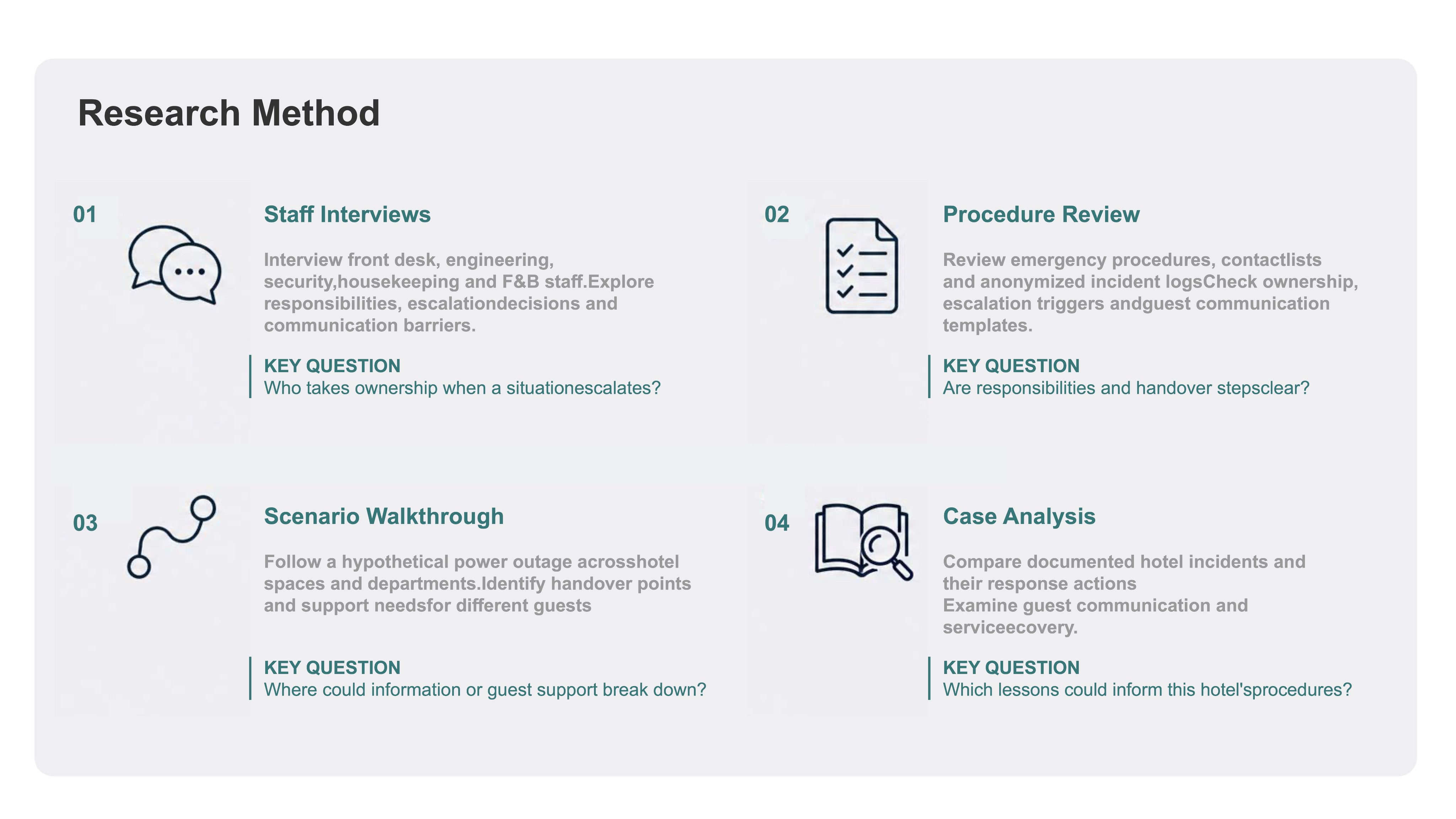
Four proposed methods—staff interviews, procedure reviews, scenario walkthroughs, and case analysis—explore gaps in responsibilities,
information sharing, and guest support. Together, they provide a basis for developing the response framework.
Risk Heatmap
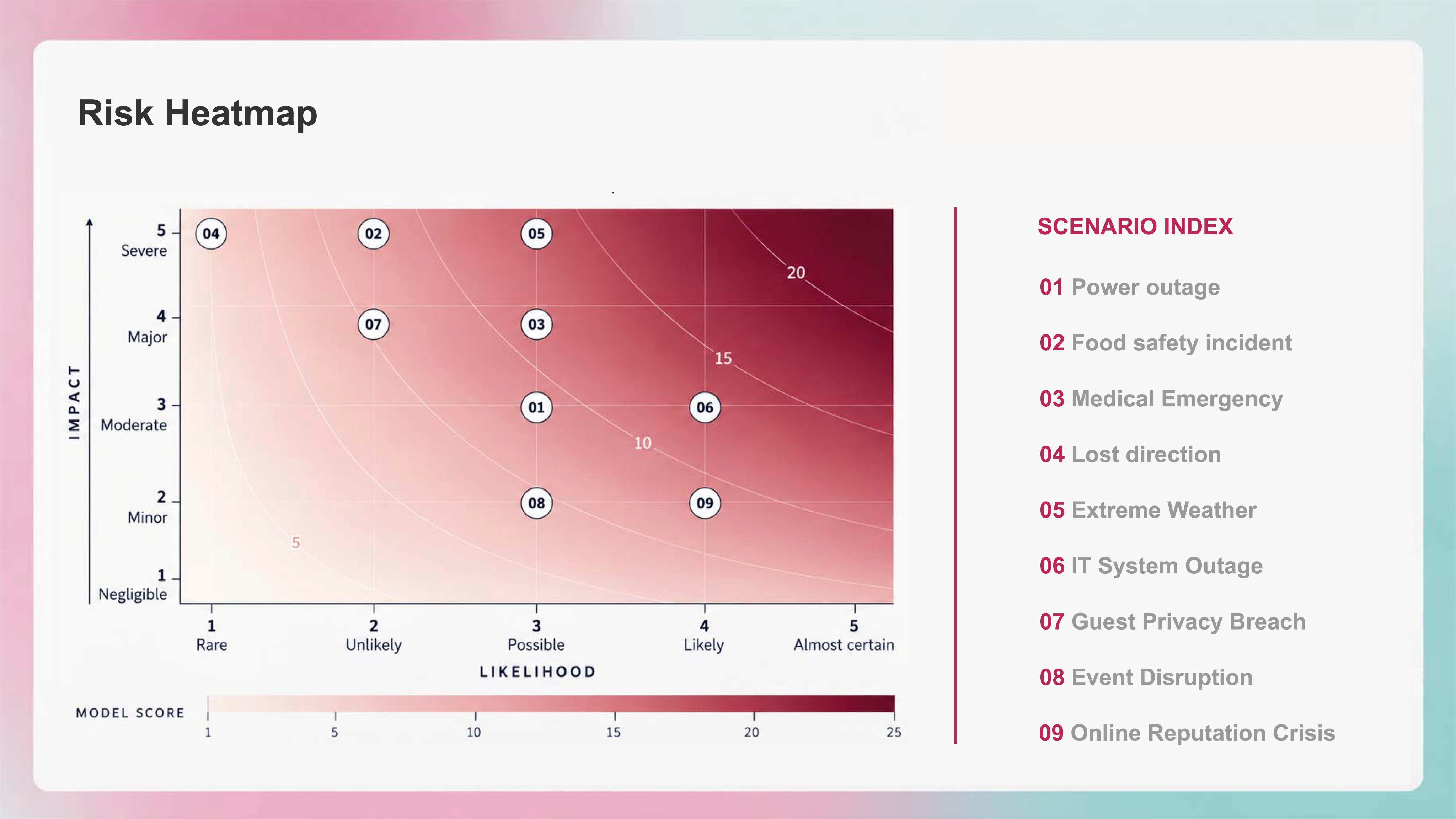
The heatmap compares nine scenarios by likelihood and impact. Ratings are illustrative and require validation through hotel records and staff
research. Severe-impact events remain important even when their likelihood is low.
Crisis Response Framework
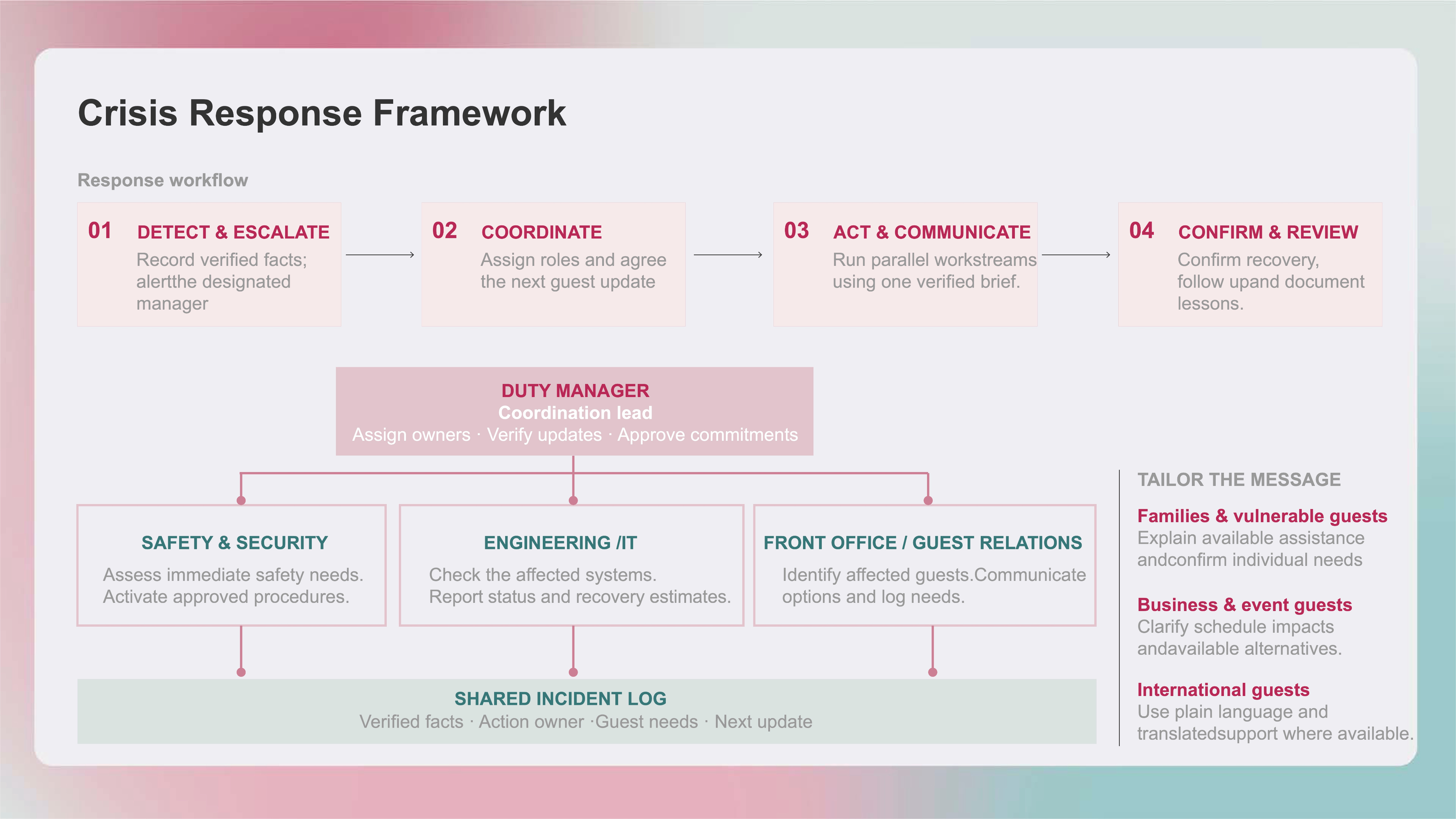
The framework defines four stages: escalation, coordination, action and communication, and recovery review. The duty manager coordinates
departmental roles, while a shared incident log keeps facts, responsibilities, and guest updates aligned.
Scenario Simulation
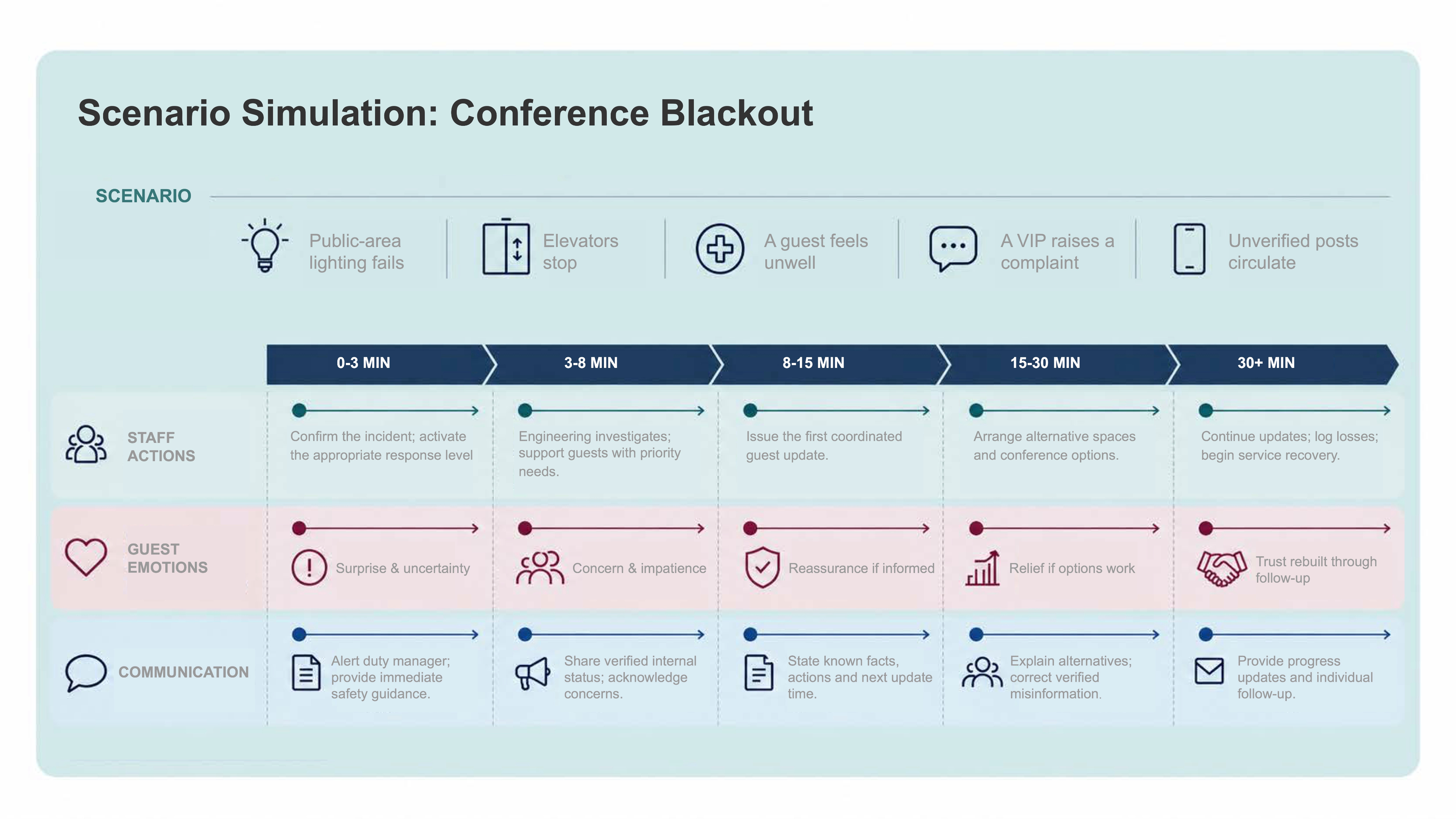
A conference blackout tests the proposed response through five time stages. Three parallel tracks show staff actions, possible guest emotions,
and communication milestones. Timings are exercise targets; urgent safety and medical needs require immediate action.
Service Recovery
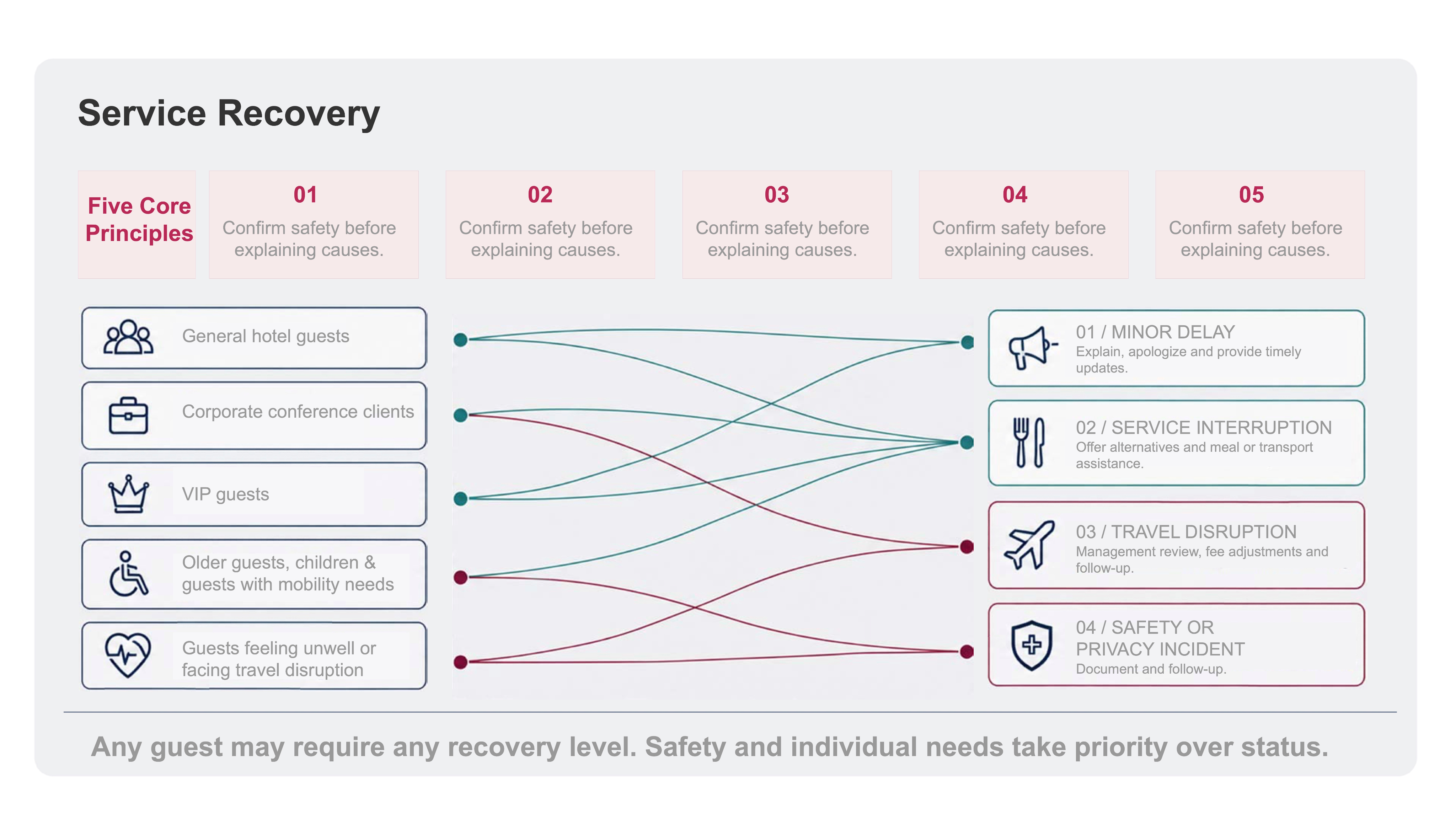
Recovery options reflect actual disruption and individual needs, not guest status alone. Responses range from timely explanations to alternative
arrangements and professional support. Privacy, medical, and compensation matters require appropriate escalation.
Handbook Prototype
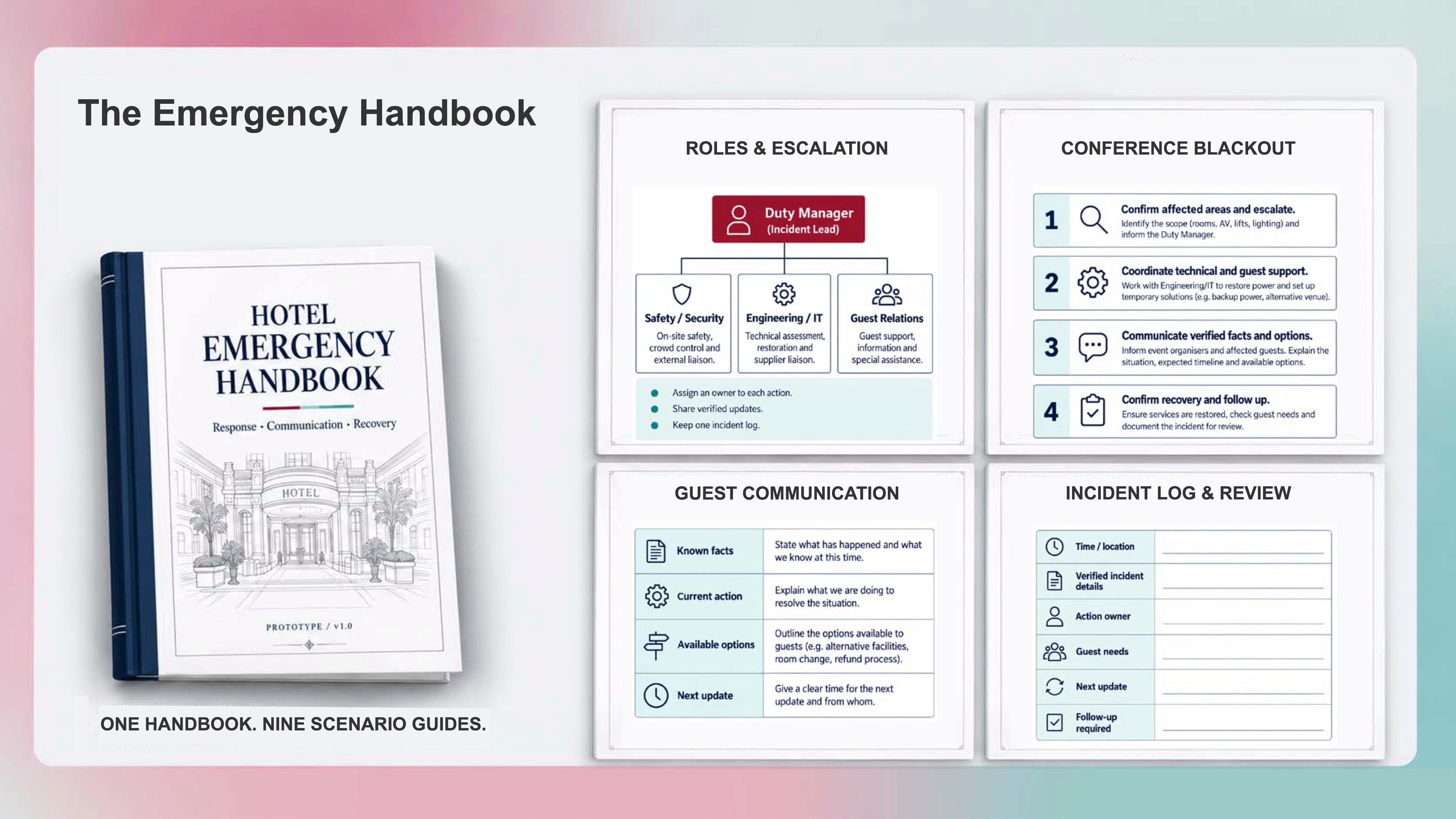
The handbook prototype brings together departmental roles, blackout guidance, communication templates, and incident records. Clear diagrams
and checklists support quick reference. Management and safety-team review, followed by supervised testing, are required before operational use.

2026 FAYE
Calm Under Pressure
Hotel Crisis Response and Service Recovery
ROLE
Independent Researcher
Crisis Response Strategist
Service Design Lead
DURATION
July 2025 – November 2025
SKILLS
Handbook Prototyping
Information Visualization
OUTPUT
Risk heatmap
Service-recovery guidelines
Project Overview
This project explores crisis management in high-end hotels, focusing on guest safety, privacy, service continuity, and reputation. It combines
proposed research methods, risk mapping, a coordination framework, and a conference blackout simulation. The final handbook prototype
translates these ideas into practical guidance for hotel review and testing.
Background
How can hotels coordinate departments and communicate with empathy during emergencies? Nine potential crises introduce the challenge,
guided by four priorities: guest safety, privacy and dignity, service continuity, and brand reputation.
Research Methods
Four proposed methods—staff interviews, procedure reviews, scenario walkthroughs, and case analysis—explore gaps in responsibilities,
information sharing, and guest support. Together, they provide a basis for developing the response framework.
Risk Heatmap
The heatmap compares nine scenarios by likelihood and impact. Ratings are illustrative and require validation through hotel records and staff
research. Severe-impact events remain important even when their likelihood is low.
Crisis Response Framework
The framework defines four stages: escalation, coordination, action and communication, and recovery review. The duty manager coordinates
departmental roles, while a shared incident log keeps facts, responsibilities, and guest updates aligned.
Scenario Simulation
A conference blackout tests the proposed response through five time stages. Three parallel tracks show staff actions, possible guest emotions,
and communication milestones. Timings are exercise targets; urgent safety and medical needs require immediate action.
Service Recovery
Recovery options reflect actual disruption and individual needs, not guest status alone. Responses range from timely explanations to alternative
arrangements and professional support. Privacy, medical, and compensation matters require appropriate escalation.
Handbook Prototype
The handbook prototype brings together departmental roles, blackout guidance, communication templates, and incident records. Clear diagrams
and checklists support quick reference. Management and safety-team review, followed by supervised testing, are required before operational use.
2026 FAYE