ORELUXIA
Turning fragrance into a spatial experience
ROLE
Founder
Brand Strategist
Product & E-commerce Builder
Duration
September 2024 – Present
WEBSITE
https://oreluxia.site/OUTCOME
2,500+ products sold since the brand was founded
Origin Story & Brand Philosophy
Making Calm Part of Everyday Life
I founded Oreluxia in September 2024 after asking a simple question: why should a moment of calm require a special place, a complicated ritual, or a large amount of time? In busy modern life, spas, confusing ingredient lists, and demanding routines can make restoration feel distant. I wanted to turn fragrance into a small, accessible pause within an ordinary day.
Before deciding what the brand should become, I began by studying the market. I surveyed 100 students about their fragrance habits, purchase motivations, preferred price ranges, packaging expectations, and the situations in which they used scented products. I also compared established brands such as Yankee Candle with smaller niche brands, focusing on differences in product range, pricing, visual identity, storytelling, customer relationships, and perceived value. This research helped me gradually define Oreluxia as an accessible yet thoughtful fragrance brand built around everyday rituals rather than occasional luxury.
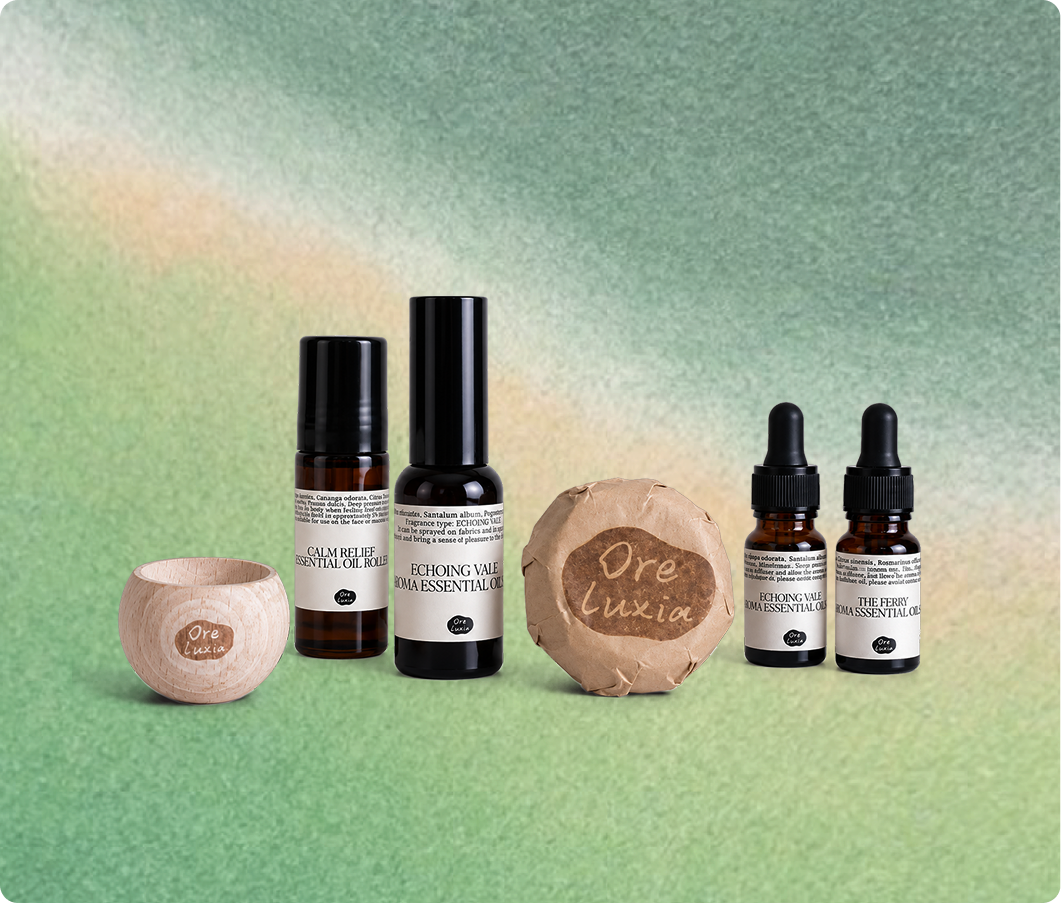
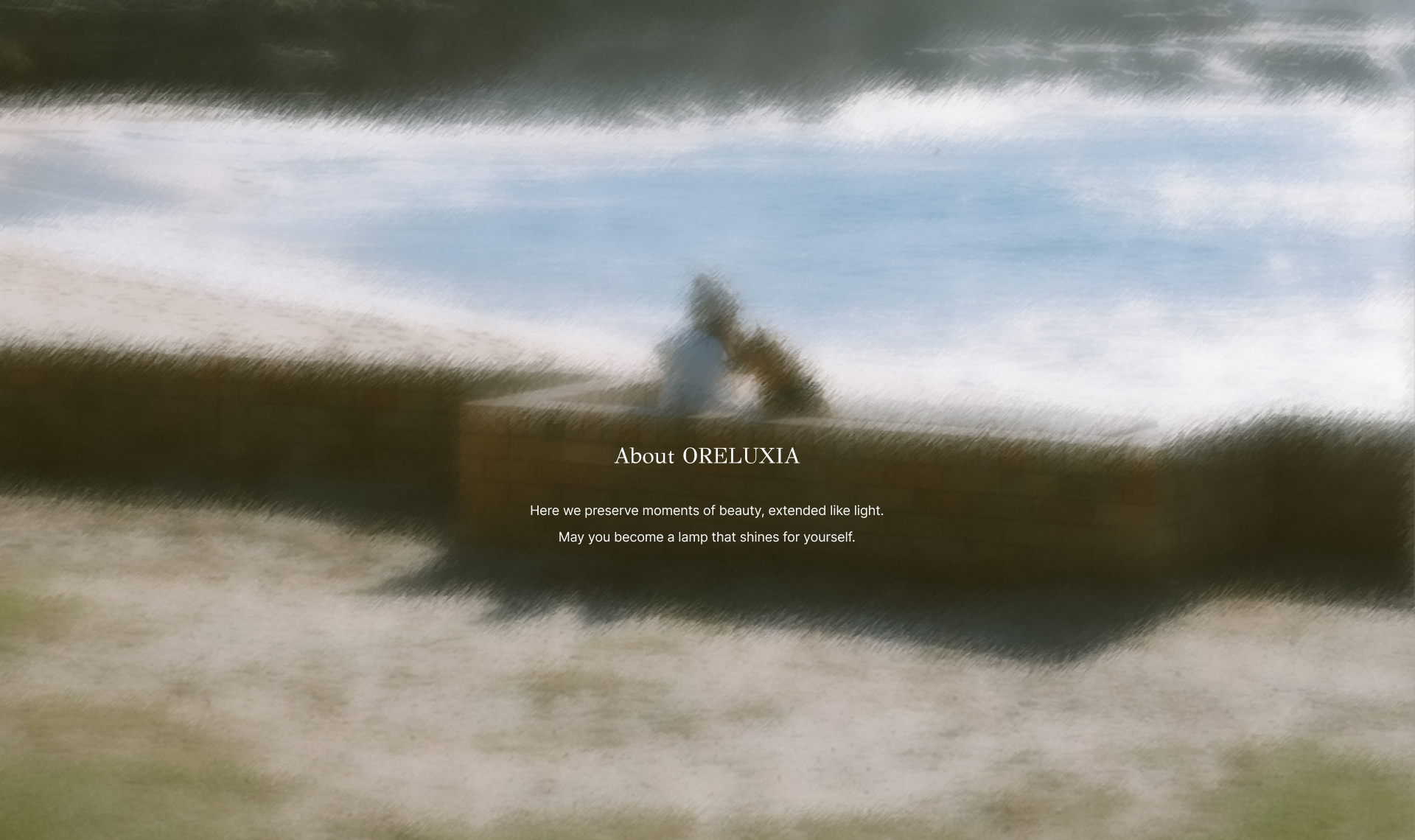
I developed the brand around natural plant essential oils, small-batch craftsmanship, and recyclable or biodegradable packaging. I chose light as its central image—not only as decoration, but as a symbol of steadiness, awareness, and returning to oneself. Through Oreluxia, I present fragrance as something that can move through daily life, from commuting and working late to resting at home or entering a hotel room. My goal is to make calm feel portable, personal, and attainable.
Founder Role & Responsibilities
Building the Brand as an Independent Project
I created Oreluxia as an independent personal project and led the process from early research to product sales and digital expansion. My responsibilities included market analysis, student surveys, competitor research, brand positioning, pricing, product selection, packaging direction, offline selling, customer feedback, business-data tracking, website design, e-commerce development, content, and marketing experiments.
I began by testing the brand through offline markets. These events gave me direct access to customer questions, hesitations, product preferences, and purchase decisions. Rather than treating each event only as an opportunity to sell products, I recorded the data behind the sales, including customer acquisition cost, conversion rate, average order value, and repeat purchase rate. I used these measures to understand which products attracted attention, which price points encouraged purchase, and which customers were most likely to return.
At the end of 2025, I began developing Oreluxia’s online store. This moved the project from a small offline brand into a connected e-commerce system and gave me new ways to study customer behavior through product-page visits, clicks, cart activity, orders, and repeat
Audience & Experience Principles
Designing for Moments Rather Than Demographics
My survey of 100 students showed me that customers did not choose fragrance only by age or identity. They often began with a specific moment: focusing during a commute, recovering after work, settling before sleep, refreshing a room, choosing a gift, or carrying a familiar sense of calm while traveling.
I used these findings to establish four experience principles: calm should feel accessible; product information should be clear and trustworthy; shopping should remain quiet without becoming confusing; and fragrance should adapt to different moods and spaces. These principles guided my product decisions, pricing, brand voice, packaging, offline presentation, and website experience.
I also learned to distinguish stated preferences from actual behavior. Survey responses helped me form hypotheses, while offline conversion, average order value, repeat purchases, and later online behavior showed me whether those hypotheses held up in real purchasing situations.
Product Ecosystem
Designing a System of Everyday Rituals
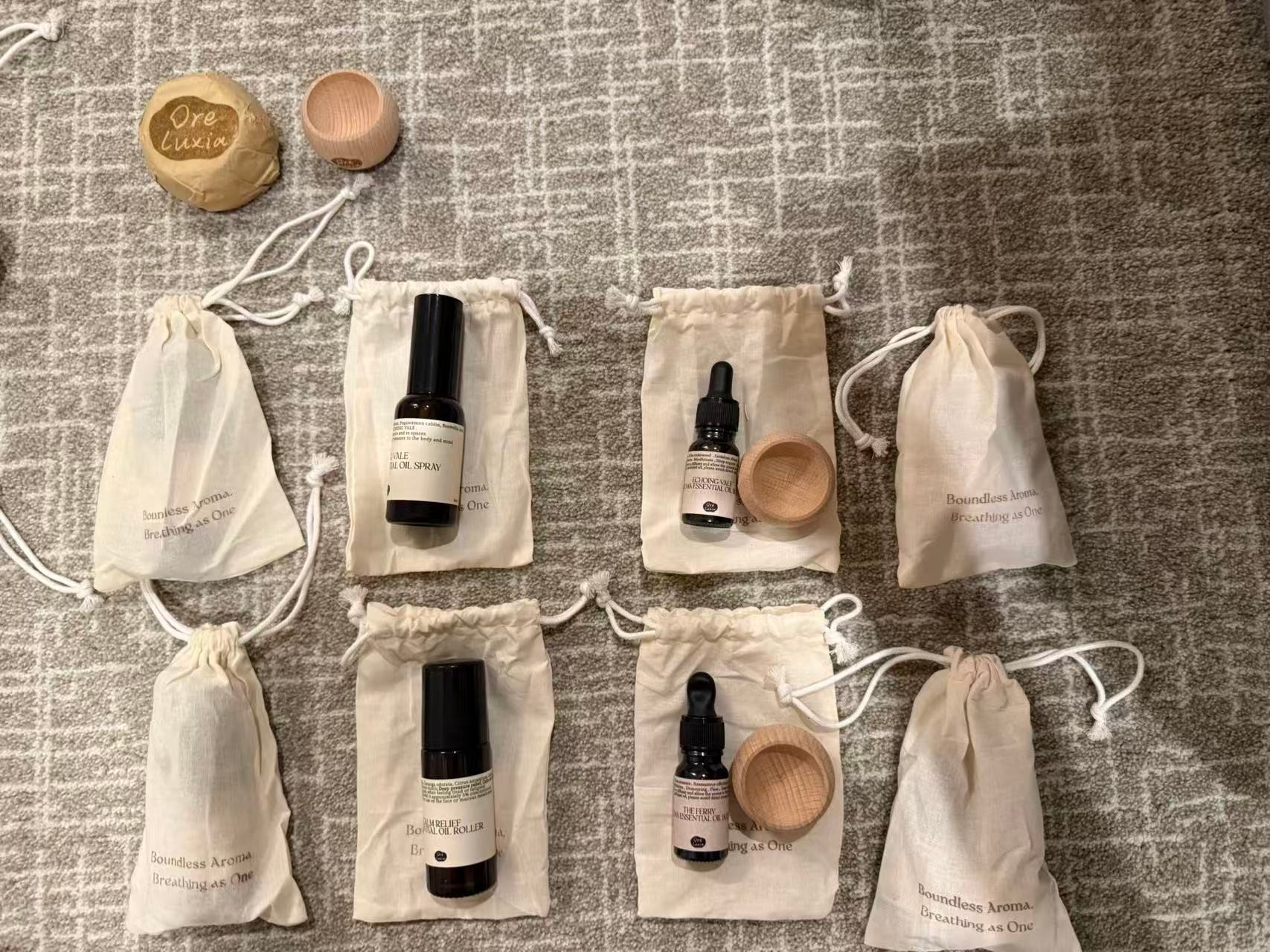
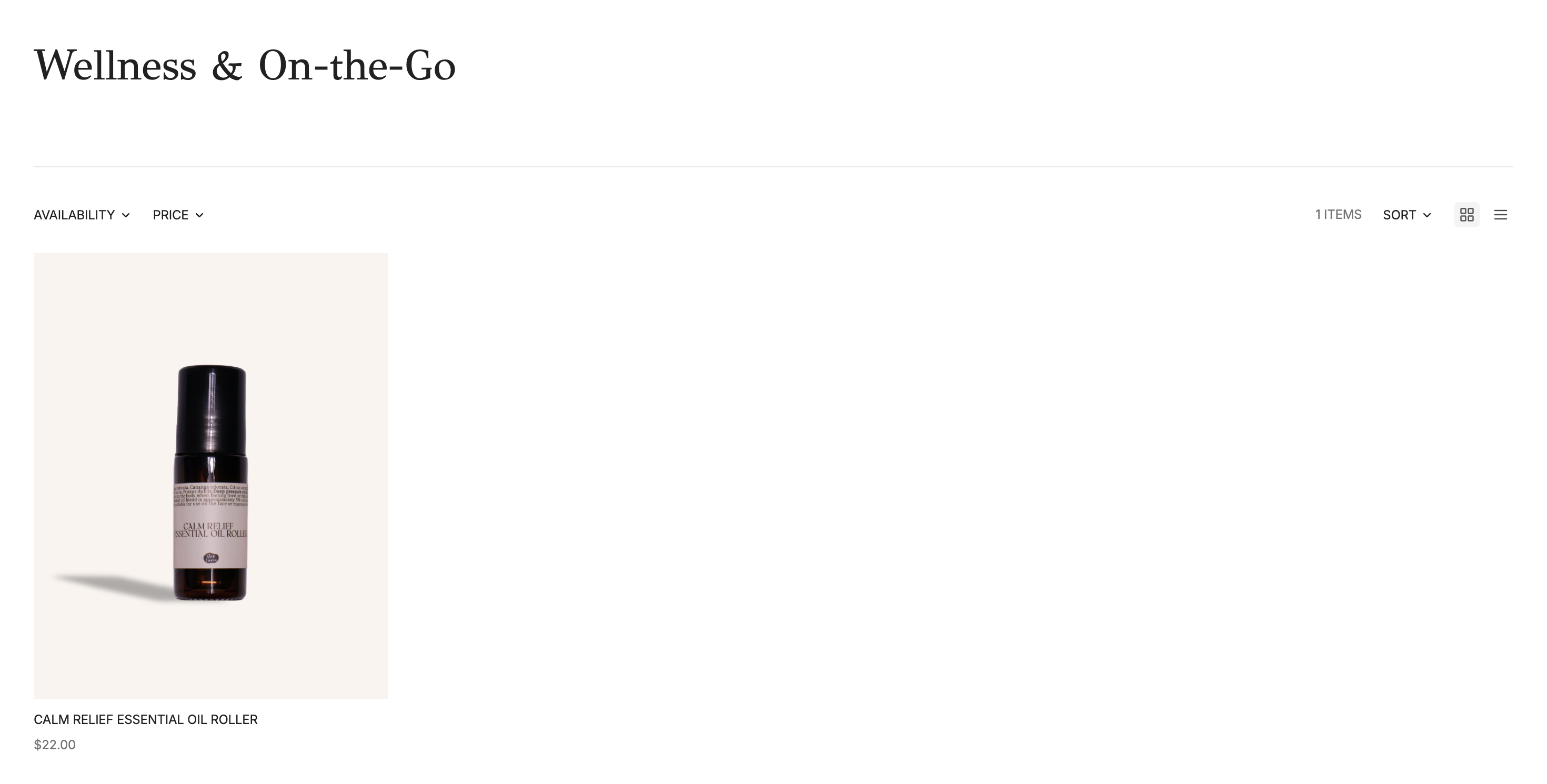
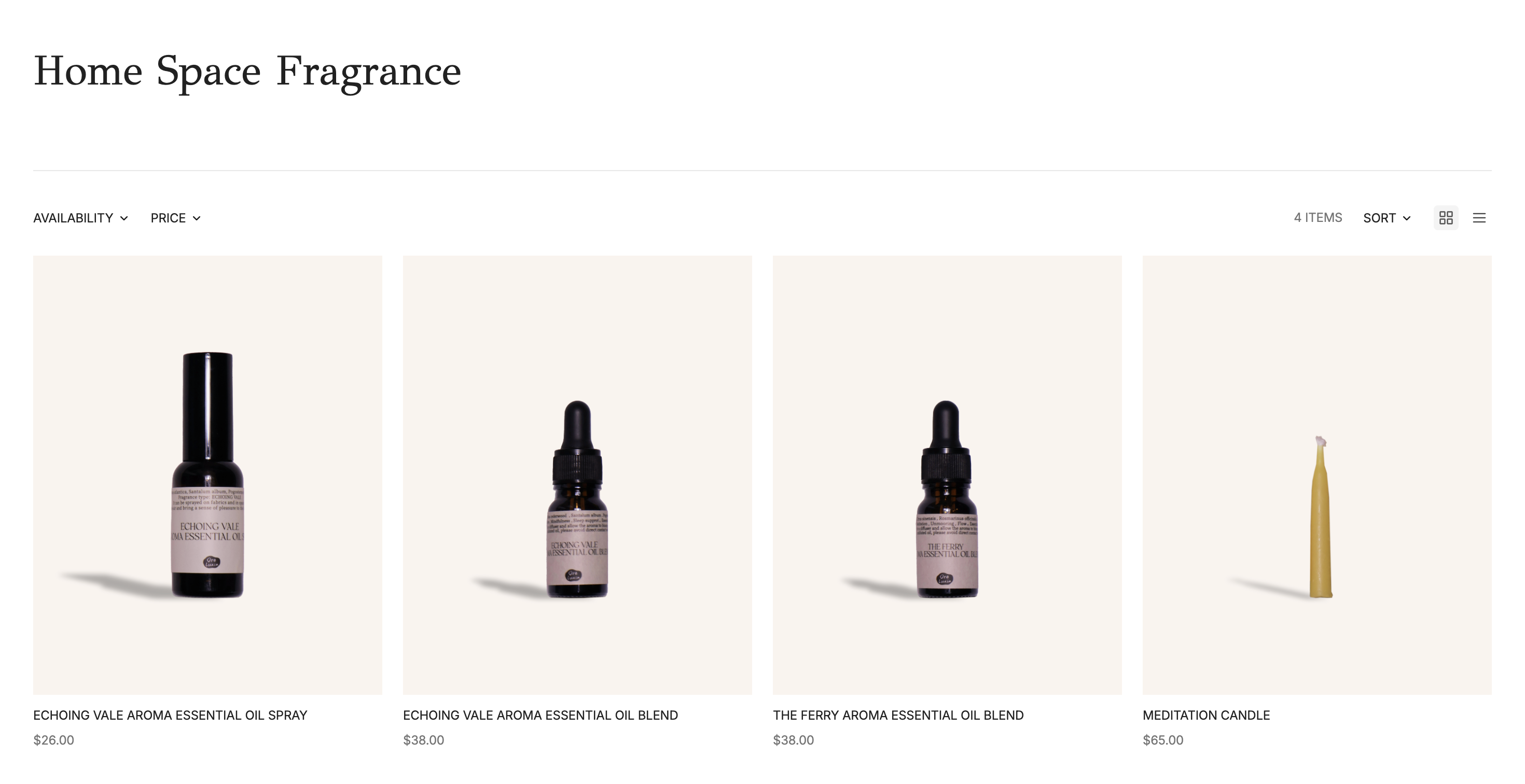
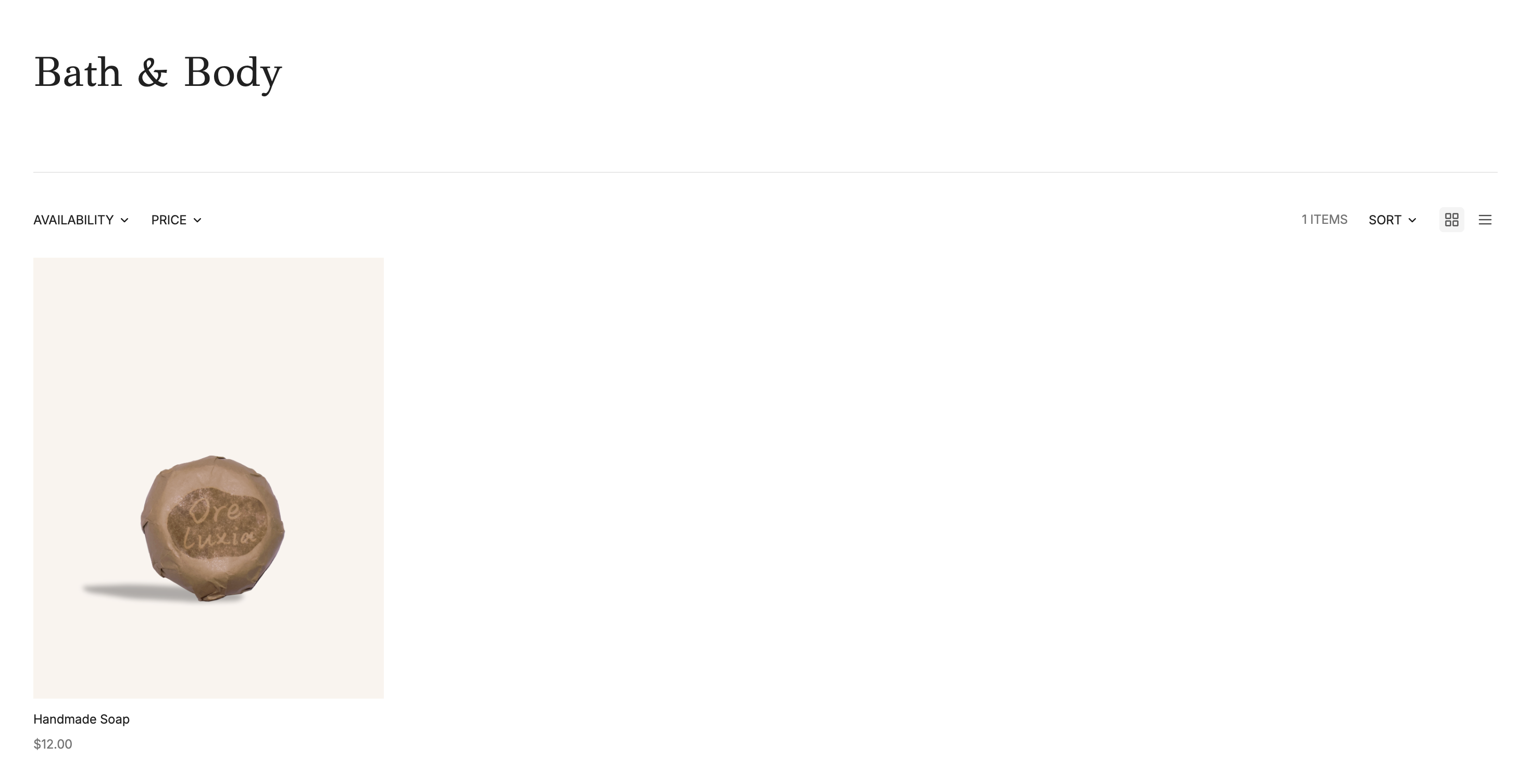
I developed Oreluxia as a connected product ecosystem that includes meditation candles, aromatherapy essential oils, essential oil mist, handmade soap, and a Hotel Collection. Each format creates a different relationship between fragrance, time, the body, and the surrounding space.
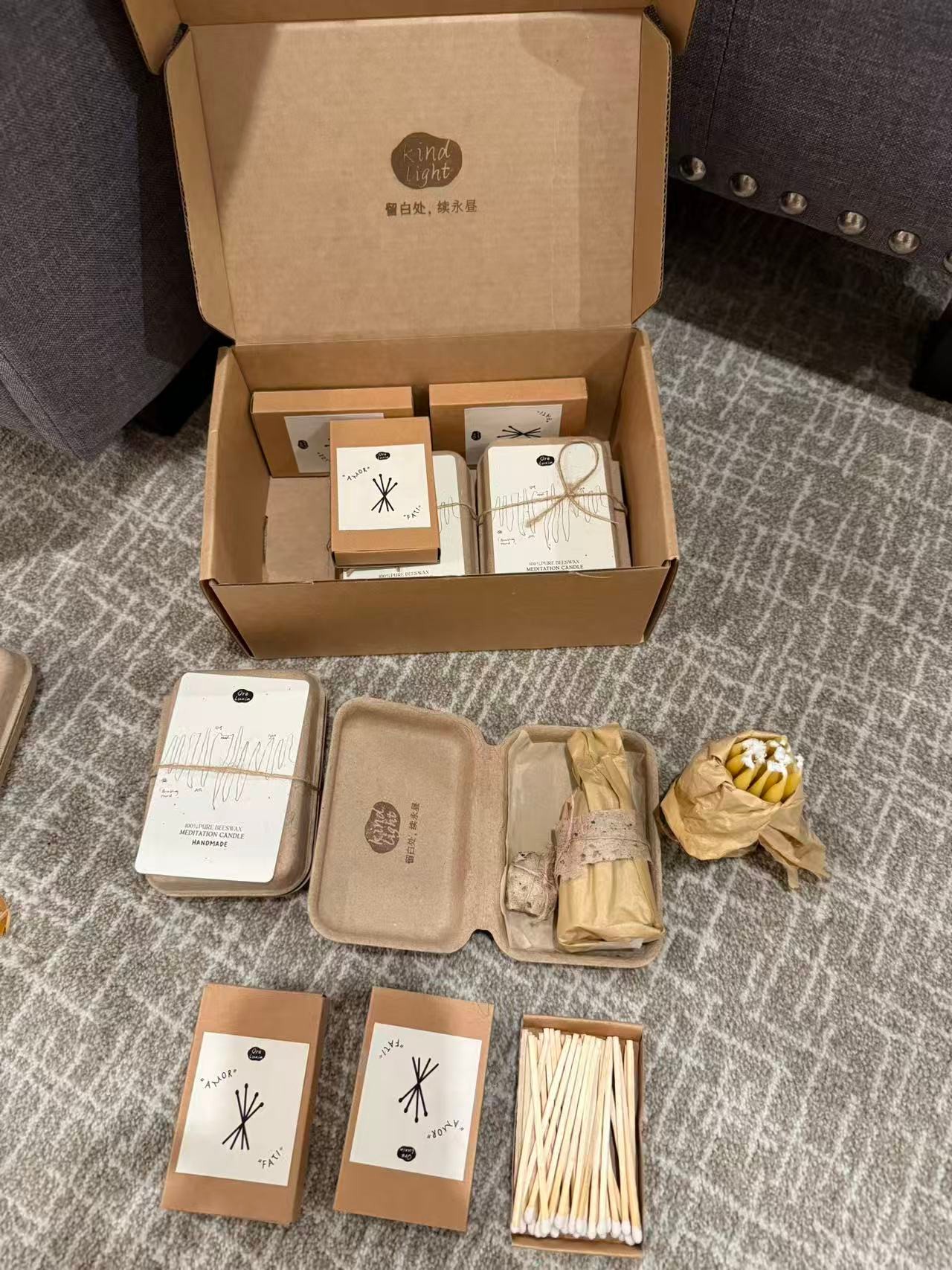
The Kindlight meditation candle makes this idea especially tangible. One candle burns for approximately twenty minutes—the length of a meditation, a cup of tea, or a short period of self-care. It is handmade with 100% pure beeswax and a cotton wick. Each box contains approximately fifteen candles and a ceramic holder that can also hold incense.
I positioned essential oils for focused scent rituals, mist as a portable and immediate format, and handmade soap as a way to connect fragrance with a familiar daily action. I organized these products into clear use cases and collections so the brand could offer more than isolated objects: it could support a sequence of small rituals across everyday life.
From Fragrance to Space
How Can a Scent Reflect the Character of a Hotel?
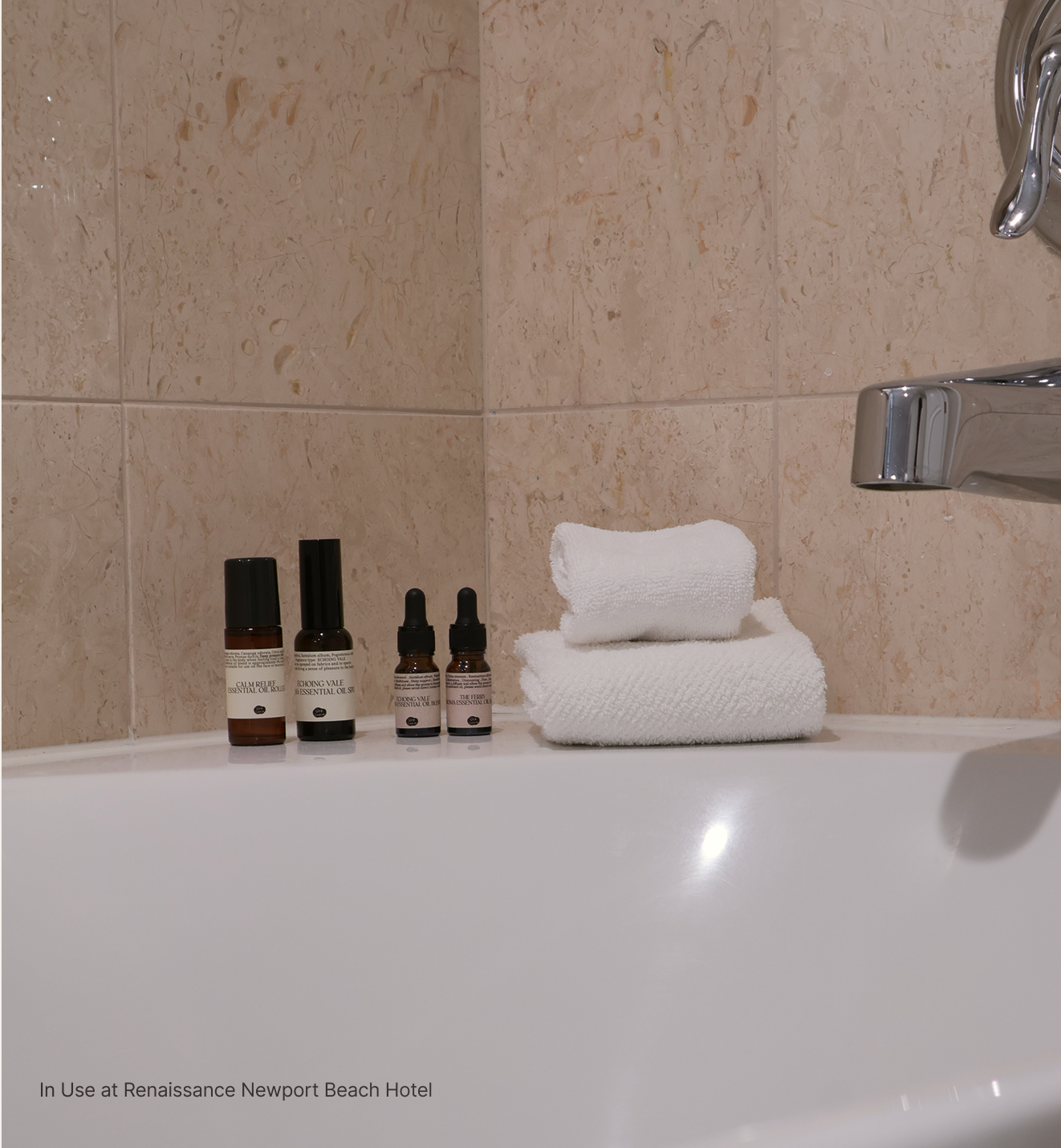
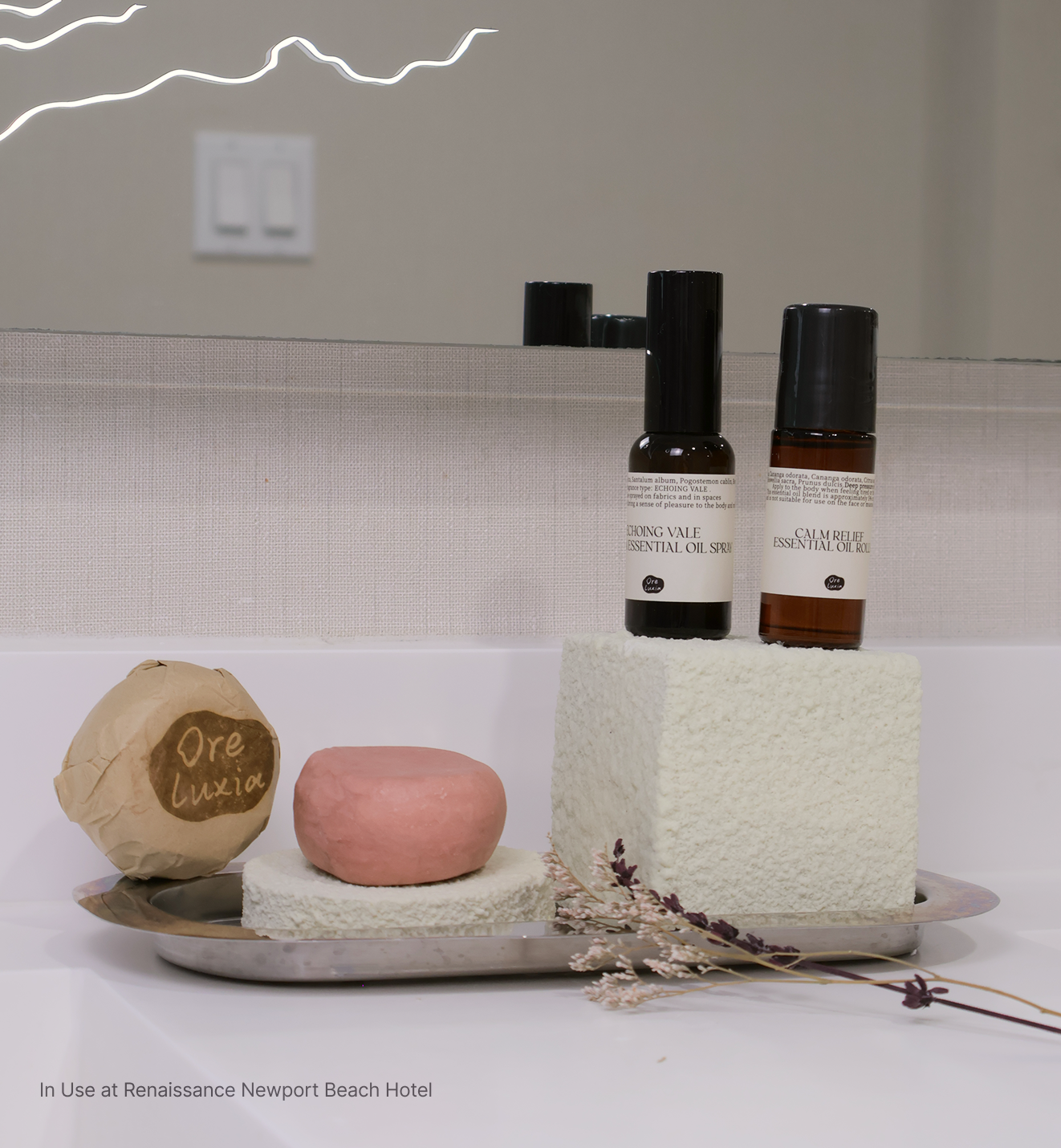
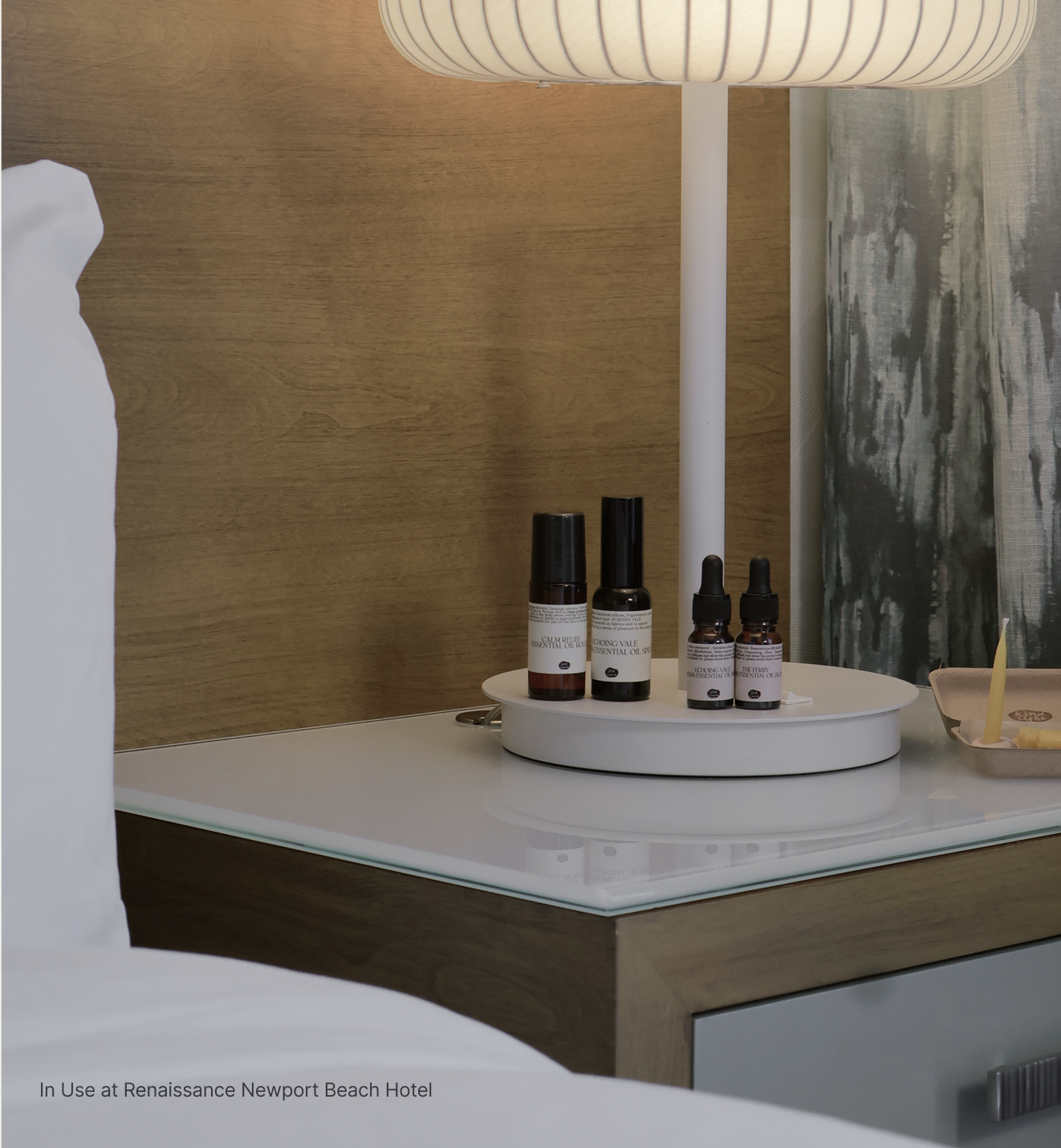
I became interested in how fragrance changes when it moves from an individual product into a shared hotel environment. A scent that feels calming in a guest room may be too strong for a lobby, unsuitable for dining, or inconsistent with the property’s identity.
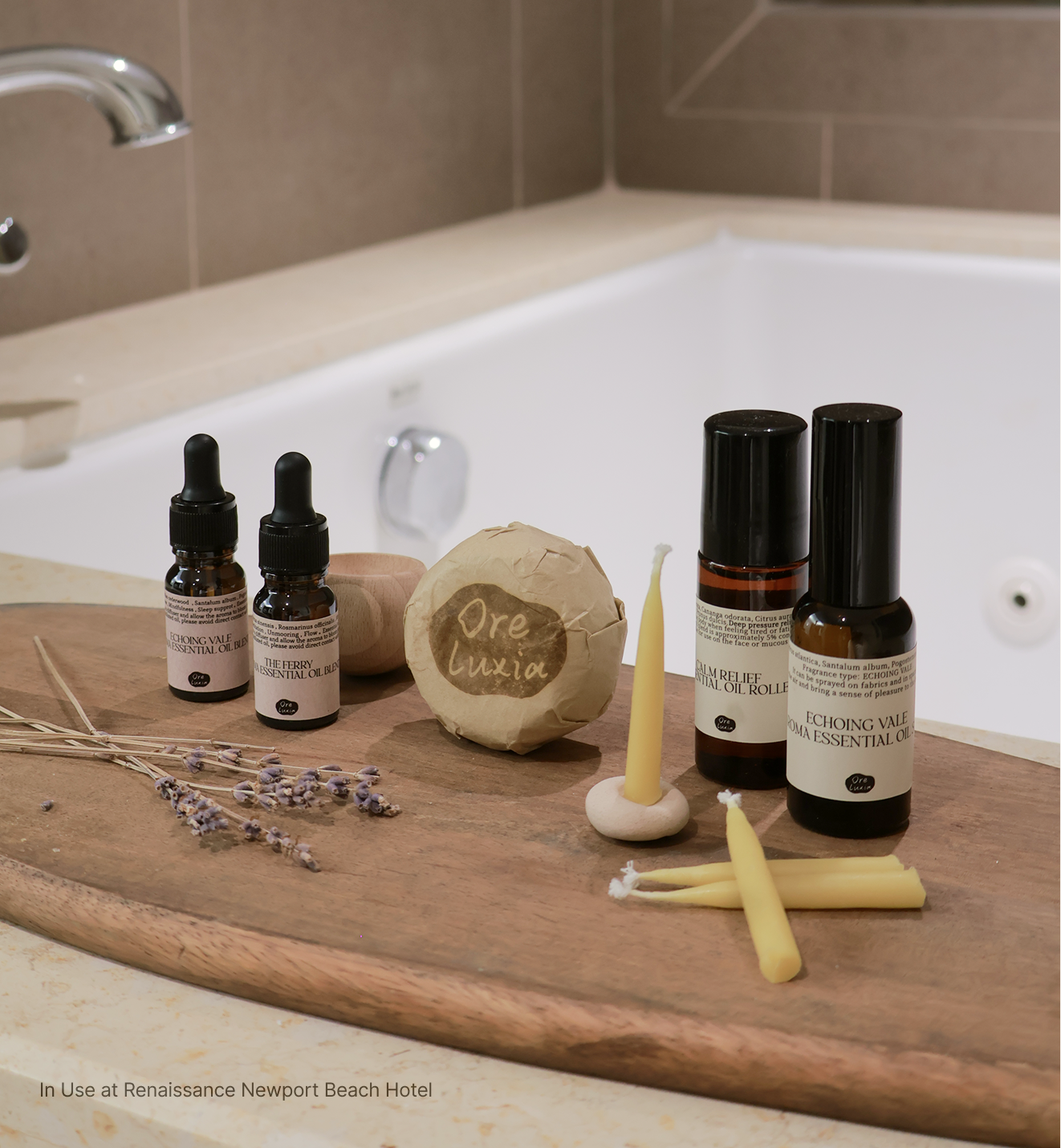
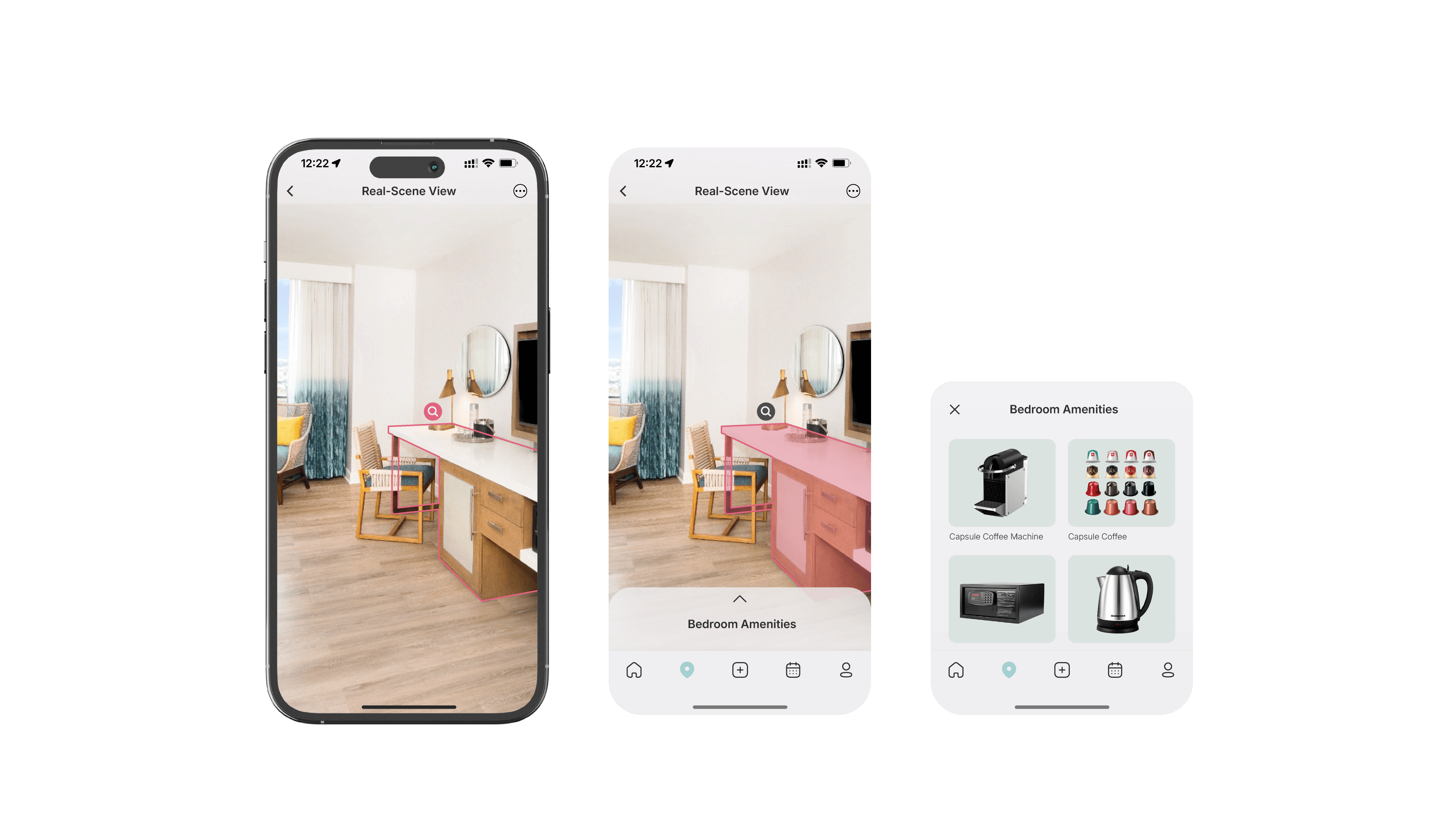
Using Renaissance Hotel as an application context, I developed a matching approach that begins with the hotel rather than the product. I considered the property’s visual character, guest profile, room function, service sequence, time of day, scent intensity, and method of delivery. I then used these factors to determine whether an oil, mist, soap, candle, or take-home product would be appropriate for a particular touchpoint.
My aim was not to make fragrance the focus of every space. I wanted scent to support the atmosphere, reduce the feeling of unfamiliarity, and strengthen a coherent memory of the stay.
Visual Identity & Art Direction
Translating Scent into a Visual Language
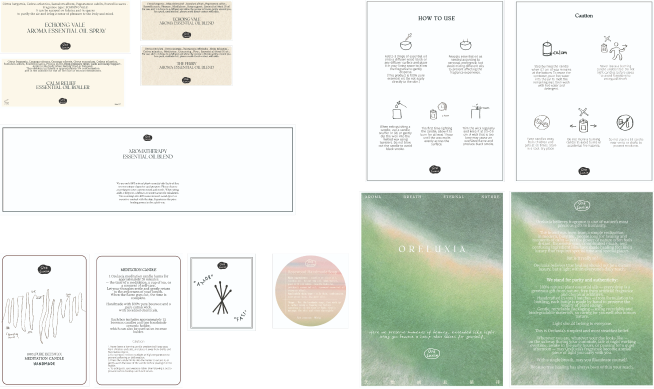
Because fragrance is invisible, I used color, space, photography, typography, and packaging to suggest its emotional character. I selected muted natural tones and generous white space to create a quiet environment, while editorial typography gave the brand a composed voice.
I used product still life, natural materials, textured light, and blurred scenes to suggest memory and movement without illustrating scent literally. For the physical product, I treated packaging as both a practical container and a key part of the customer’s first impression.
I did not assume that one packaging direction would work best. I compared different packaging versions and later used A/B tests to evaluate how changes in color, hierarchy, imagery, and product information affected attention and purchase behavior. These experiments helped me separate my personal visual preferences from the choices that customers understood and responded to most clearly.
Website Architecture & Product Discovery
Helping Customers Discover an Invisible Product
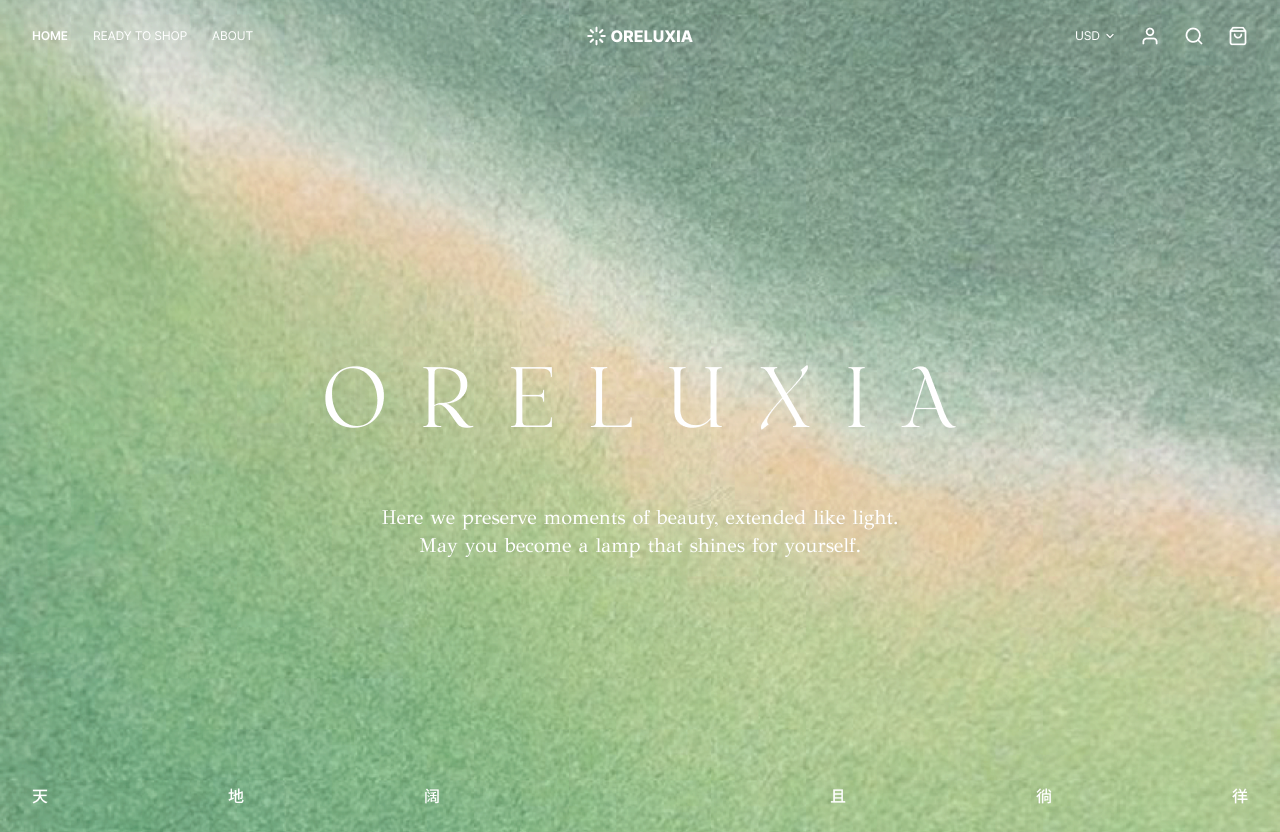
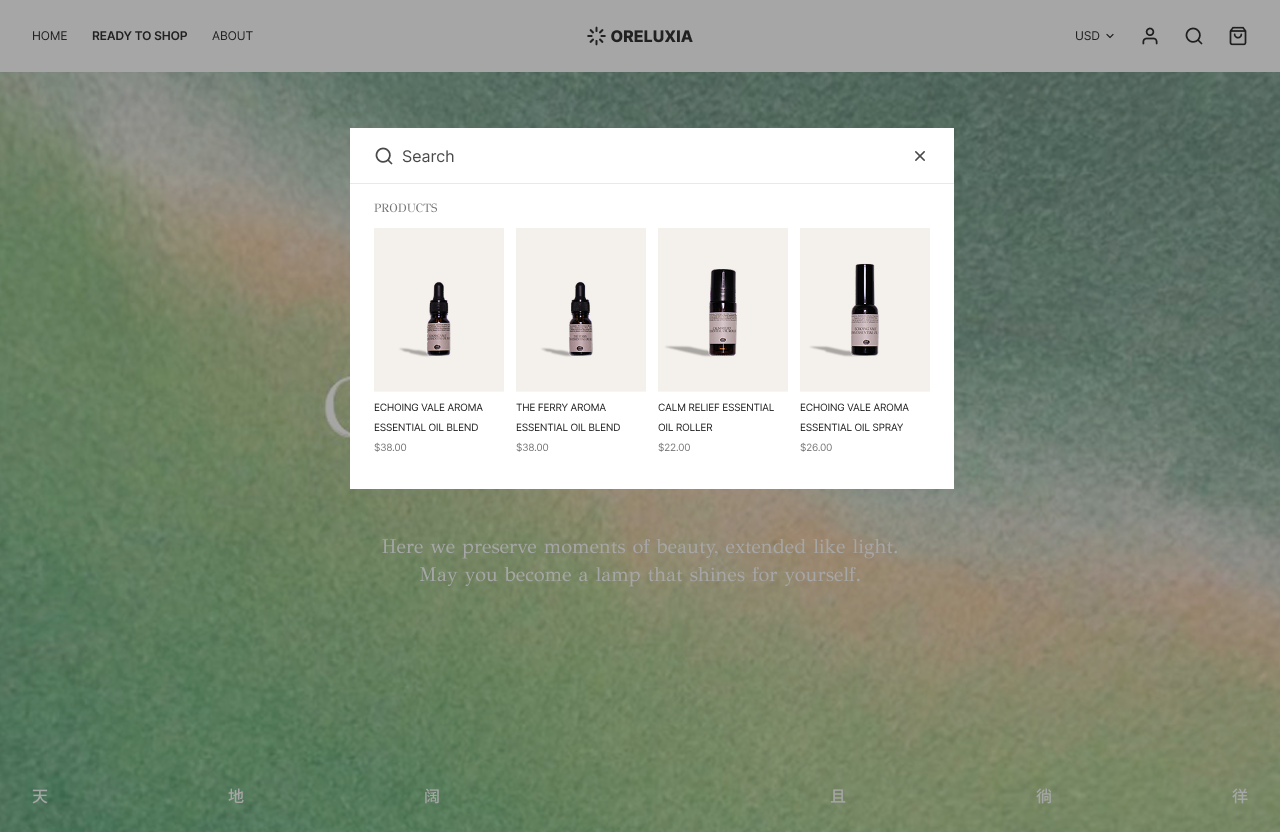
At the end of 2025, I began designing and developing Oreluxia’s online store. Because customers cannot smell a product through a screen, I needed to help them choose through context, organization, ingredients, use cases, and relationships between collections. I designed several paths into the catalog: Featured Collection, Hotel Collection, All Products, category browsing, search, and recommended products within navigation.
I connected discovery with action. Customers could move from a collection to a product, review details and related items, add a selection to the cart, and continue to checkout. Currency and market settings supported different locations without interrupting the core journey.
Mapping the complete system also revealed dependencies between the storefront, accounts, products, orders, markets, content, and site settings. I therefore built the website as one connected service rather than a group of independent pages. After the online store opened, all products across the website reached a combined sales volume of 1,050 units.
Shopping Journey
From Discovery to Checkout
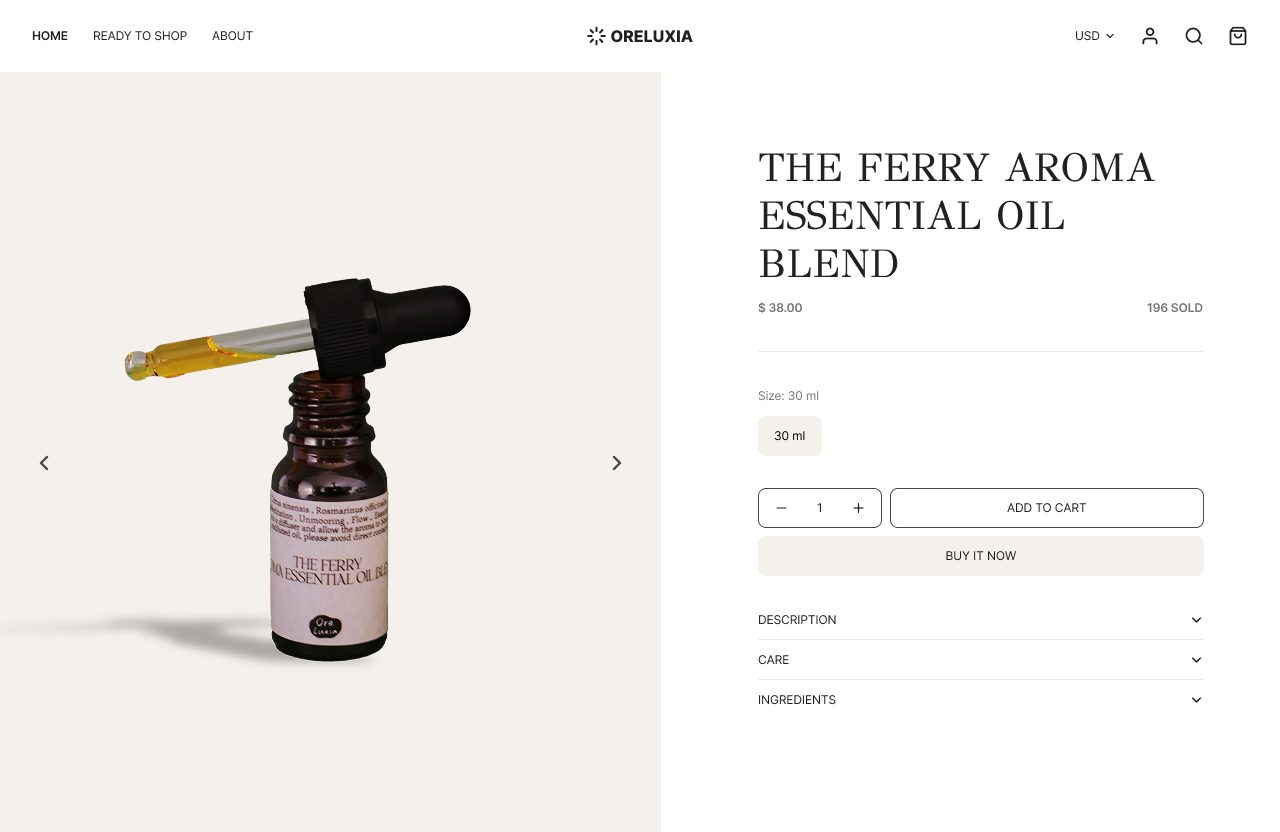
I designed the shopping journey as a continuous path from interest to decision. Customers begin by browsing collections, searching for a product, or selecting a recommendation. On the product page, I combined imagery, price, size, quantity, description, care instructions, ingredients, and related items.
This information is especially important for fragrance because customers must make a sensory decision without physically experiencing the product. I used clear content to reduce uncertainty while preserving the brand’s quiet visual tone. I also tested different product descriptions and calls to action to understand which wording produced a higher click-through rate.
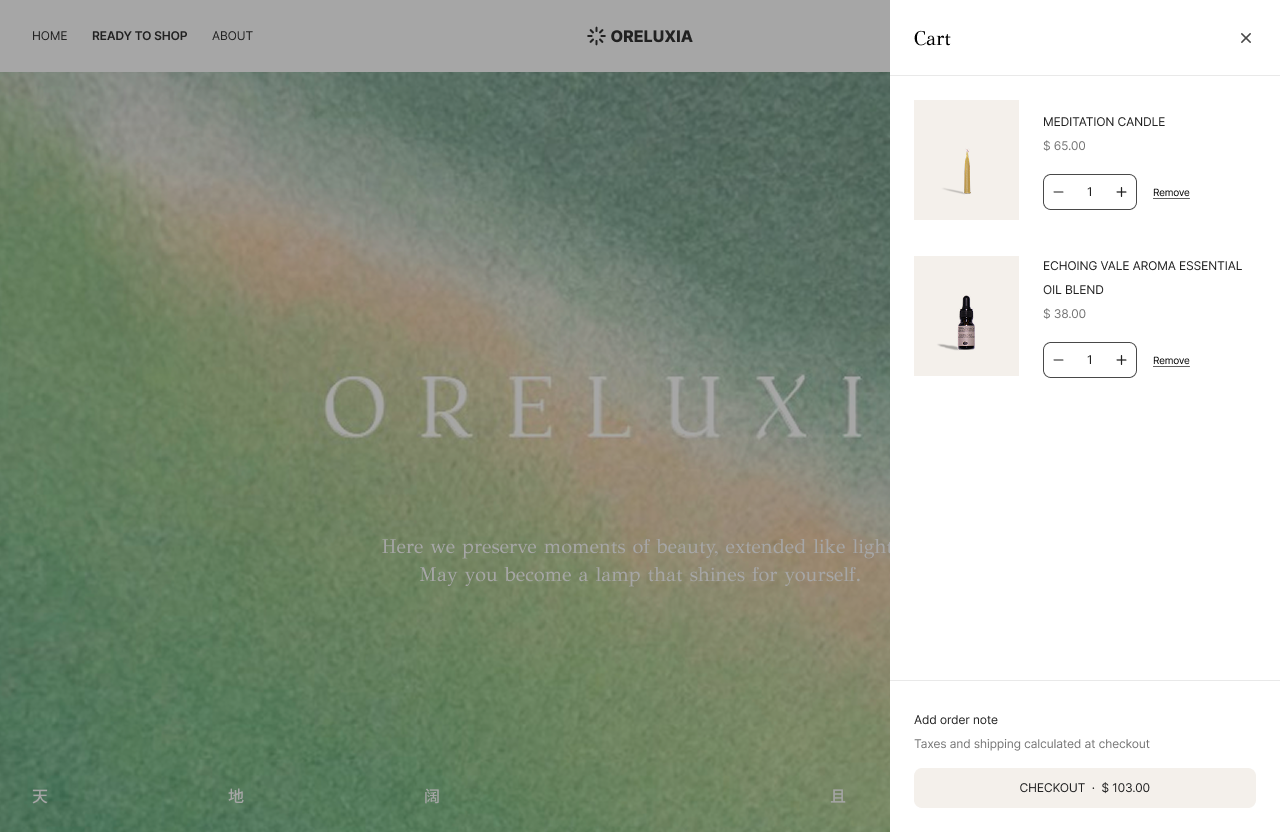
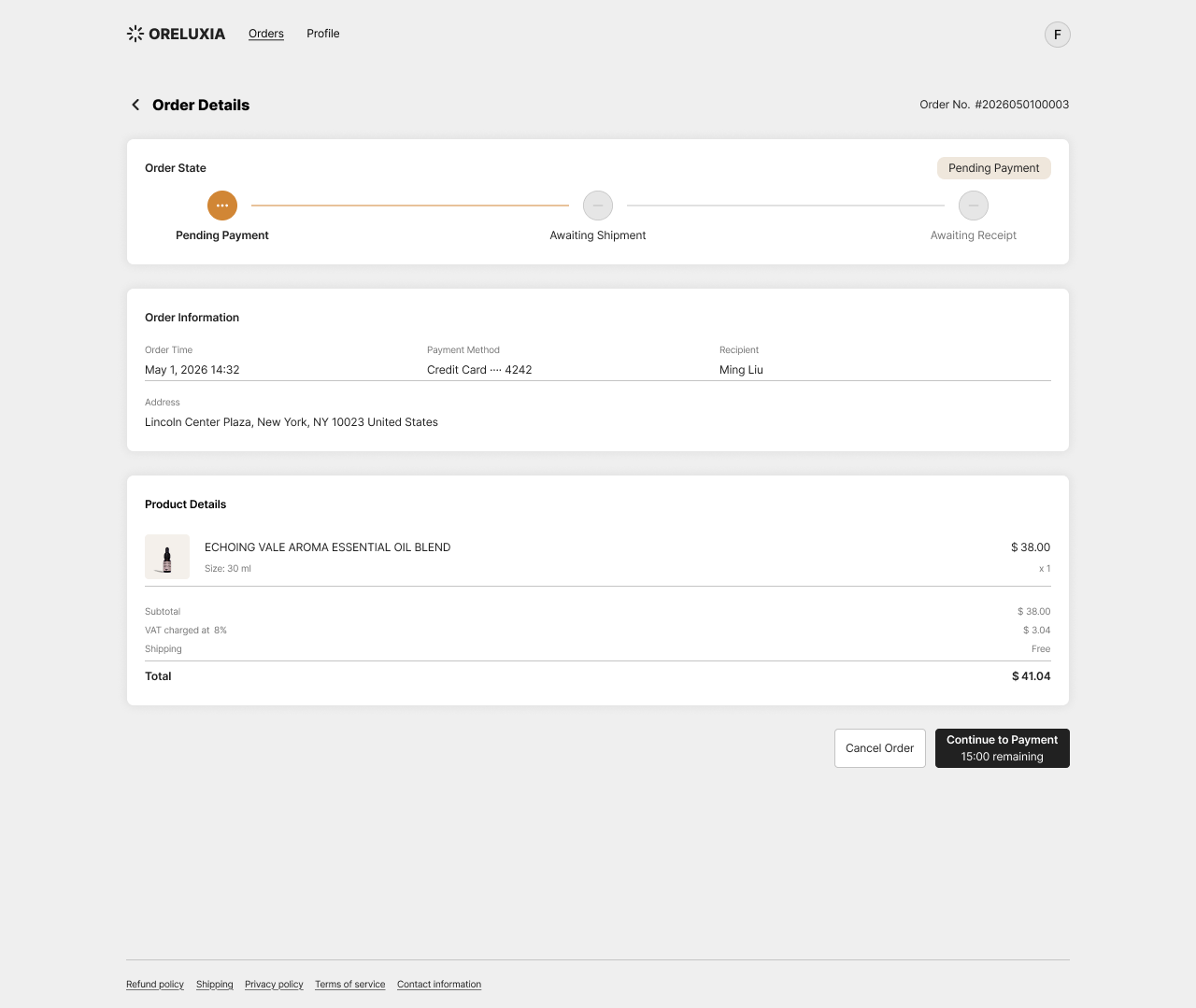
After customers choose an item, they can review it in the cart without losing their place in the storefront. I designed checkout to bring together the selected product, quantity, subtotal, and shipping address. Once an order is created, it becomes part of the customer account, connecting the transaction with saved addresses, order status, order history, and my fulfillment workflow within one consistent service journey.
The online store accelerated Oreluxia’s growth. Of the 2,500+ products sold since I founded the brand, 1,050 were sold through the website after it opened.
Admin & Business Operations
Designing the Relationship Beyond Purchase
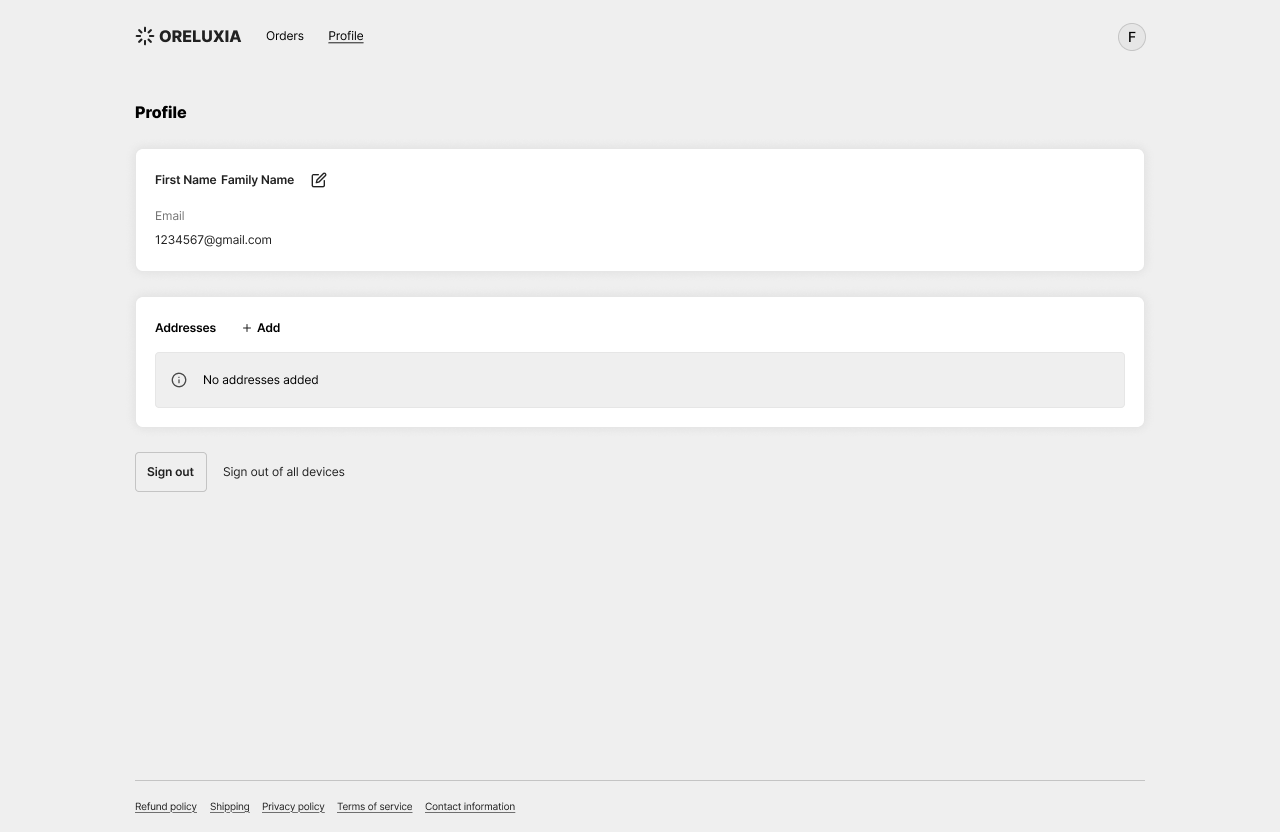
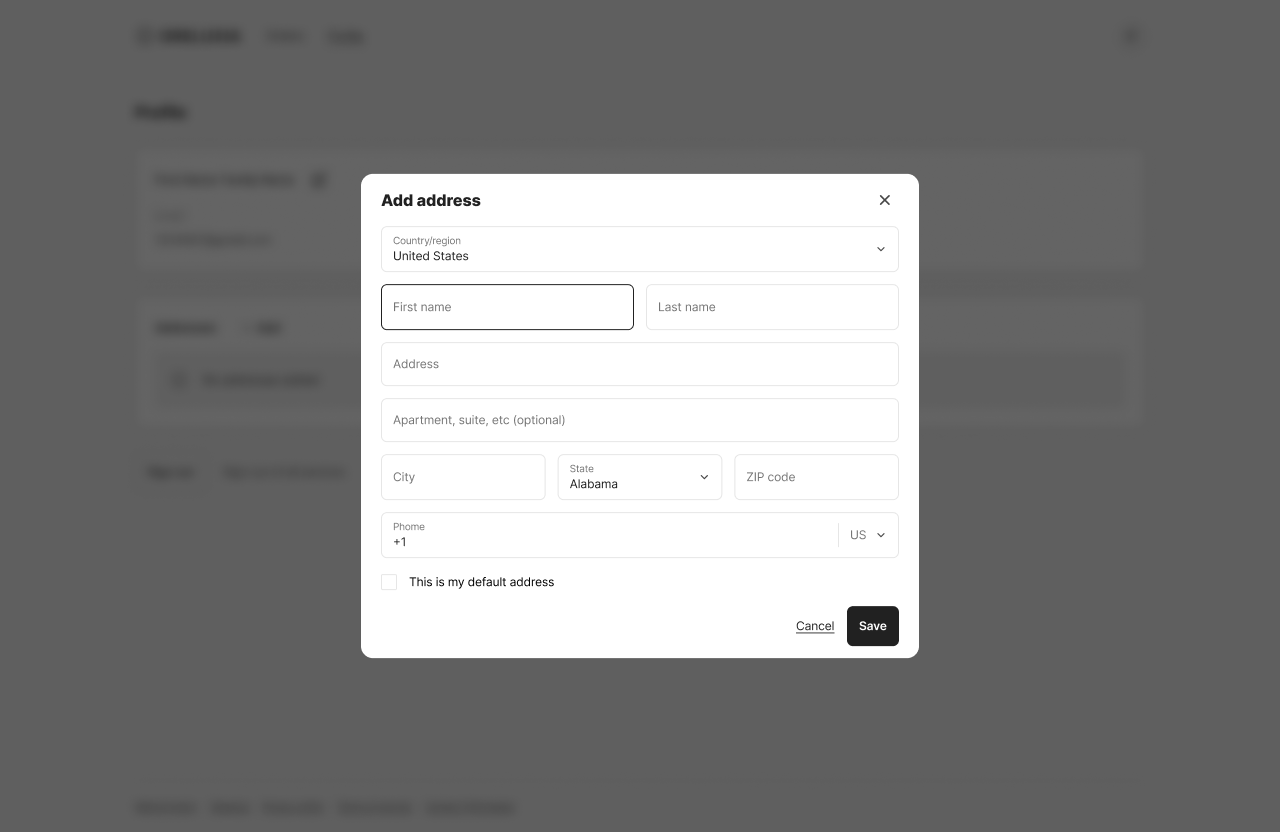
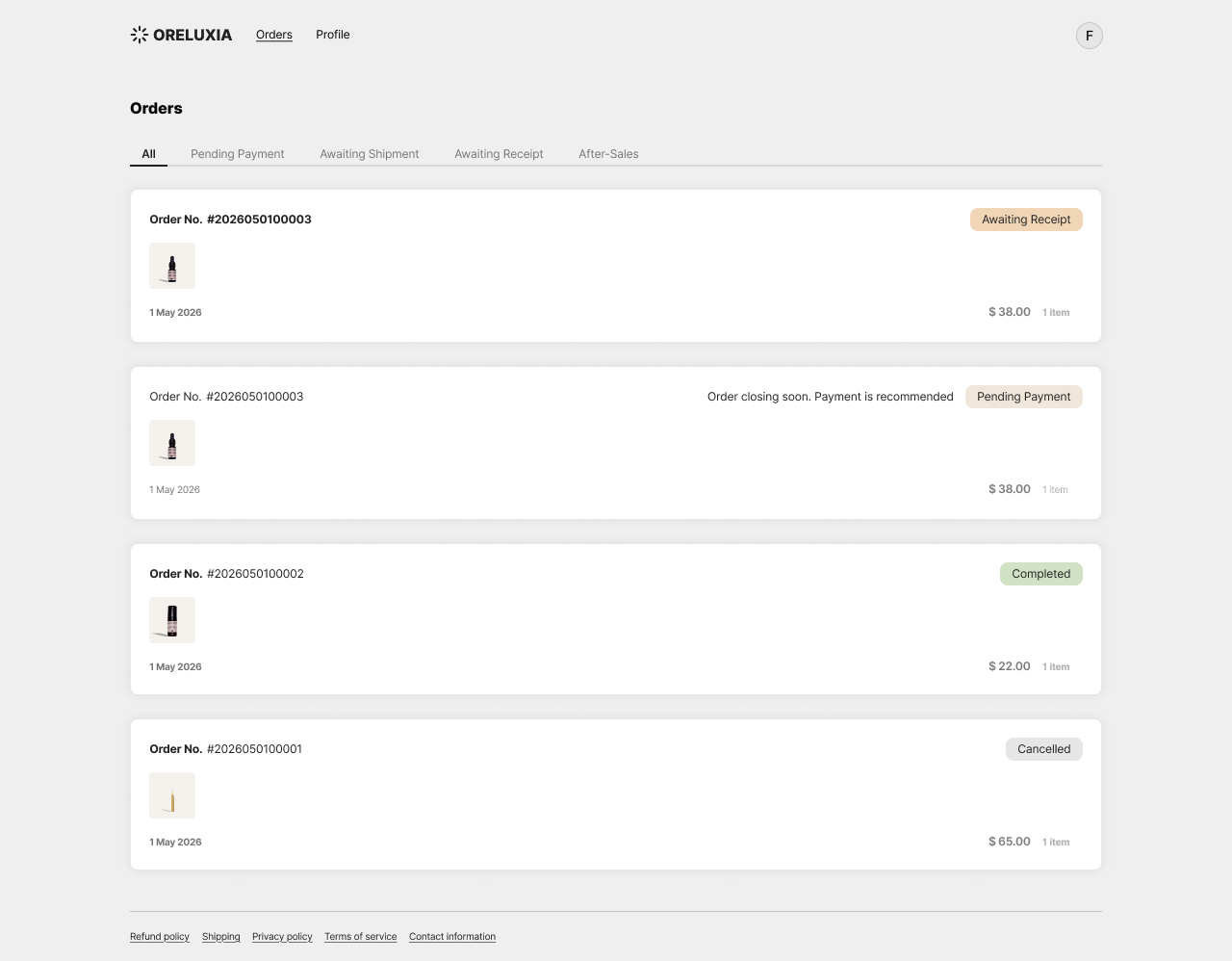
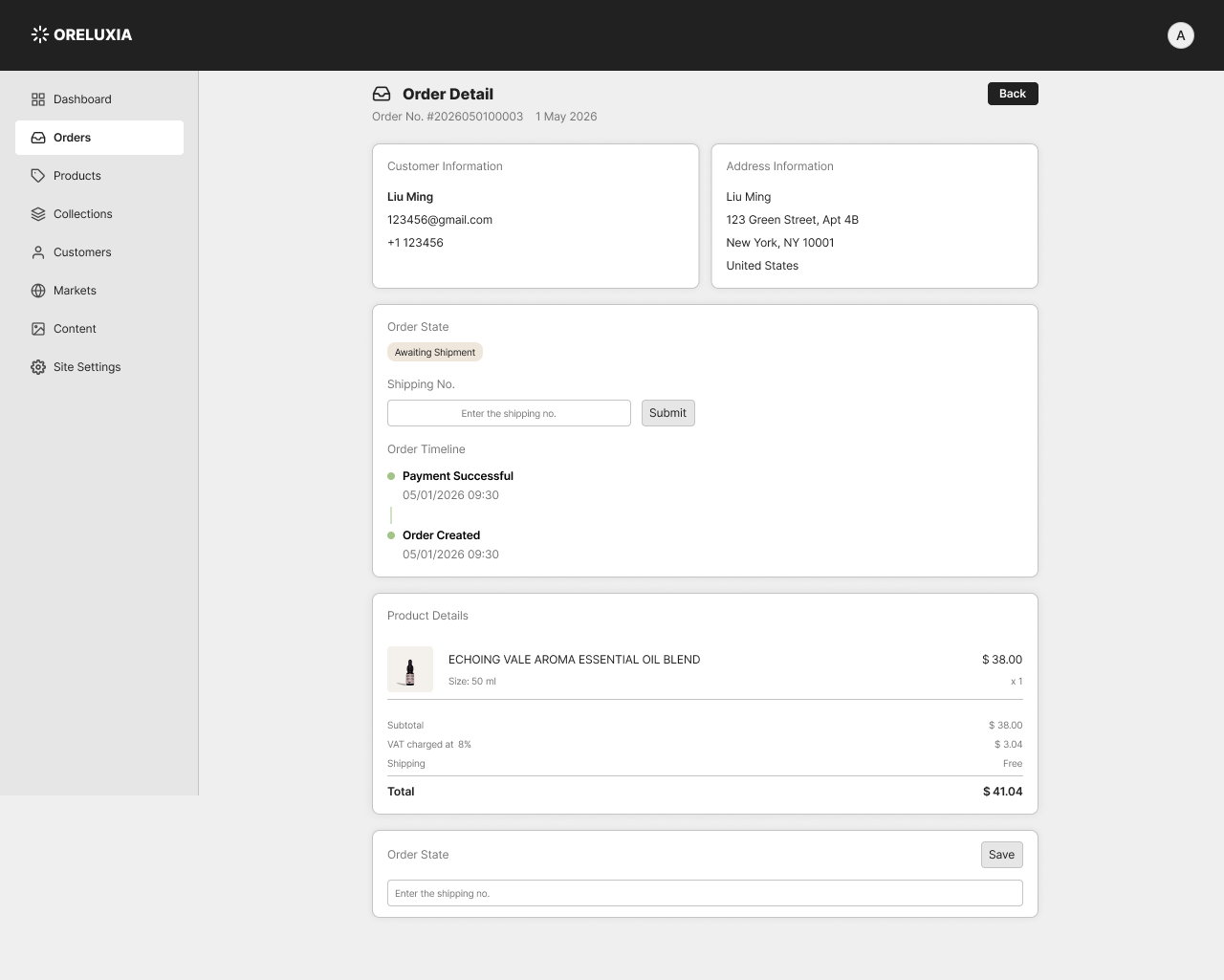
I designed and developed registration, sign-in, password recovery, profile editing, address management, order history, and order details. These functions helped the store remain useful after a customer left the product page.
I created both empty and active states, supporting customers with no orders as well as those returning to review an existing purchase. Maintaining information across sessions also connected customer actions with my operational view, making account reliability part of the wider service experience.
The account system also gave me a clearer foundation for understanding repeat behavior. Alongside direct customer feedback, I used order histories and repeat purchases to evaluate whether Oreluxia was building an ongoing customer relationship rather than generating only one-time transactions.
Designing for the Work Behind the Store
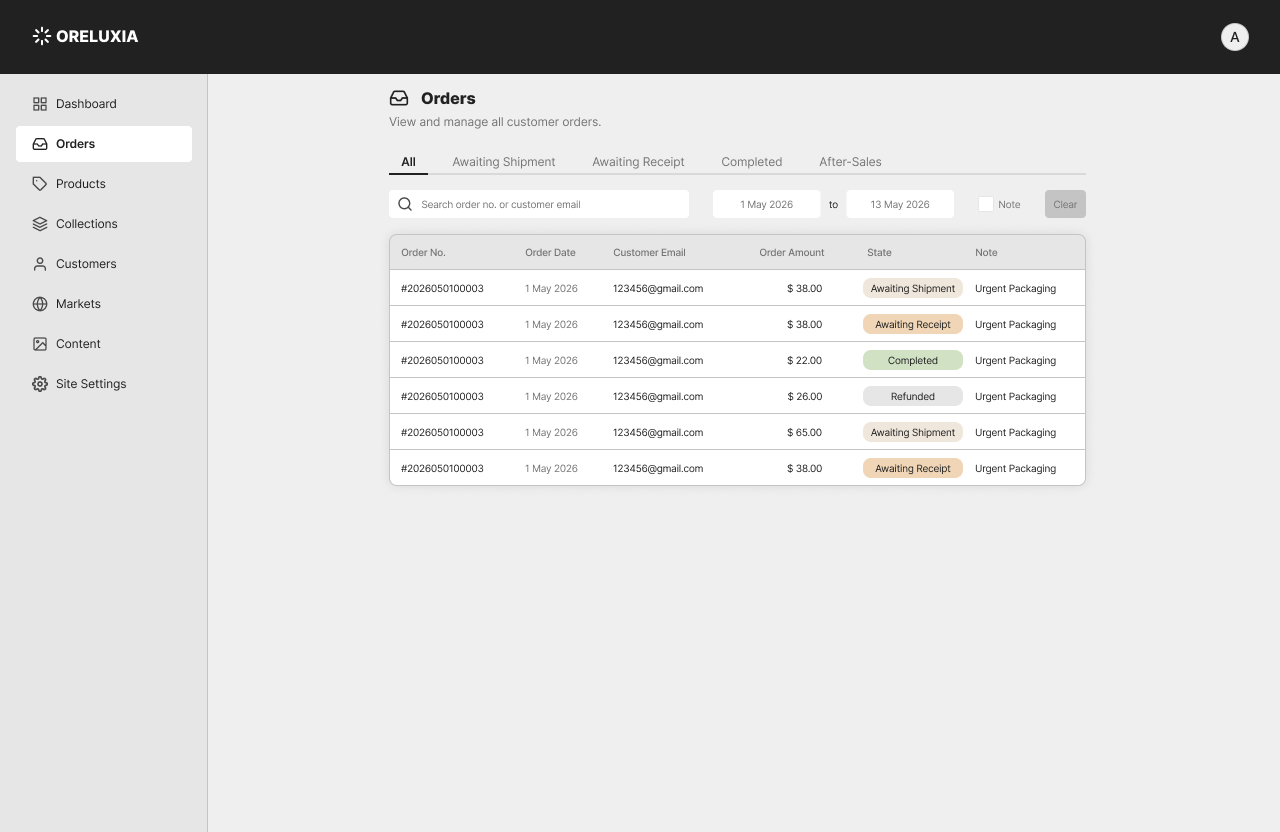
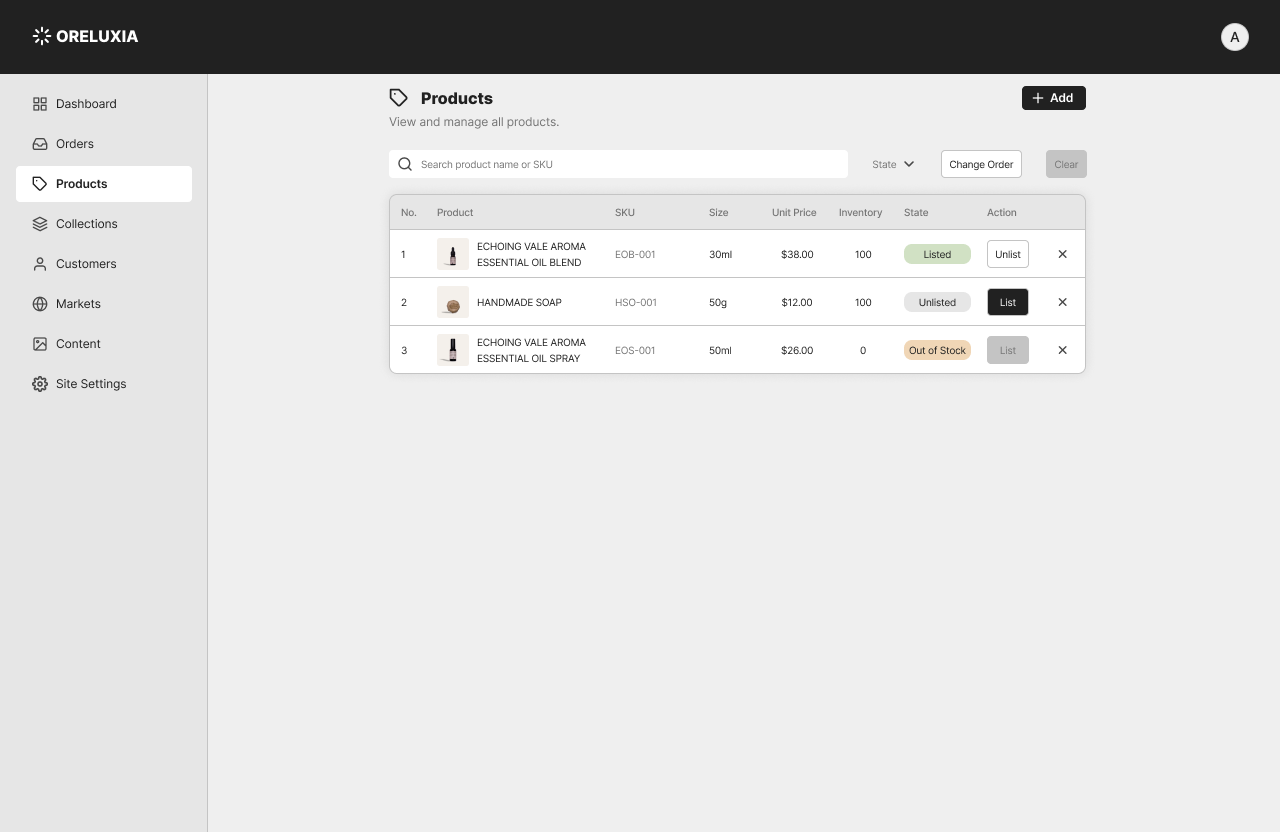
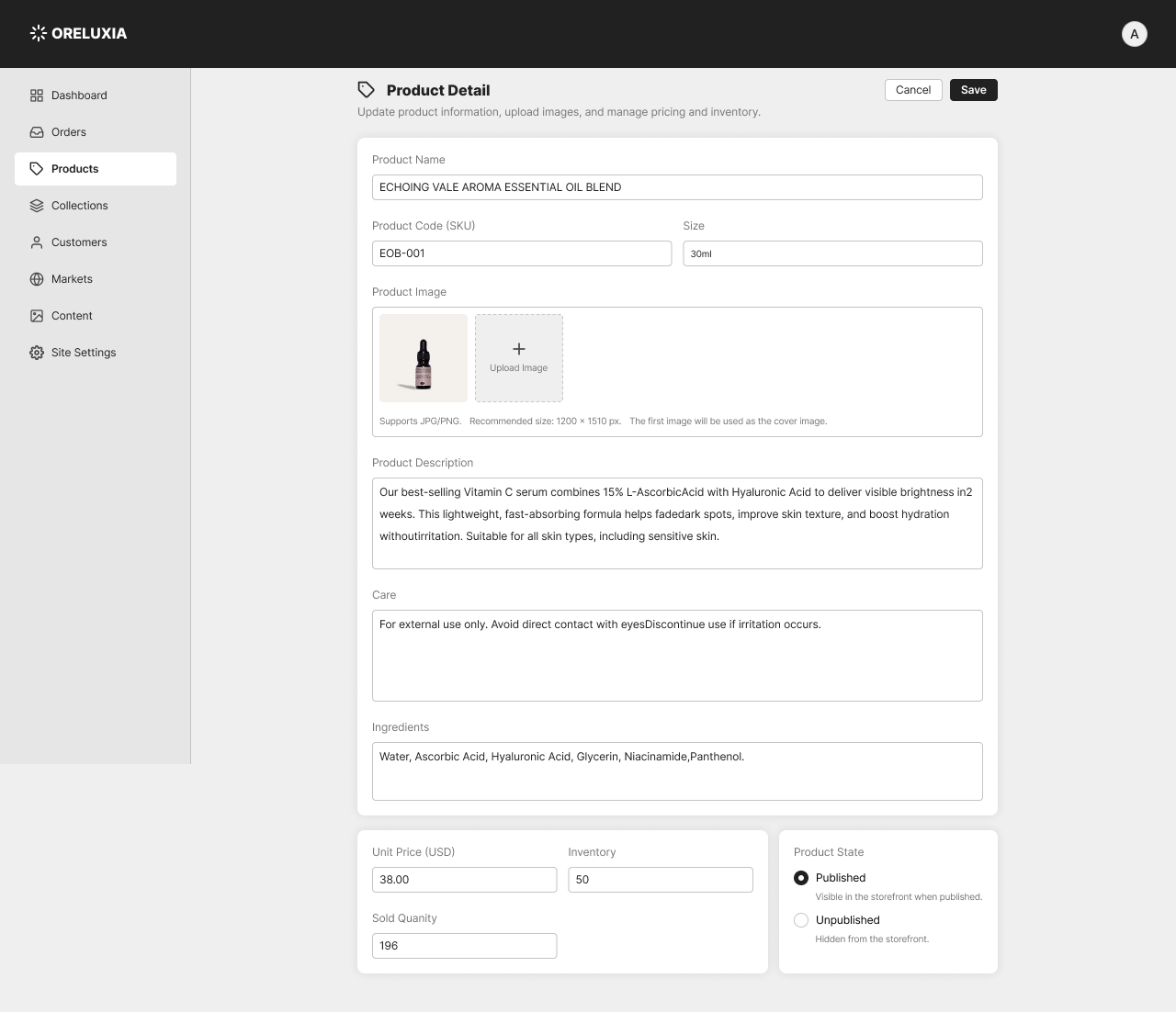
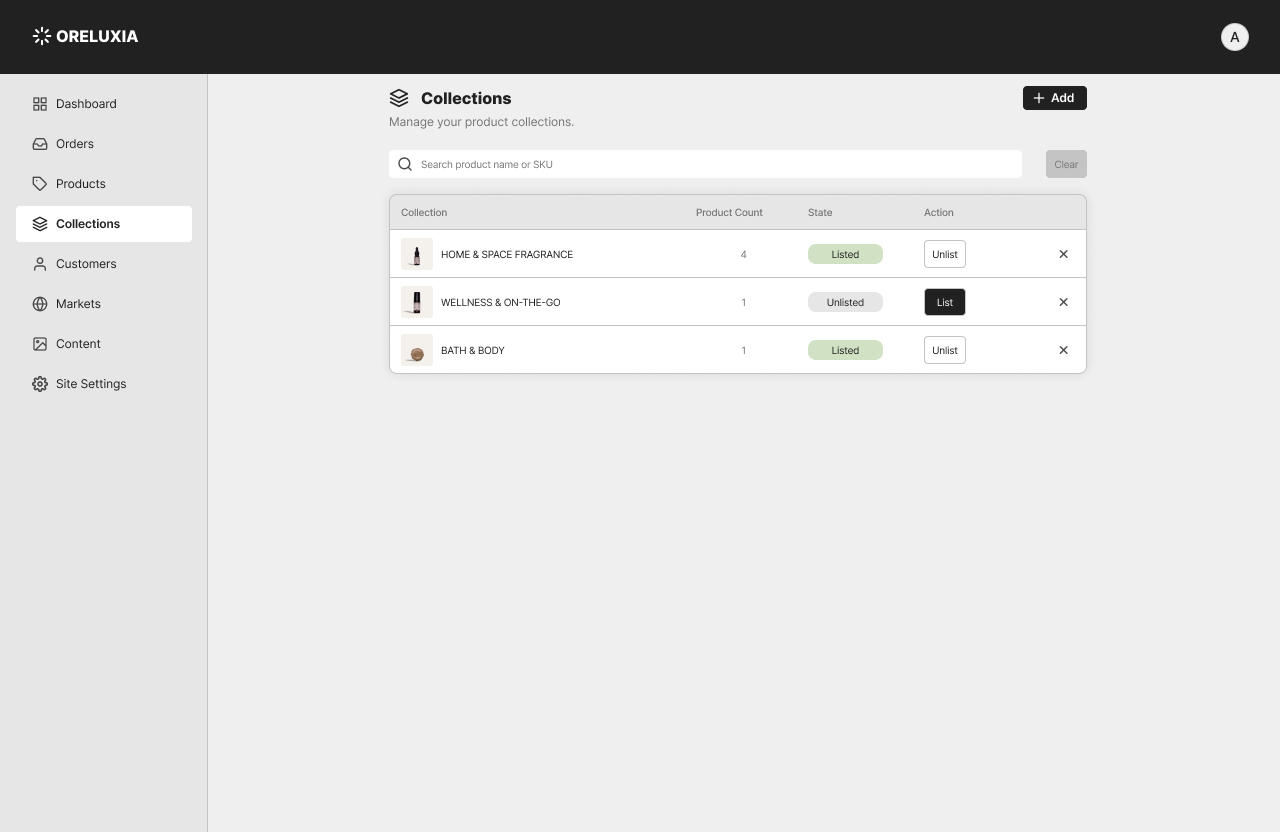
I developed an administrator system so I could support the customer experience with clear operational tools. The dashboard brings together sales, new orders, new users, pending work, and performance over time. Product and collection modules help me manage information, listing status, grouping, and display order.
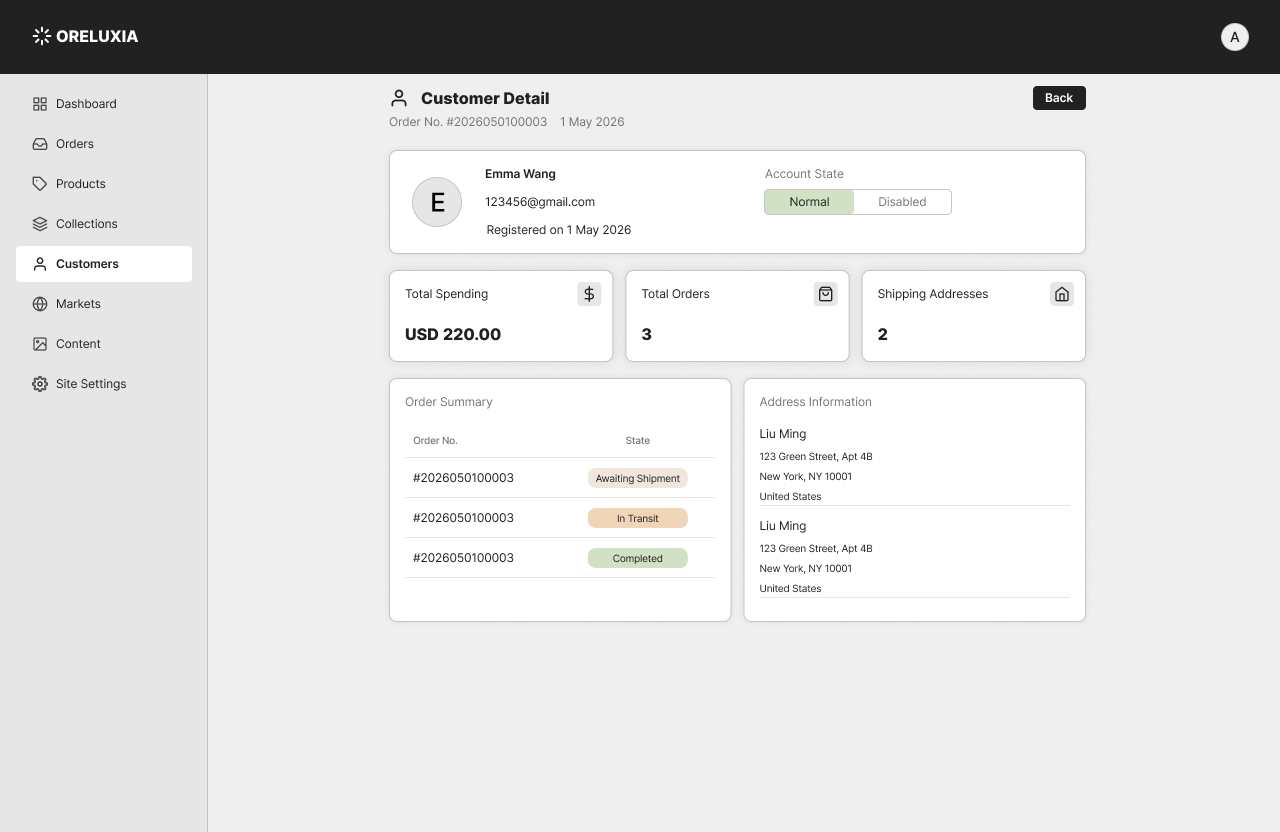
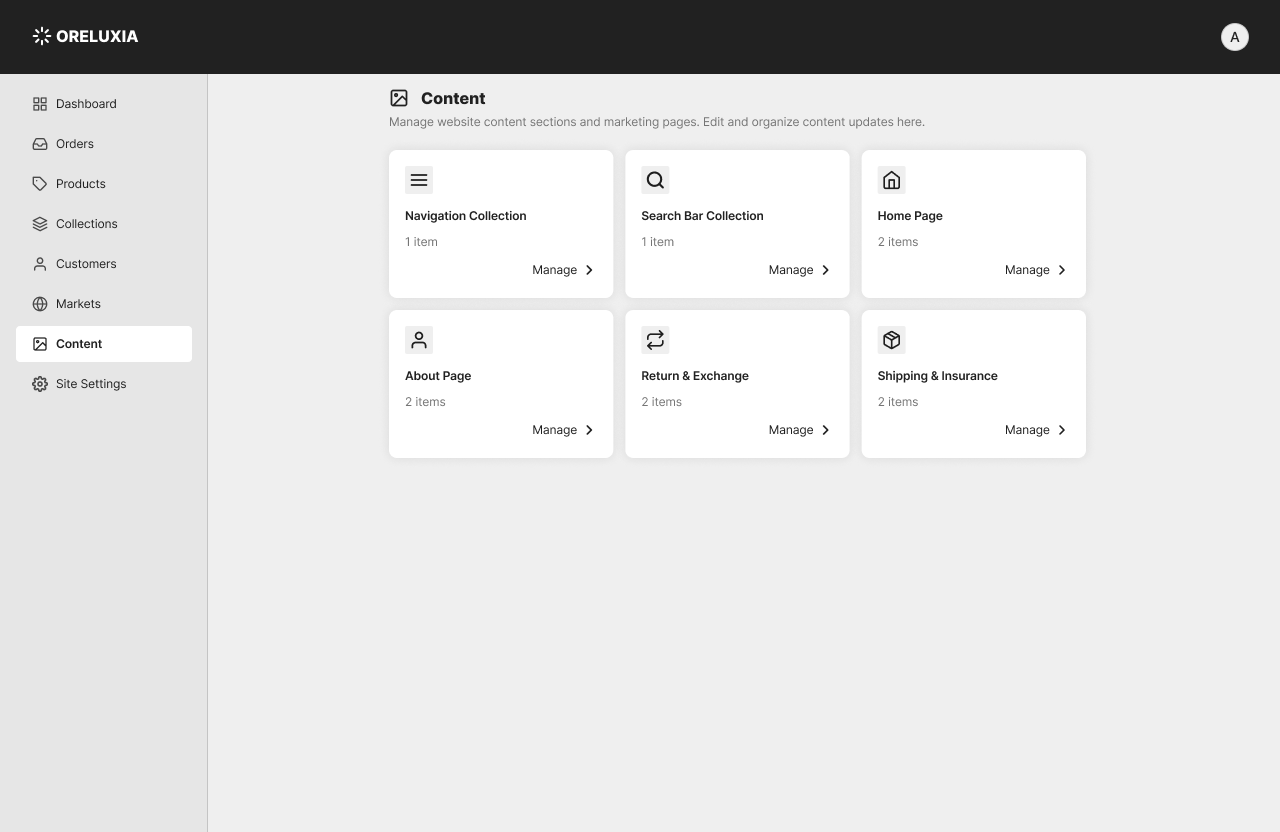
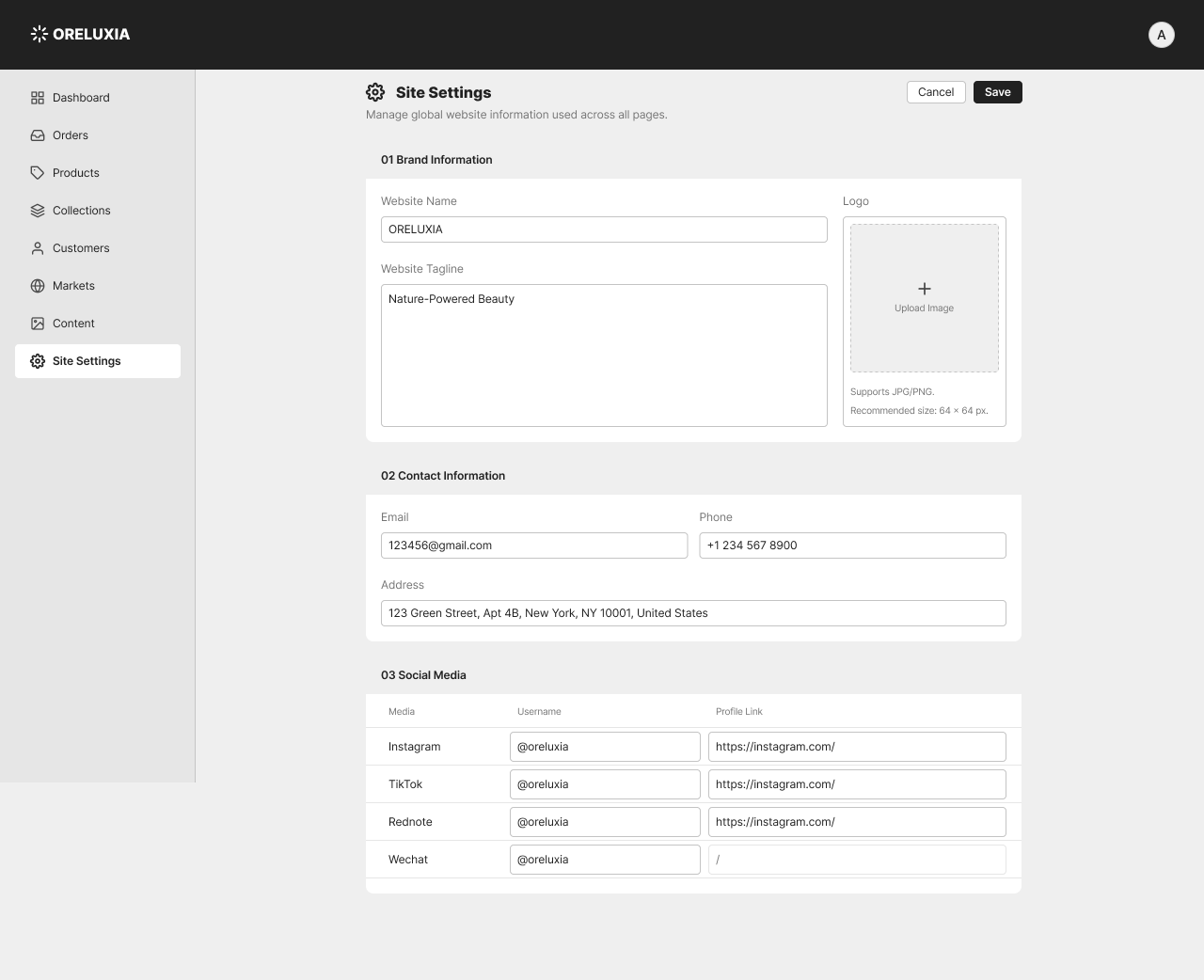
I connected purchases with fulfillment and customer management through the order and customer areas. I used market settings to organize regions and currencies, while the content system controls the homepage, About page, recommendations, return policies, and shipping information. Site settings coordinate shared brand information across the platform.
I also brought the business measures I first tracked at offline markets into my wider decision-making process. I monitored customer acquisition cost, conversion rate, average order value, and repeat purchase rate instead of looking only at total sales. These measures helped me compare channels, evaluate marketing decisions, and understand whether growth was efficient and sustainable.
From Design to Code
Building the Experience as a Working System
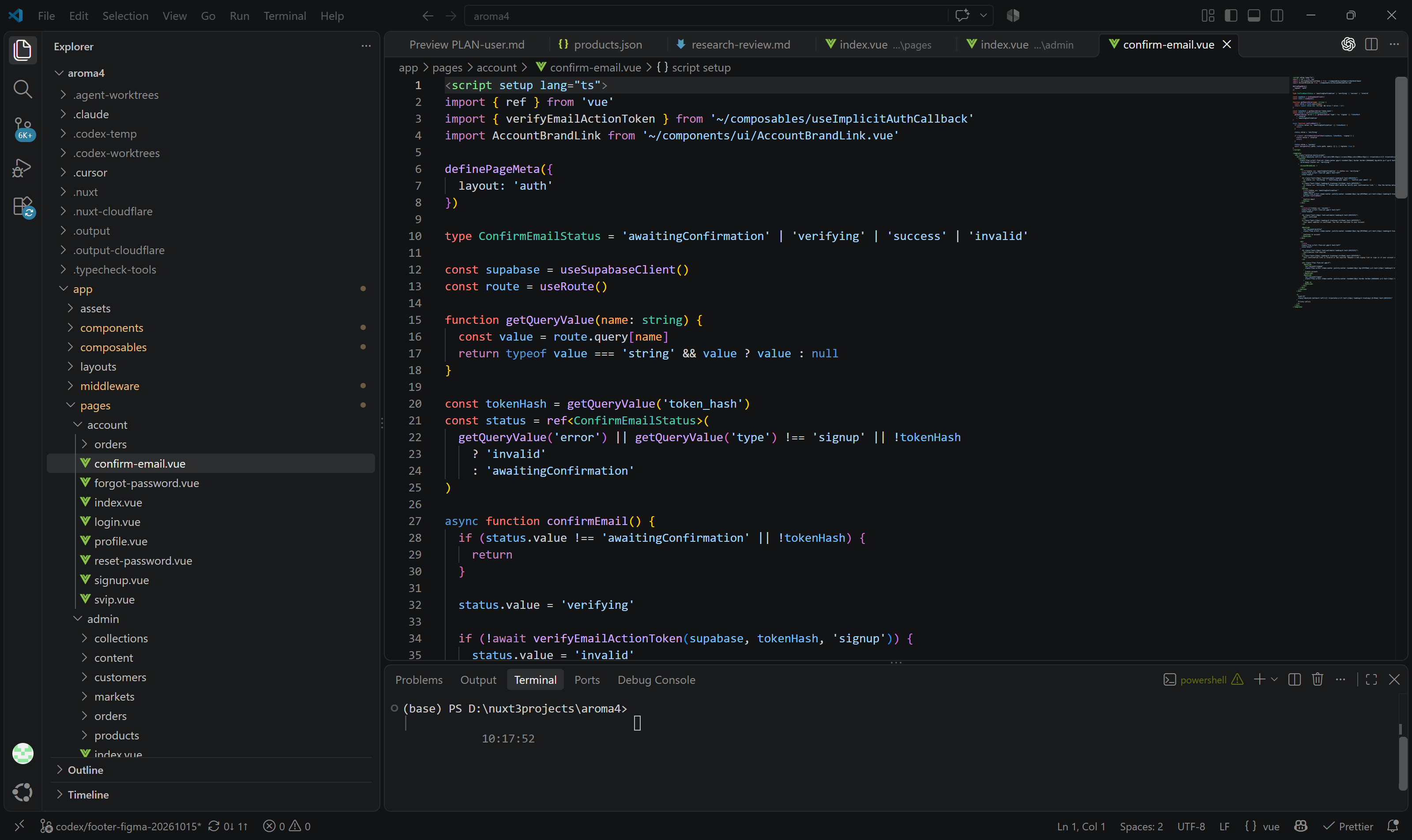
I translated the visual direction, shopping journey, customer account, and administrator workflows into a working website. I connected the public storefront with product information, saved addresses, carts, checkout, orders, collections, markets, content, and site settings.
I separated the project into application, server, shared, database, and testing areas. Building these relationships required me to consider state, persistence, permissions, loading behavior, errors, and the connection between front-end actions and back-end data. Pages that appeared visually independent often depended on the same information.
This process changed how I evaluated design decisions. A simple interaction could create several technical states, while a small data inconsistency could interrupt an entire customer or administrator journey. Moving from interface design to development revealed the hidden structure required to make the experience reliable across the complete commerce system.
Testing & Iteration
Testing the Product, Price, Packaging, and Message
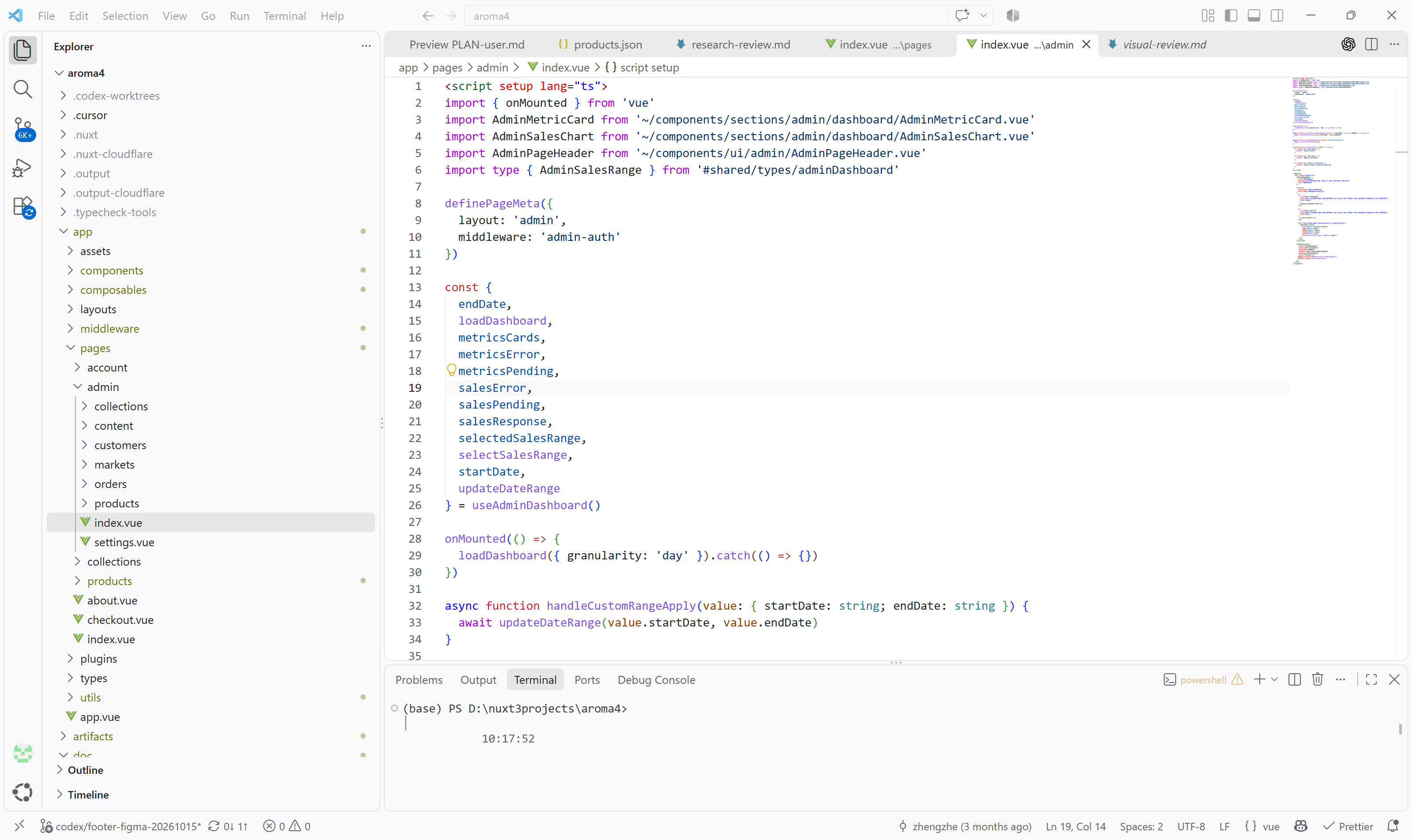
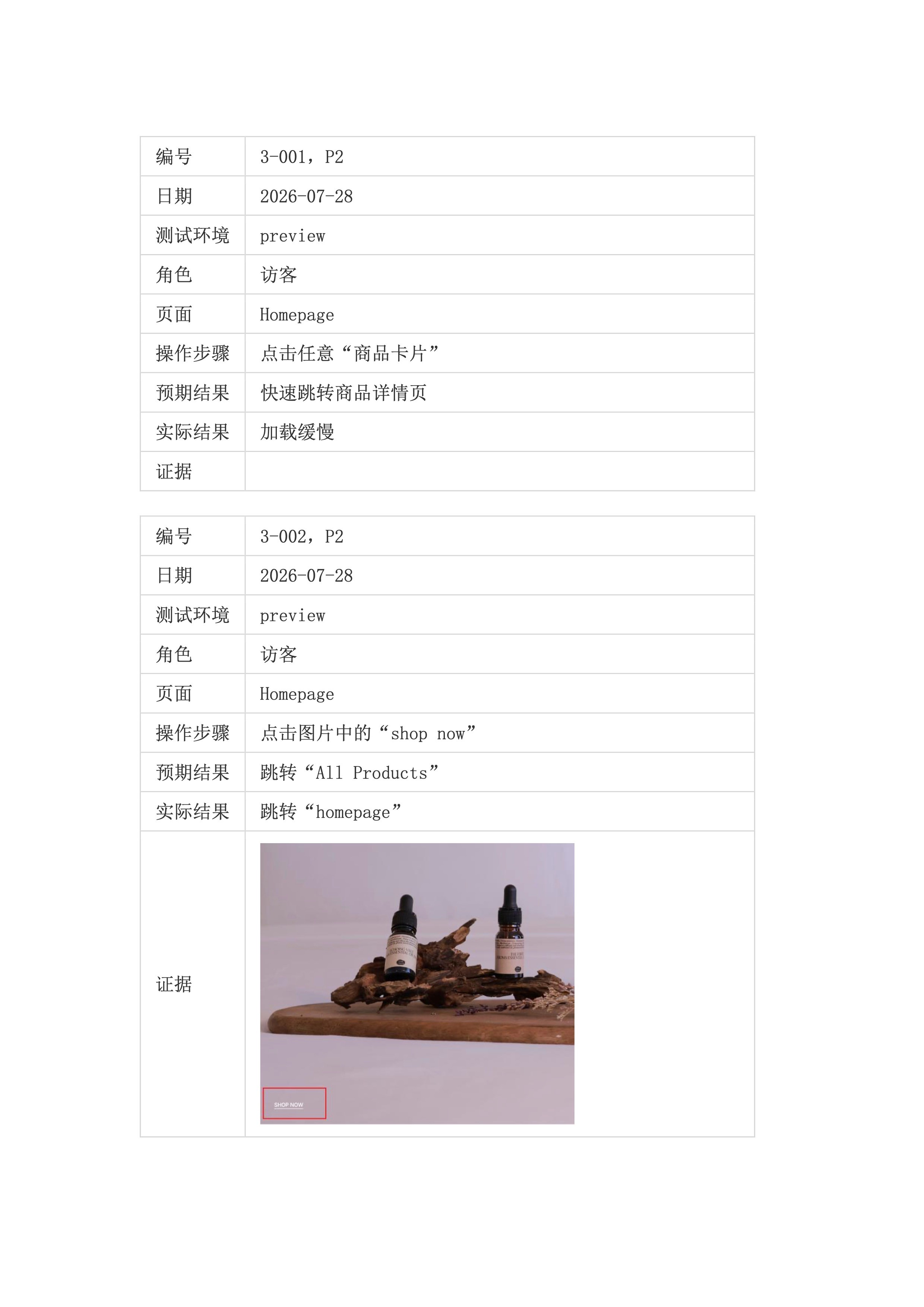
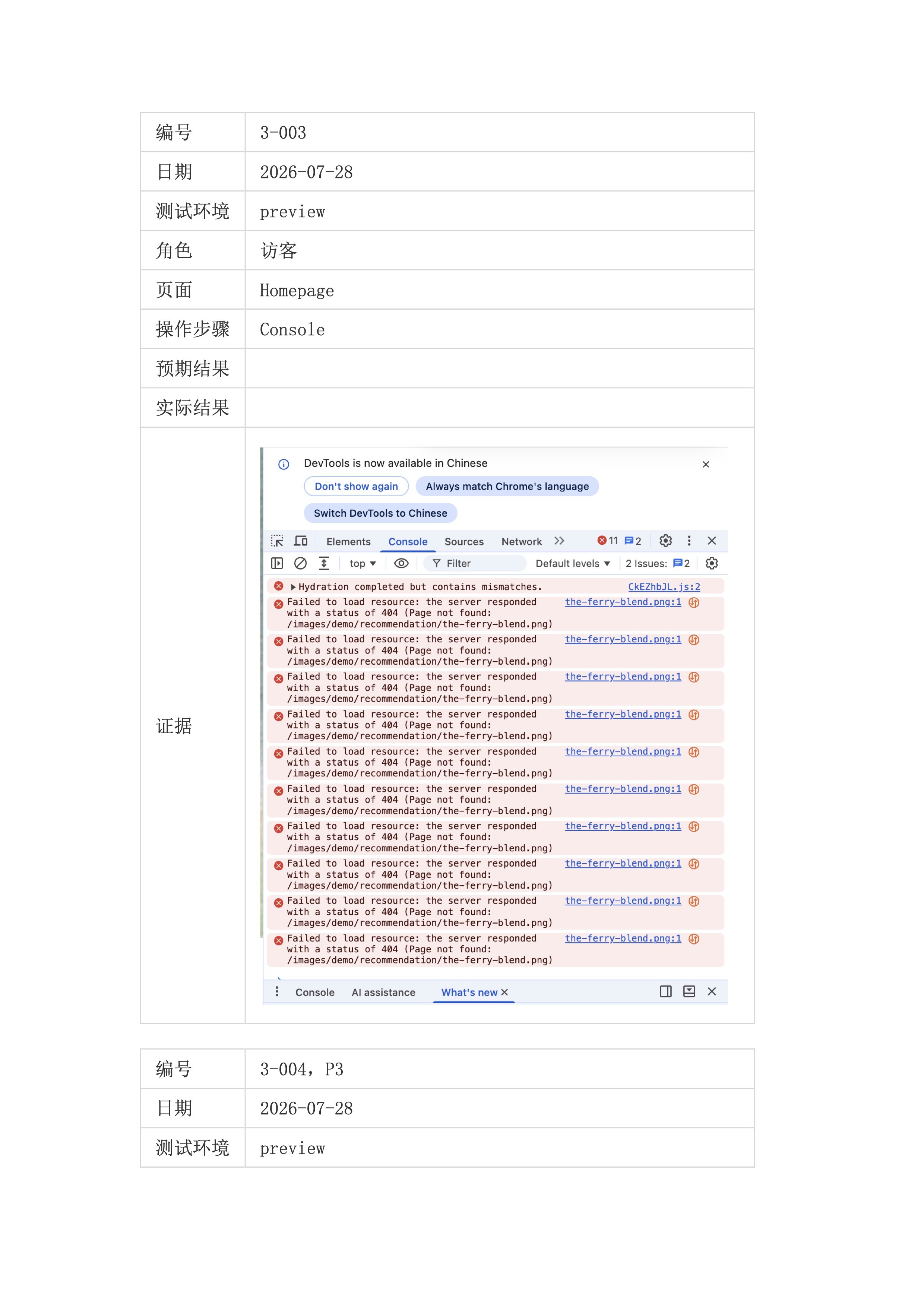
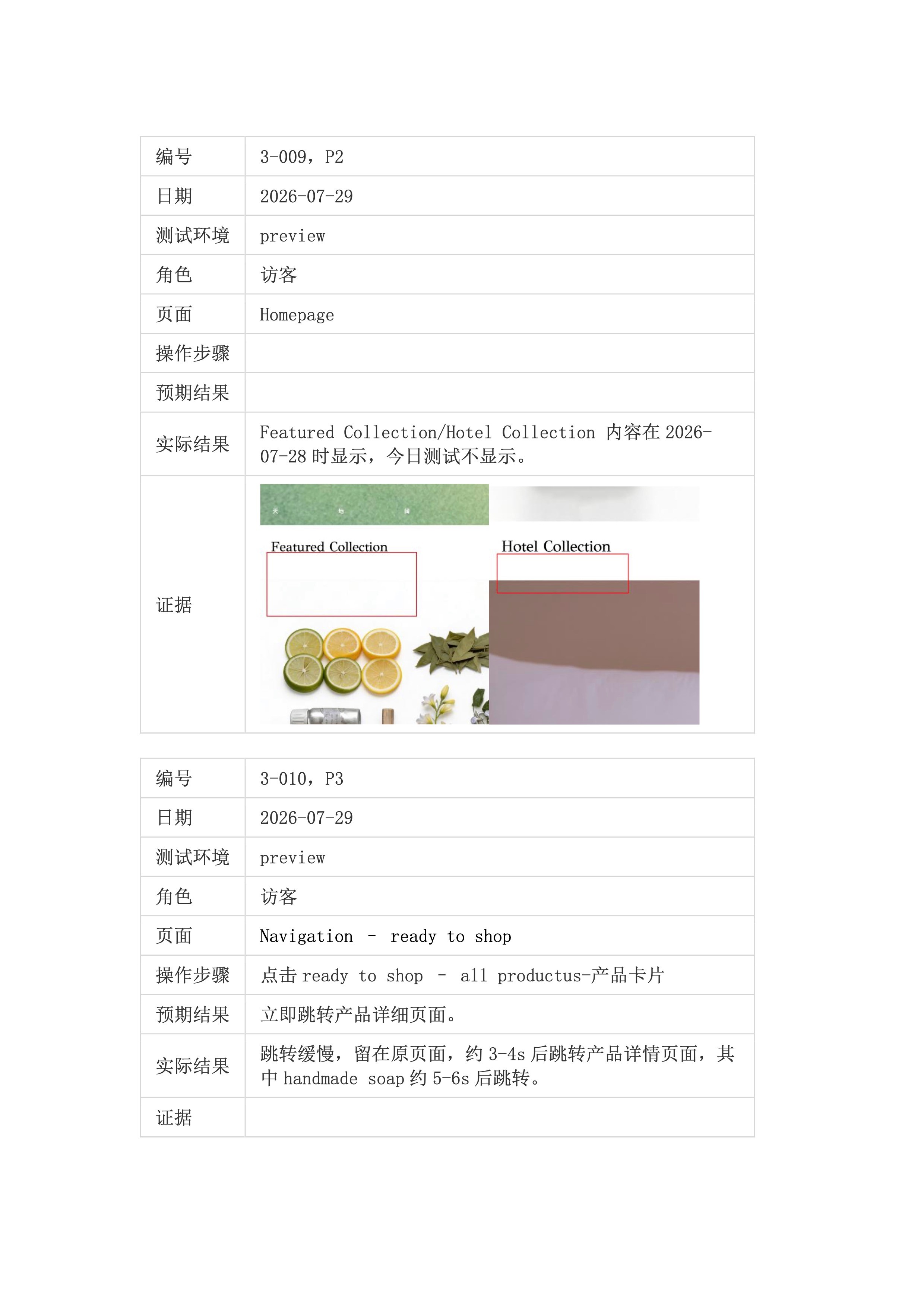
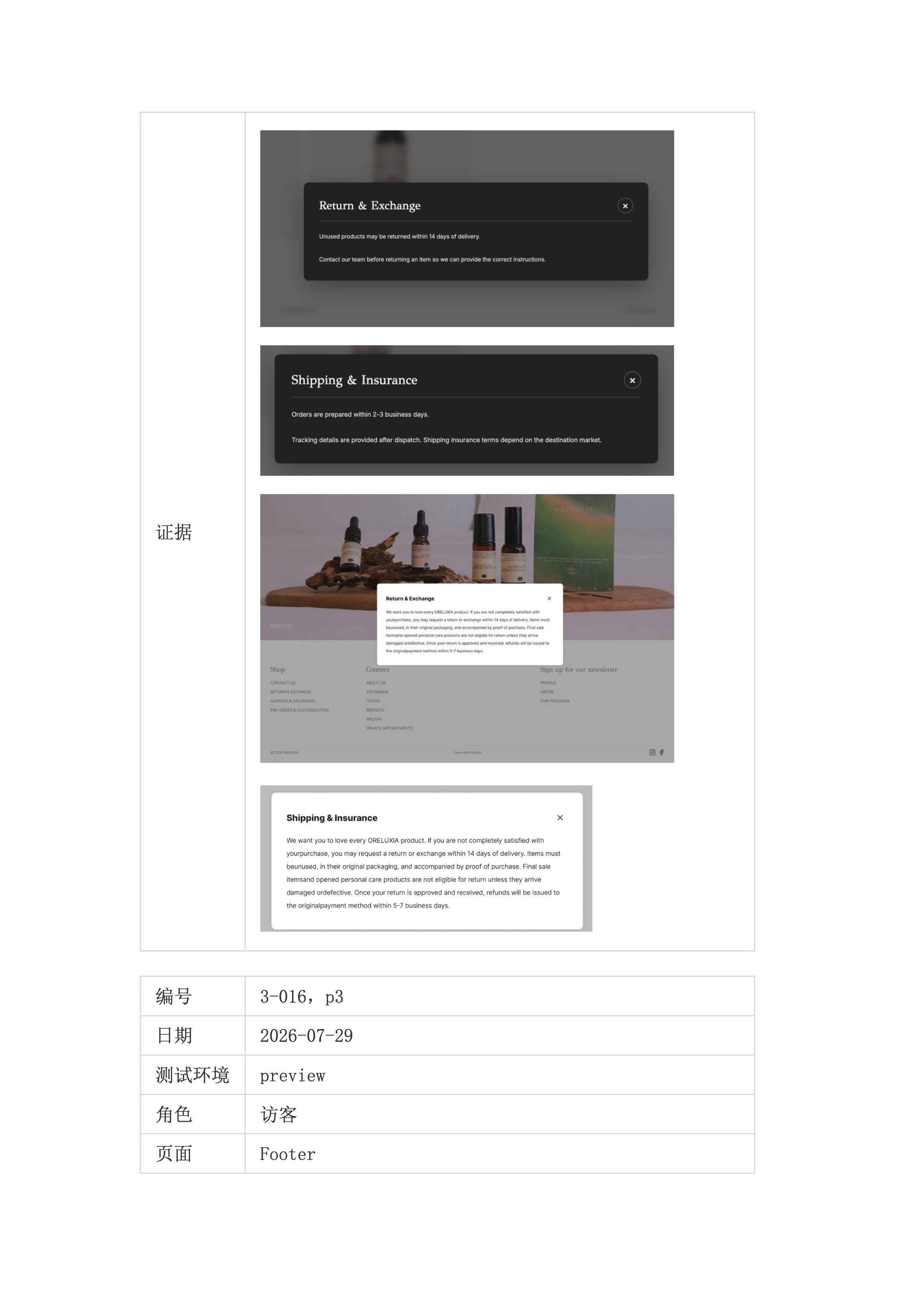
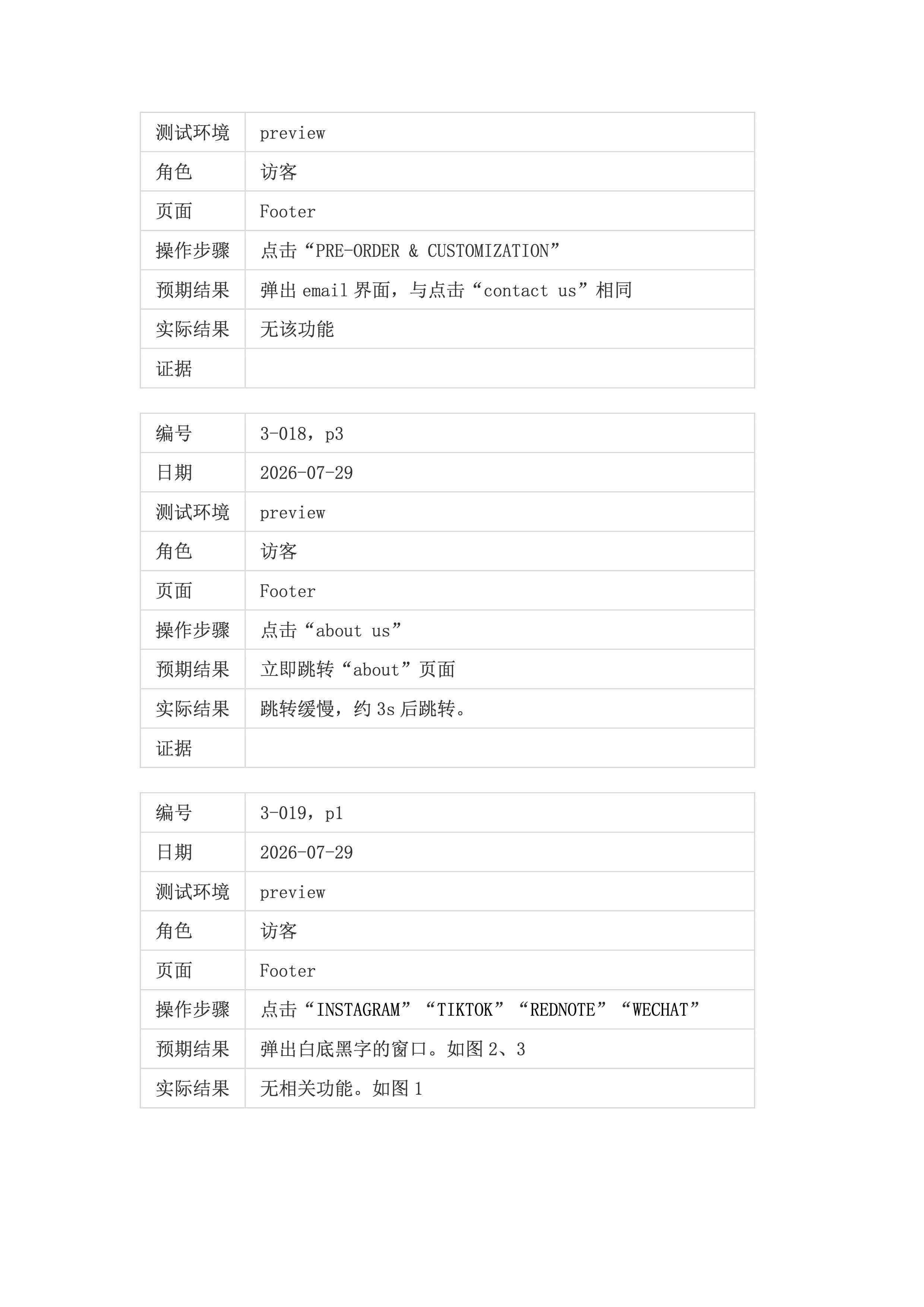
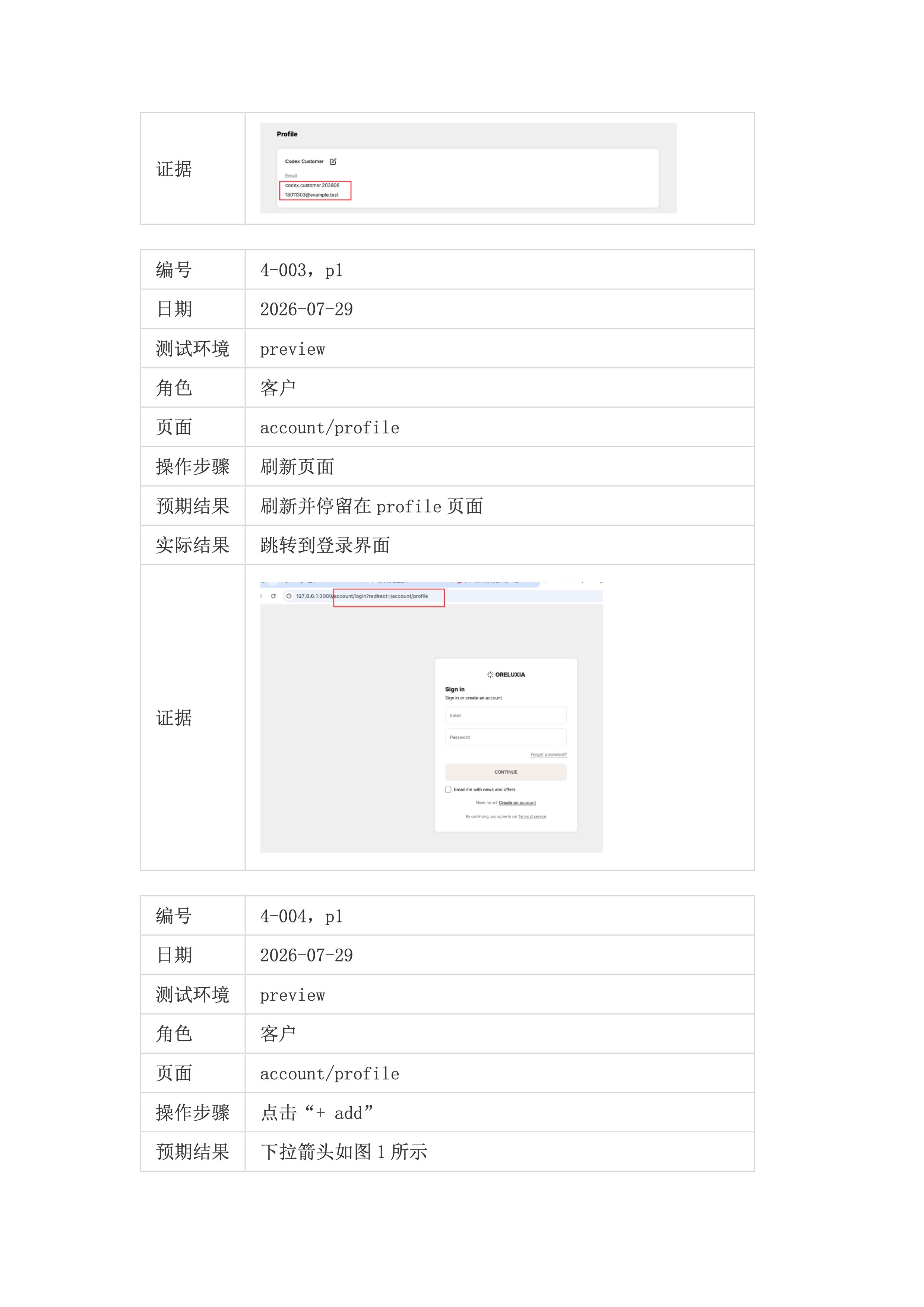
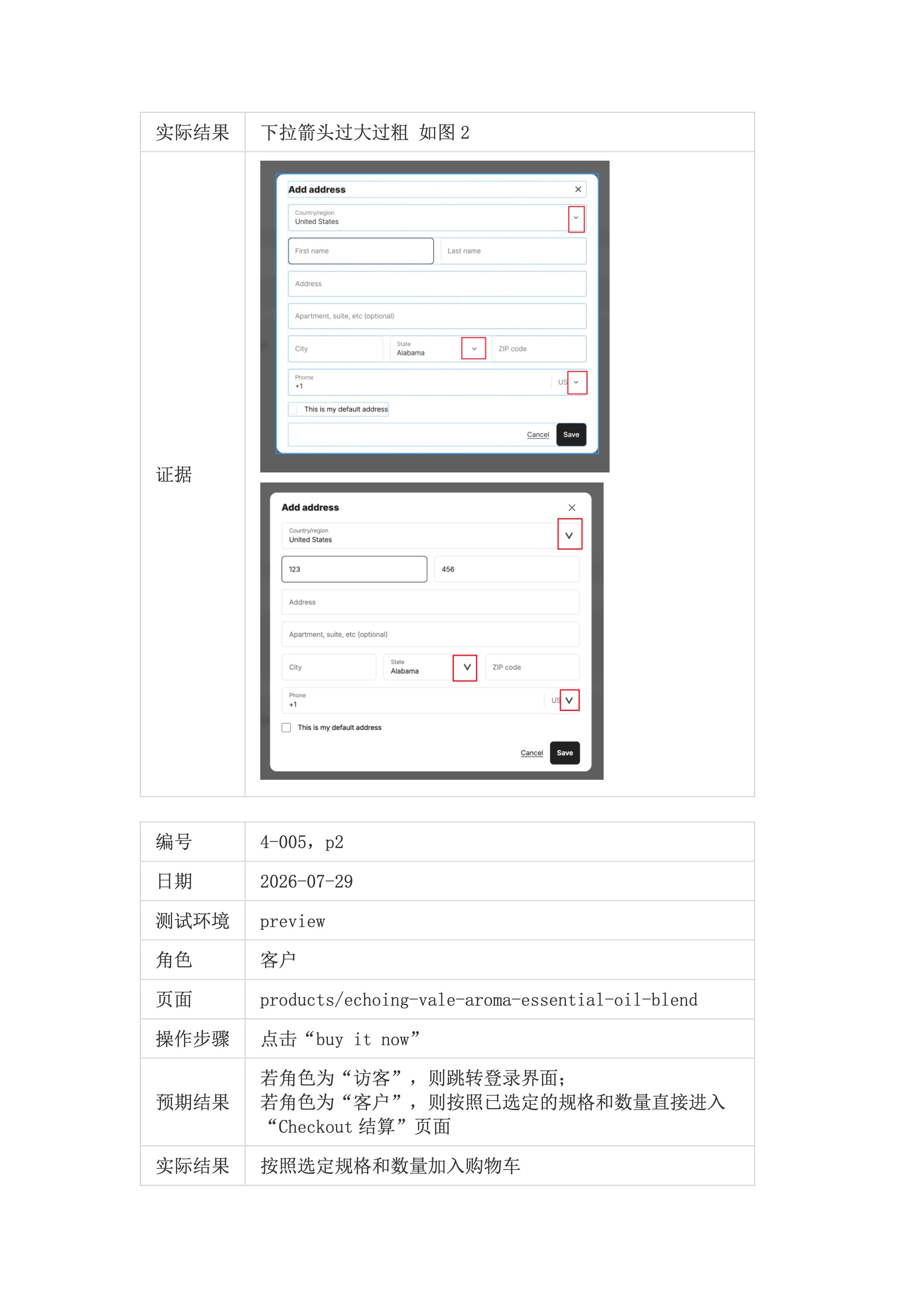
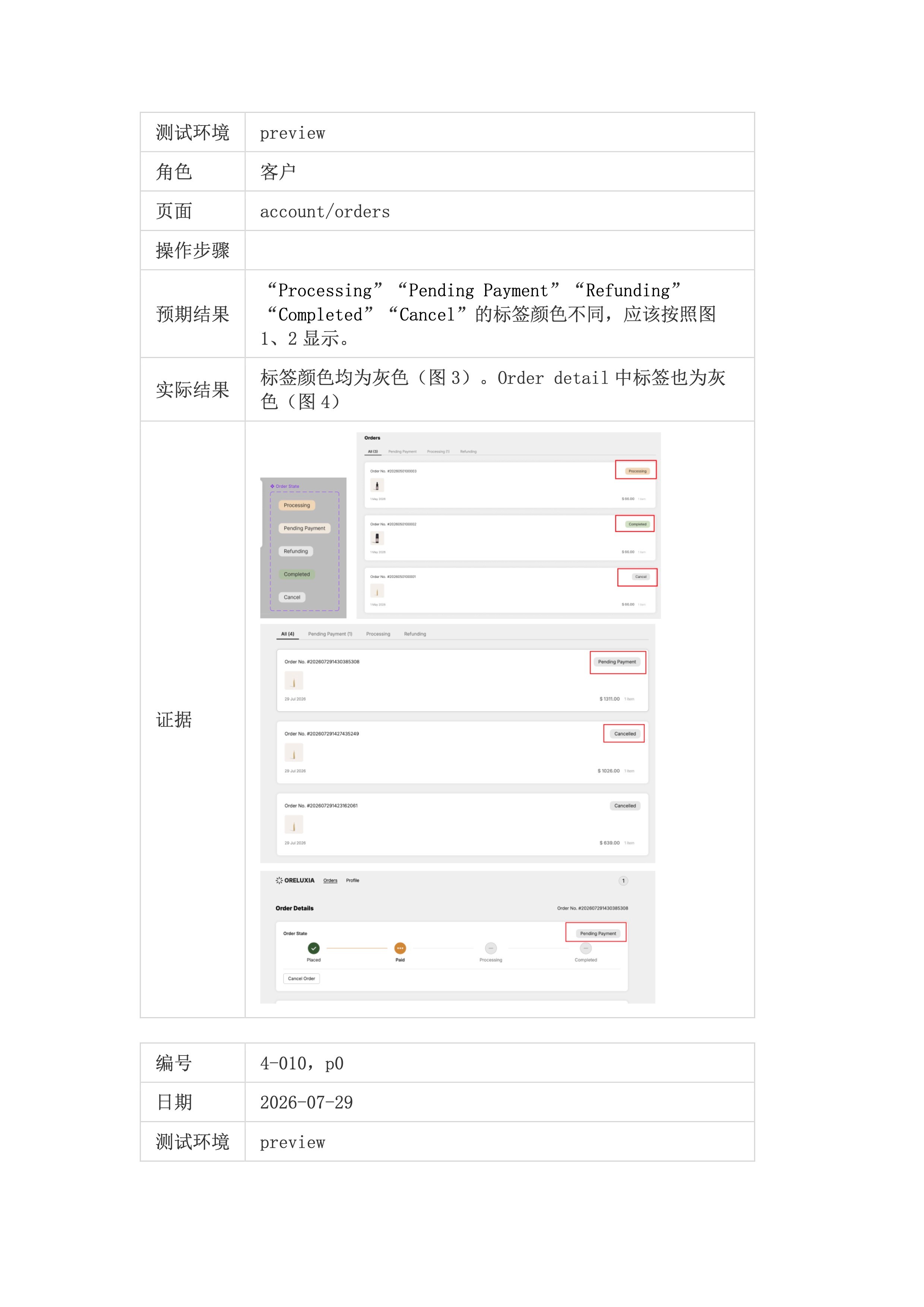
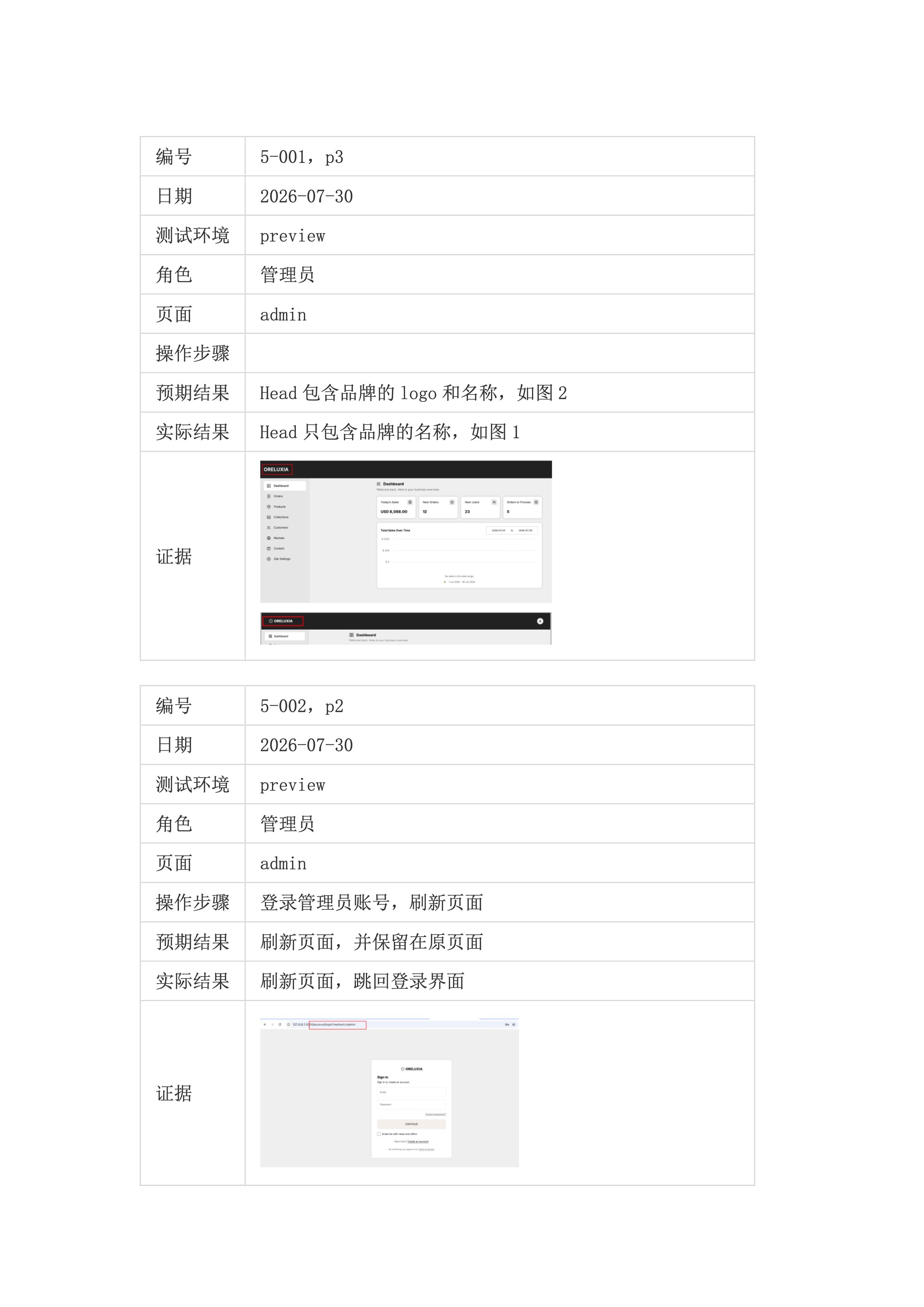
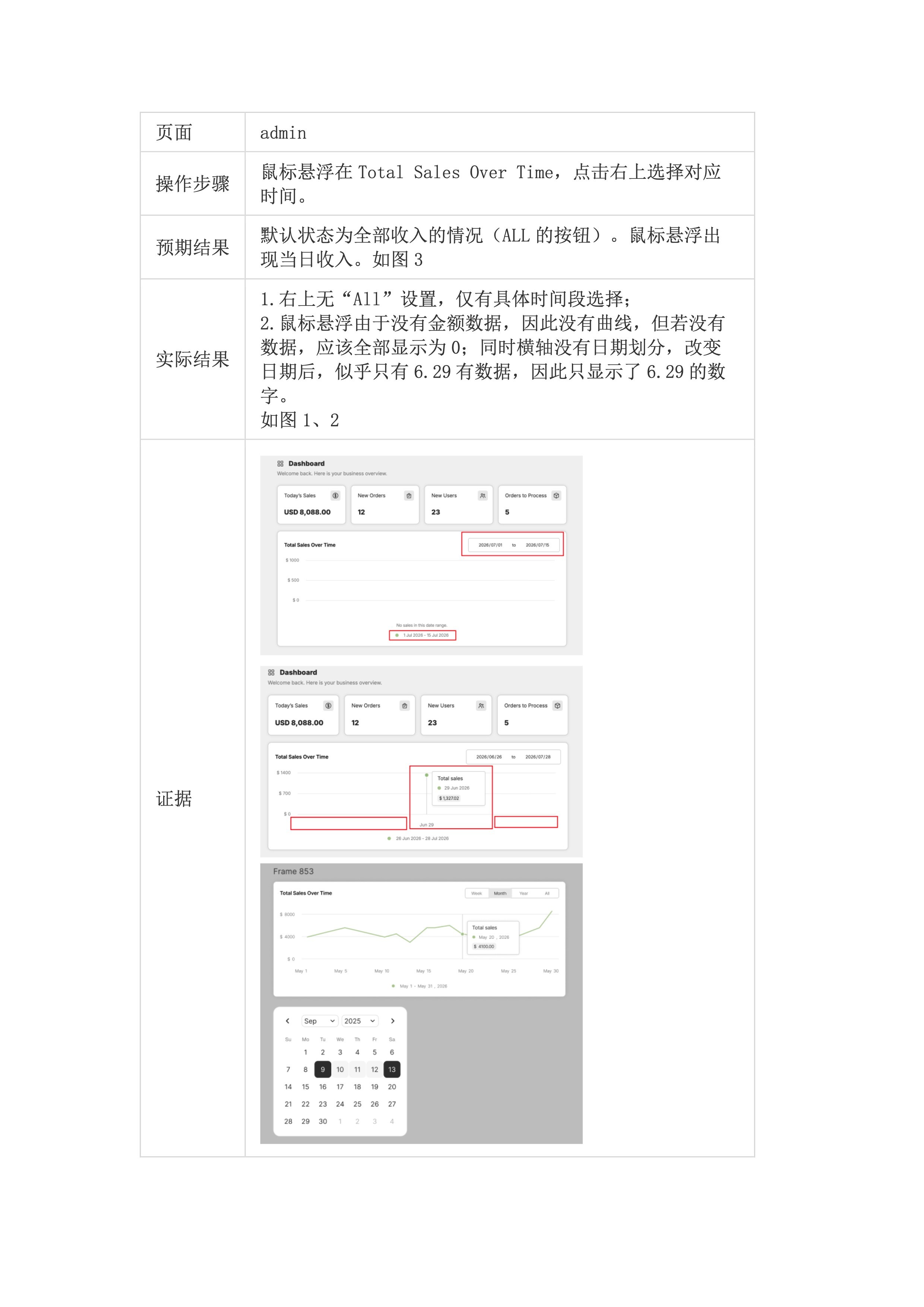
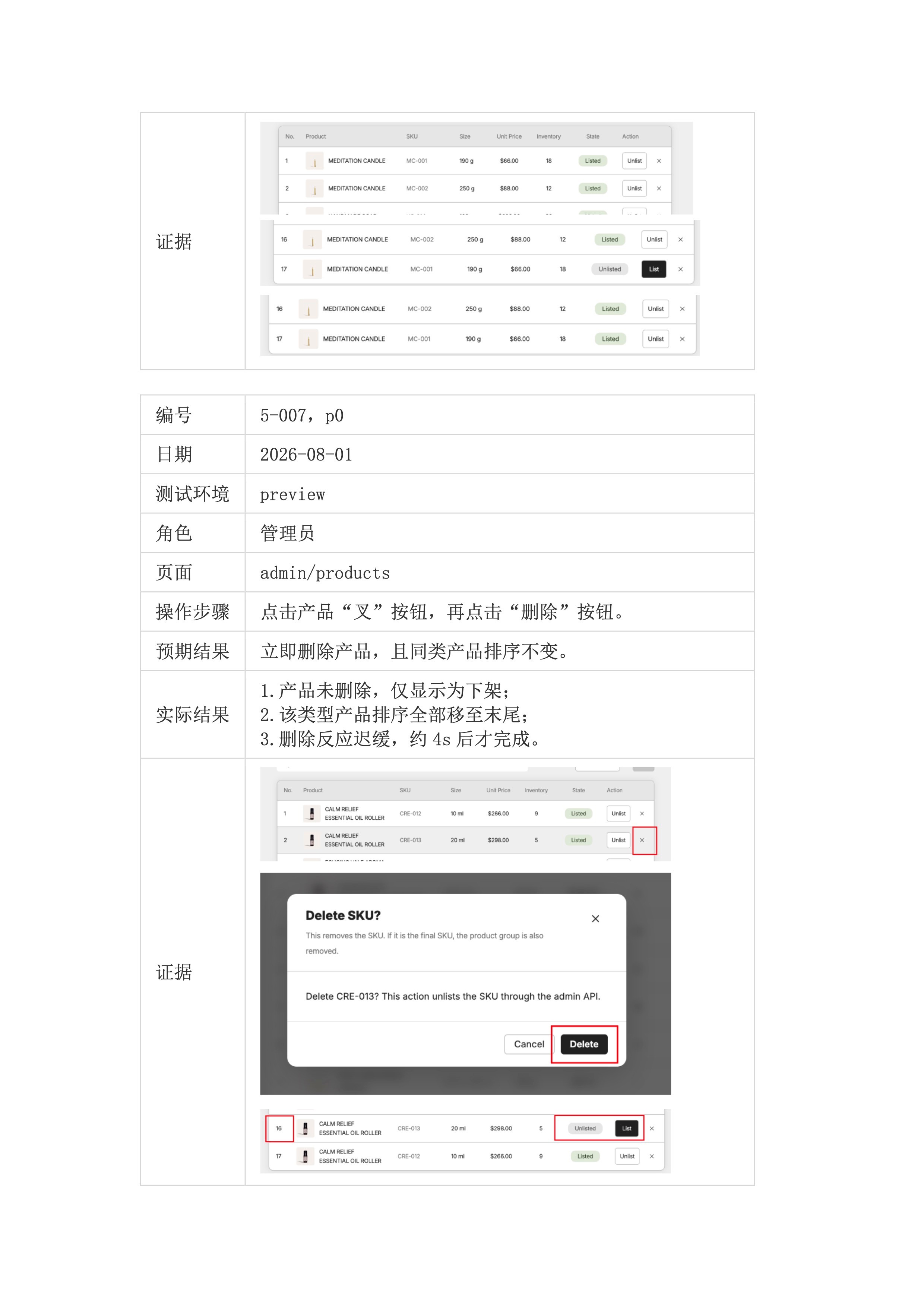
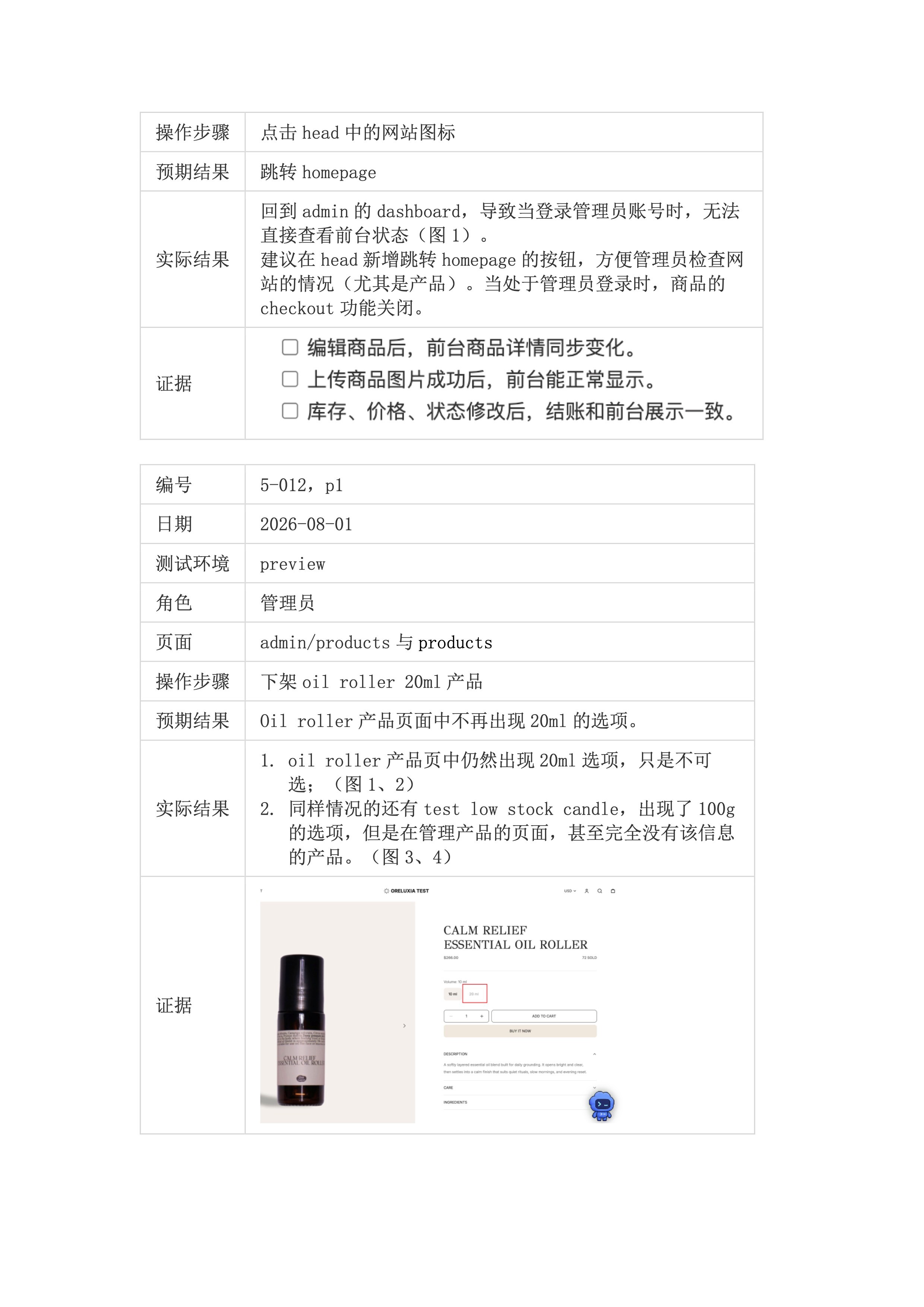
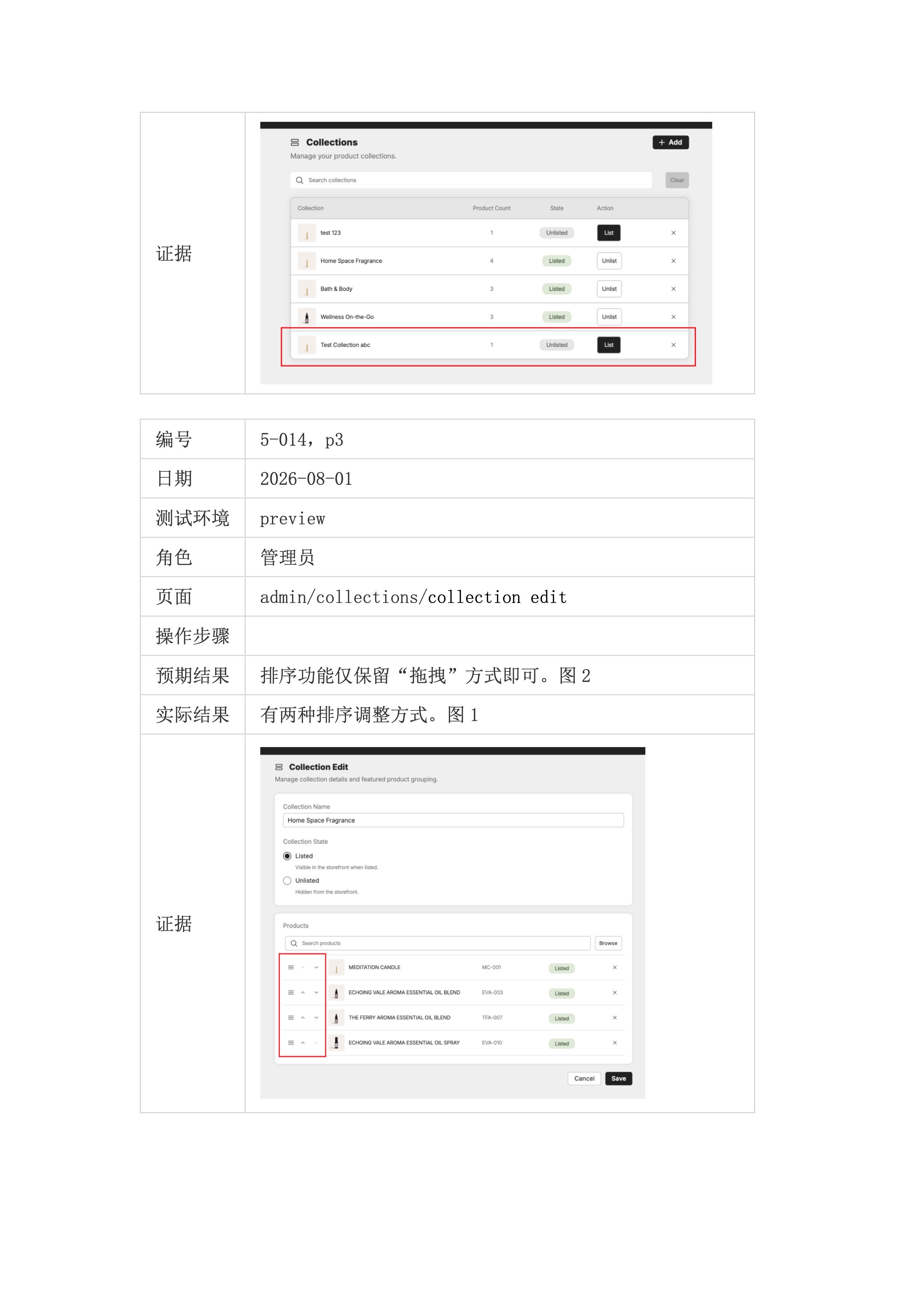
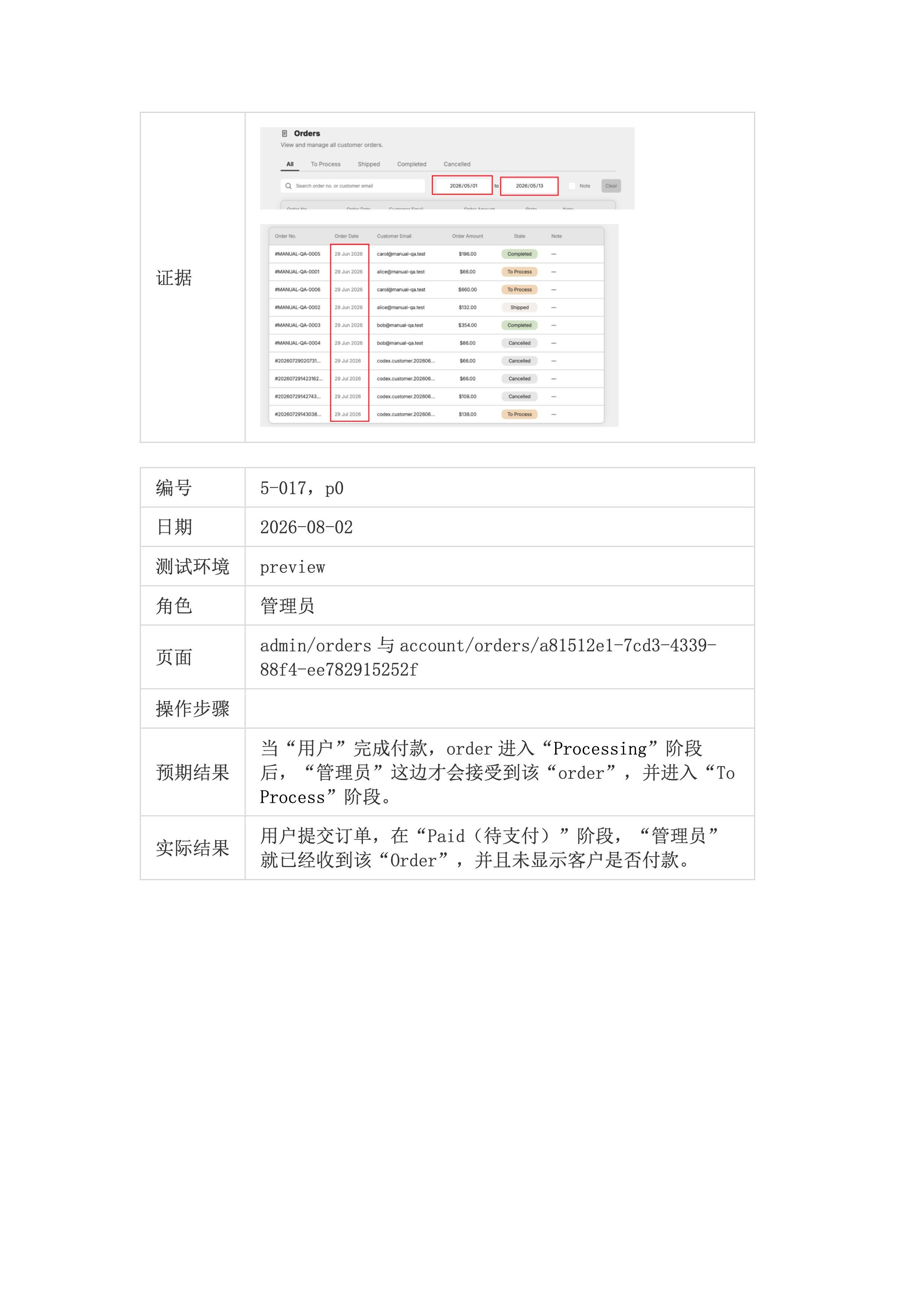
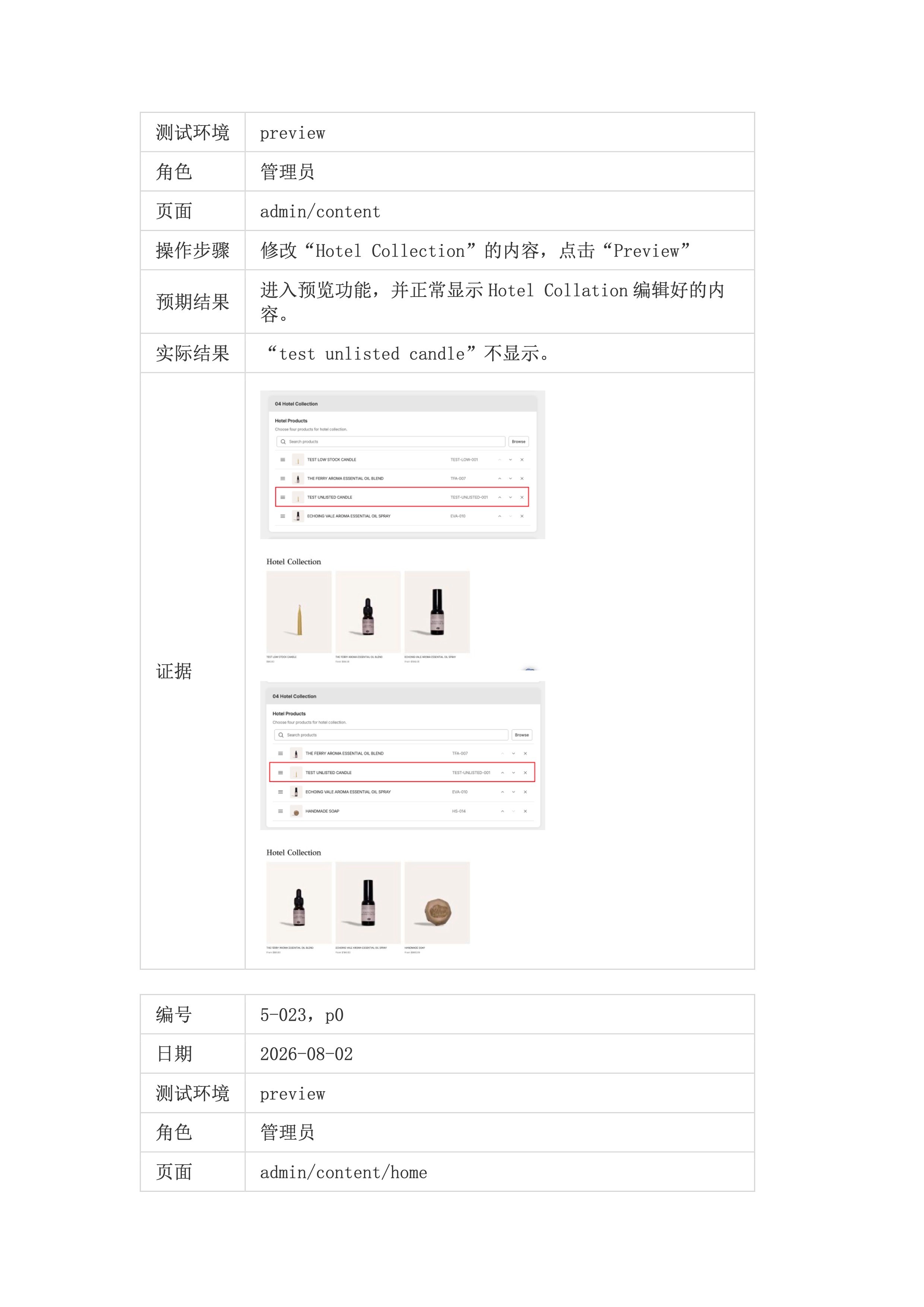
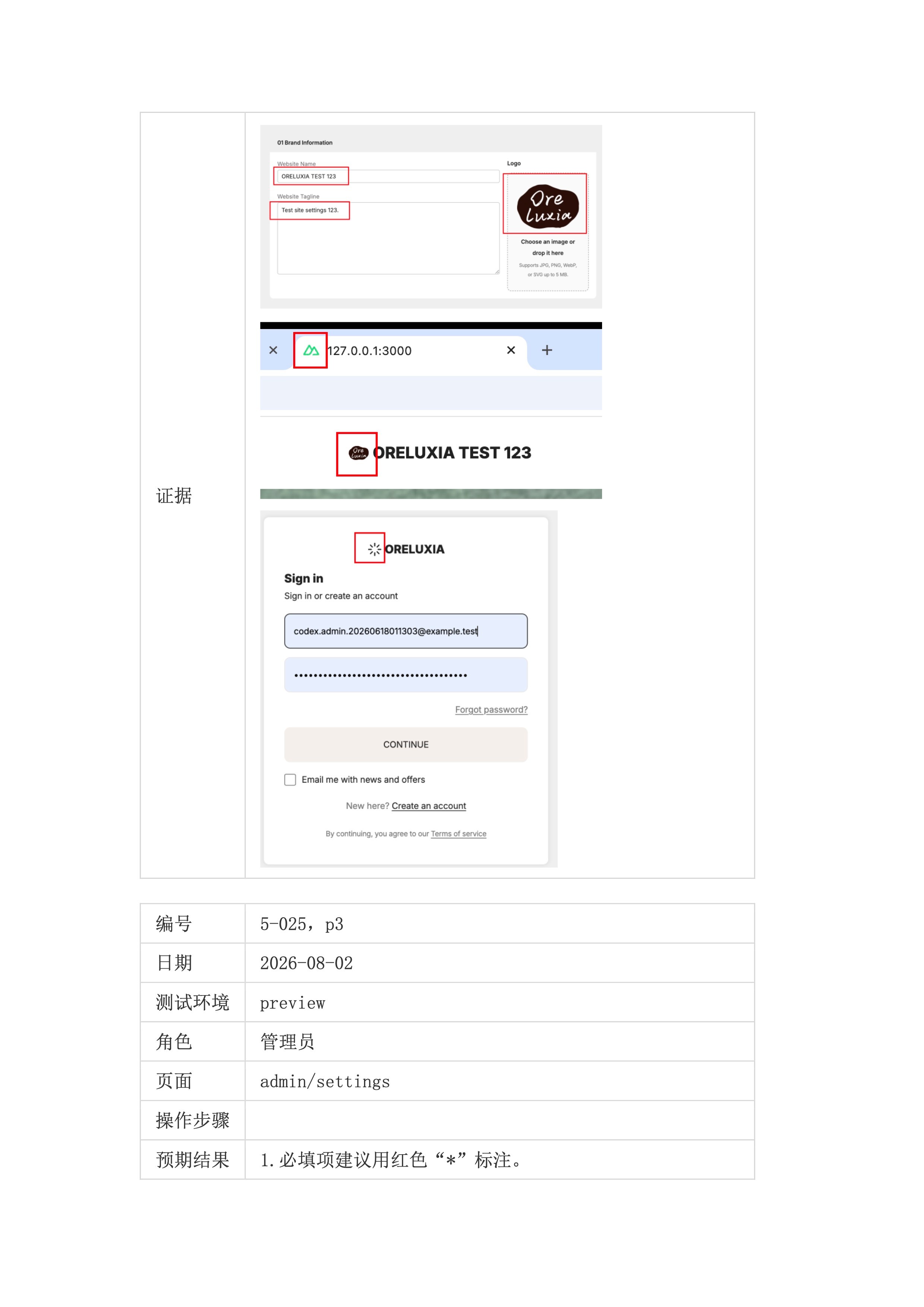
I treated testing as both a technical process and a marketing method. On the website, I tested visitor, customer, and administrator journeys across navigation, search, accounts, cart persistence, checkout, orders, products, customers, publishing, and site settings. I documented issues by page, action, expected result, actual result, priority, and visual evidence, then resolved system-critical problems before refining smaller visual details.
These tests taught me that marketing is not simply promotion. It is the ability to form a hypothesis, change one meaningful variable, observe customer behavior, and use the result to make a clearer decision about the product, price, presentation, or message.
What I Learned
Designing More Than a Storefront
Oreluxia taught me that building a brand requires more than creating attractive products. I learned to move from an initial observation to market research, from survey findings to positioning, and from offline customer conversations to measurable business decisions.
Selling at physical markets taught me to watch how people actually responded rather than relying only on what they said they preferred. Tracking customer acquisition cost, conversion rate, average order value, and repeat purchase rate helped me understand the health of the business behind the sales total. Developing the website then showed me how customer experience depends on less visible systems such as data persistence, order status, fulfillment, and content publishing.
My experiments with packaging, price, and copy strengthened my understanding of marketing as a research discipline. I learned to use evidence to refine a brand while preserving a consistent point of view. Most importantly, I learned how to carry an independent idea across research, product development, sales, design, technology, and business operations.
Next project


2026 FAYE
ORELUXIA
Turning fragrance into a spatial experience
ROLE
Founder
Brand Strategist
Product & E-commerce Builder
Duration
September 2024 – Present
WEBSITE
https://oreluxia.site/OUTCOME
2,500+ products sold since the brand was founded
Origin Story & Brand Philosophy
Making Calm Part of Everyday Life
I founded Oreluxia in September 2024 after asking a simple question: why should a moment of calm require a special place, a complicated ritual, or a large amount of time? In busy modern life, spas, confusing ingredient lists, and demanding routines can make restoration feel distant. I wanted to turn fragrance into a small, accessible pause within an ordinary day.
Before deciding what the brand should become, I began by studying the market. I surveyed 100 students about their fragrance habits, purchase motivations, preferred price ranges, packaging expectations, and the situations in which they used scented products. I also compared established brands such as Yankee Candle with smaller niche brands, focusing on differences in product range, pricing, visual identity, storytelling, customer relationships, and perceived value. This research helped me gradually define Oreluxia as an accessible yet thoughtful fragrance brand built around everyday rituals rather than occasional luxury.
I developed the brand around natural plant essential oils, small-batch craftsmanship, and recyclable or biodegradable packaging. I chose light as its central image—not only as decoration, but as a symbol of steadiness, awareness, and returning to oneself. Through Oreluxia, I present fragrance as something that can move through daily life, from commuting and working late to resting at home or entering a hotel room. My goal is to make calm feel portable, personal, and attainable.
Founder Role & Responsibilities
Building the Brand as an Independent Project
I created Oreluxia as an independent personal project and led the process from early research to product sales and digital expansion. My responsibilities included market analysis, student surveys, competitor research, brand positioning, pricing, product selection, packaging direction, offline selling, customer feedback, business-data tracking, website design, e-commerce development, content, and marketing experiments.
I began by testing the brand through offline markets. These events gave me direct access to customer questions, hesitations, product preferences, and purchase decisions. Rather than treating each event only as an opportunity to sell products, I recorded the data behind the sales, including customer acquisition cost, conversion rate, average order value, and repeat purchase rate. I used these measures to understand which products attracted attention, which price points encouraged purchase, and which customers were most likely to return.
At the end of 2025, I began developing Oreluxia’s online store. This moved the project from a small offline brand into a connected e-commerce system and gave me new ways to study customer behavior through product-page visits, clicks, cart activity, orders, and repeat
Audience & Experience Principles
Designing for Moments Rather Than Demographics
My survey of 100 students showed me that customers did not choose fragrance only by age or identity. They often began with a specific moment: focusing during a commute, recovering after work, settling before sleep, refreshing a room, choosing a gift, or carrying a familiar sense of calm while traveling.
I used these findings to establish four experience principles: calm should feel accessible; product information should be clear and trustworthy; shopping should remain quiet without becoming confusing; and fragrance should adapt to different moods and spaces. These principles guided my product decisions, pricing, brand voice, packaging, offline presentation, and website experience.
I also learned to distinguish stated preferences from actual behavior. Survey responses helped me form hypotheses, while offline conversion, average order value, repeat purchases, and later online behavior showed me whether those hypotheses held up in real purchasing situations.
Product Ecosystem
Designing a System of Everyday Rituals
I developed Oreluxia as a connected product ecosystem that includes meditation candles, aromatherapy essential oils, essential oil mist, handmade soap, and a Hotel Collection. Each format creates a different relationship between fragrance, time, the body, and the surrounding space.
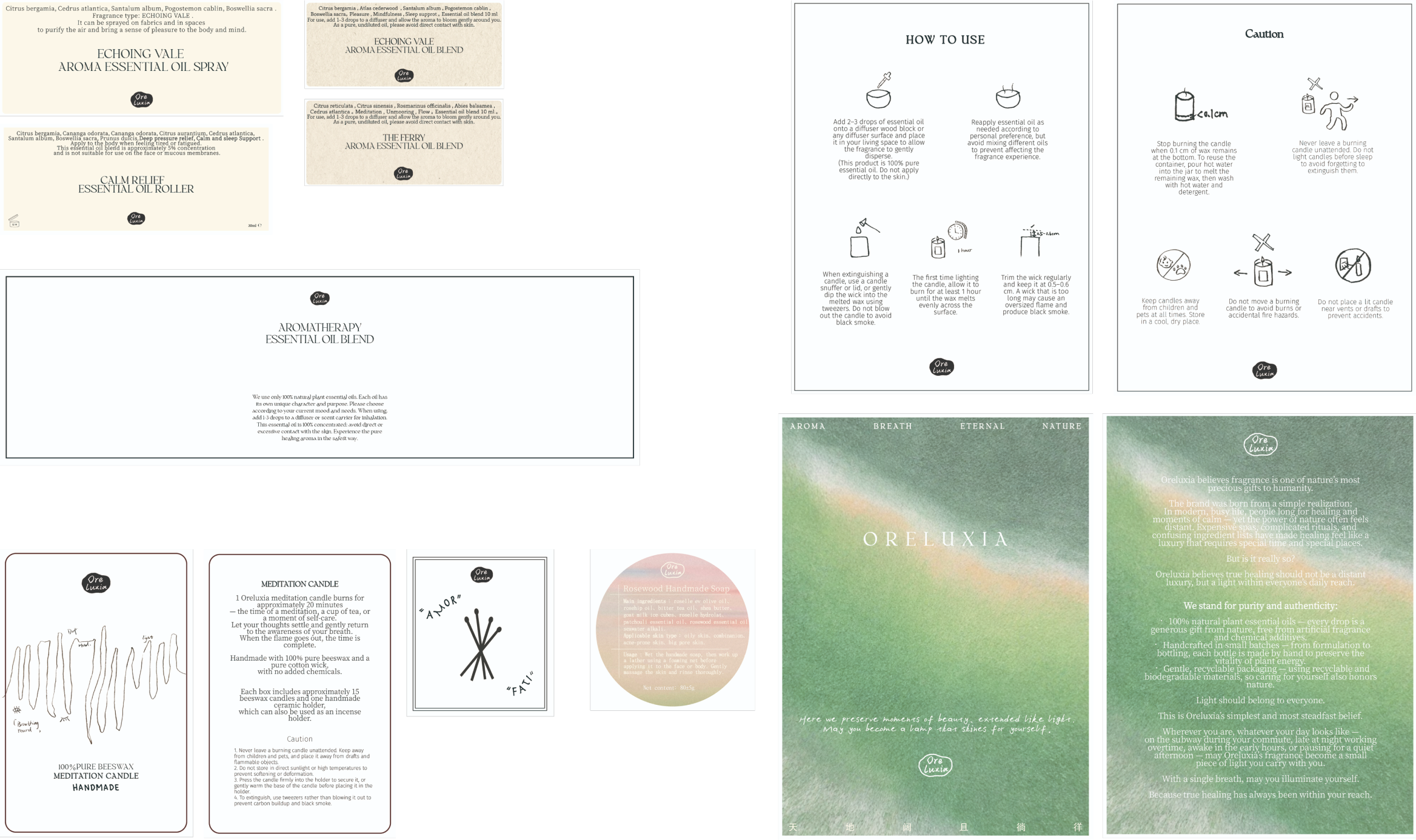
The Kindlight meditation candle makes this idea especially tangible. One candle burns for approximately twenty minutes—the length of a meditation, a cup of tea, or a short period of self-care. It is handmade with 100% pure beeswax and a cotton wick. Each box contains approximately fifteen candles and a ceramic holder that can also hold incense.
I positioned essential oils for focused scent rituals, mist as a portable and immediate format, and handmade soap as a way to connect fragrance with a familiar daily action. I organized these products into clear use cases and collections so the brand could offer more than isolated objects: it could support a sequence of small rituals across everyday life.
From Fragrance to Space
How Can a Scent Reflect the Character of a Hotel?
I became interested in how fragrance changes when it moves from an individual product into a shared hotel environment. A scent that feels calming in a guest room may be too strong for a lobby, unsuitable for dining, or inconsistent with the property’s identity.
Using Renaissance Hotel as an application context, I developed a matching approach that begins with the hotel rather than the product. I considered the property’s visual character, guest profile, room function, service sequence, time of day, scent intensity, and method of delivery. I then used these factors to determine whether an oil, mist, soap, candle, or take-home product would be appropriate for a particular touchpoint.
My aim was not to make fragrance the focus of every space. I wanted scent to support the atmosphere, reduce the feeling of unfamiliarity, and strengthen a coherent memory of the stay.
Visual Identity & Art Direction
Translating Scent into a Visual Language
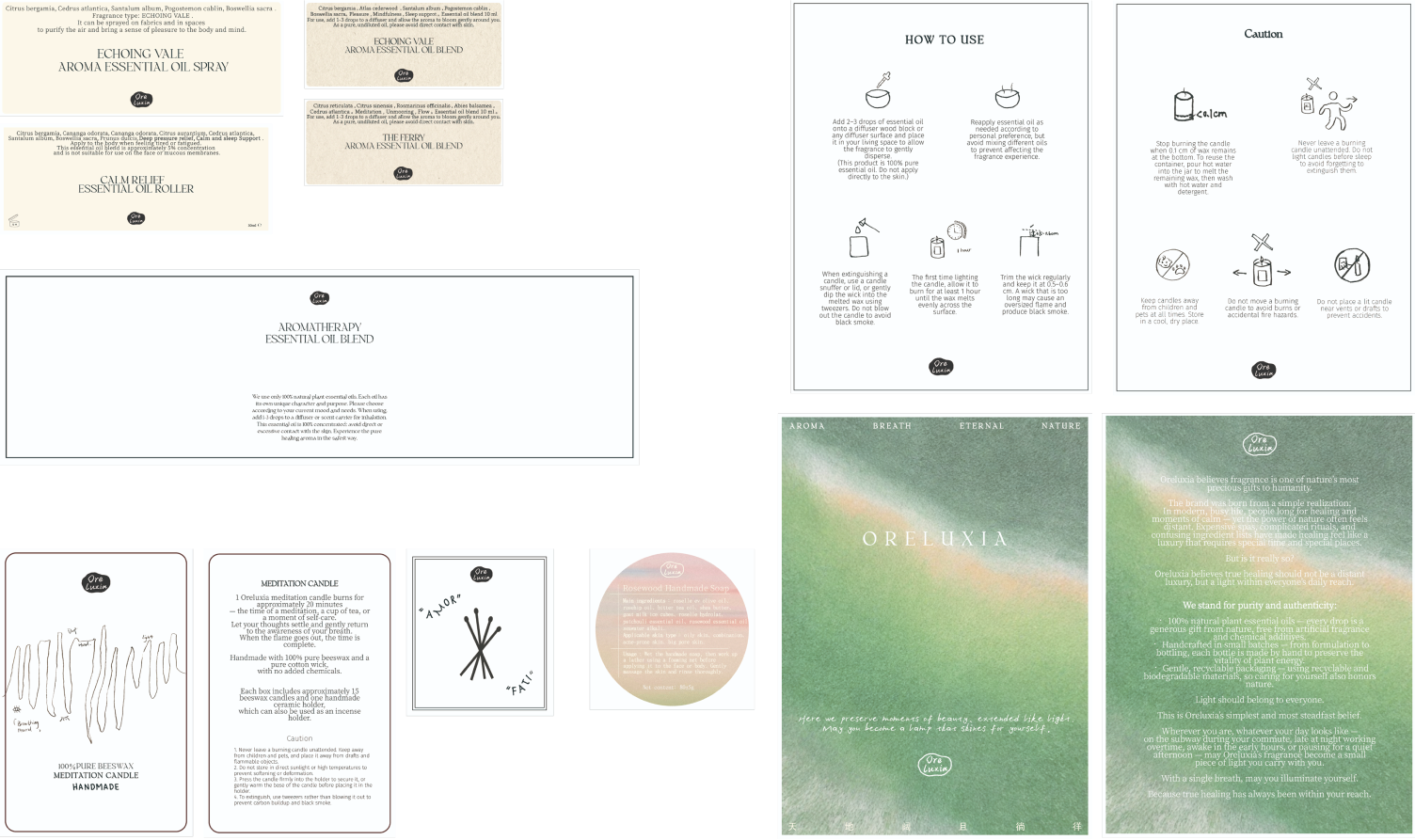
Because fragrance is invisible, I used color, space, photography, typography, and packaging to suggest its emotional character. I selected muted natural tones and generous white space to create a quiet environment, while editorial typography gave the brand a composed voice.
I used product still life, natural materials, textured light, and blurred scenes to suggest memory and movement without illustrating scent literally. For the physical product, I treated packaging as both a practical container and a key part of the customer’s first impression.
I did not assume that one packaging direction would work best. I compared different packaging versions and later used A/B tests to evaluate how changes in color, hierarchy, imagery, and product information affected attention and purchase behavior. These experiments helped me separate my personal visual preferences from the choices that customers understood and responded to most clearly.
Website Architecture & Product Discovery
Helping Customers Discover an Invisible Product
At the end of 2025, I began designing and developing Oreluxia’s online store. Because customers cannot smell a product through a screen, I needed to help them choose through context, organization, ingredients, use cases, and relationships between collections. I designed several paths into the catalog: Featured Collection, Hotel Collection, All Products, category browsing, search, and recommended products within navigation.
I connected discovery with action. Customers could move from a collection to a product, review details and related items, add a selection to the cart, and continue to checkout. Currency and market settings supported different locations without interrupting the core journey.
Mapping the complete system also revealed dependencies between the storefront, accounts, products, orders, markets, content, and site settings. I therefore built the website as one connected service rather than a group of independent pages. After the online store opened, all products across the website reached a combined sales volume of 1,050 units.
Shopping Journey
From Discovery to Checkout
I designed the shopping journey as a continuous path from interest to decision. Customers begin by browsing collections, searching for a product, or selecting a recommendation. On the product page, I combined imagery, price, size, quantity, description, care instructions, ingredients, and related items.
This information is especially important for fragrance because customers must make a sensory decision without physically experiencing the product. I used clear content to reduce uncertainty while preserving the brand’s quiet visual tone. I also tested different product descriptions and calls to action to understand which wording produced a higher click-through rate.
After customers choose an item, they can review it in the cart without losing their place in the storefront. I designed checkout to bring together the selected product, quantity, subtotal, and shipping address. Once an order is created, it becomes part of the customer account, connecting the transaction with saved addresses, order status, order history, and my fulfillment workflow within one consistent service journey.
The online store accelerated Oreluxia’s growth. Of the 2,500+ products sold since I founded the brand, 1,050 were sold through the website after it opened.
Admin & Business Operations
Designing the Relationship Beyond Purchase
I designed and developed registration, sign-in, password recovery, profile editing, address management, order history, and order details. These functions helped the store remain useful after a customer left the product page.
I created both empty and active states, supporting customers with no orders as well as those returning to review an existing purchase. Maintaining information across sessions also connected customer actions with my operational view, making account reliability part of the wider service experience.
The account system also gave me a clearer foundation for understanding repeat behavior. Alongside direct customer feedback, I used order histories and repeat purchases to evaluate whether Oreluxia was building an ongoing customer relationship rather than generating only one-time transactions.
Designing for the Work Behind the Store
I developed an administrator system so I could support the customer experience with clear operational tools. The dashboard brings together sales, new orders, new users, pending work, and performance over time. Product and collection modules help me manage information, listing status, grouping, and display order.
I connected purchases with fulfillment and customer management through the order and customer areas. I used market settings to organize regions and currencies, while the content system controls the homepage, About page, recommendations, return policies, and shipping information. Site settings coordinate shared brand information across the platform.
I also brought the business measures I first tracked at offline markets into my wider decision-making process. I monitored customer acquisition cost, conversion rate, average order value, and repeat purchase rate instead of looking only at total sales. These measures helped me compare channels, evaluate marketing decisions, and understand whether growth was efficient and sustainable.
From Design to Code
Building the Experience as a Working System
I translated the visual direction, shopping journey, customer account, and administrator workflows into a working website. I connected the public storefront with product information, saved addresses, carts, checkout, orders, collections, markets, content, and site settings.
I separated the project into application, server, shared, database, and testing areas. Building these relationships required me to consider state, persistence, permissions, loading behavior, errors, and the connection between front-end actions and back-end data. Pages that appeared visually independent often depended on the same information.
This process changed how I evaluated design decisions. A simple interaction could create several technical states, while a small data inconsistency could interrupt an entire customer or administrator journey. Moving from interface design to development revealed the hidden structure required to make the experience reliable across the complete commerce system.
Testing & Iteration
Testing the Product, Price, Packaging, and Message
I treated testing as both a technical process and a marketing method. On the website, I tested visitor, customer, and administrator journeys across navigation, search, accounts, cart persistence, checkout, orders, products, customers, publishing, and site settings. I documented issues by page, action, expected result, actual result, priority, and visual evidence, then resolved system-critical problems before refining smaller visual details.
These tests taught me that marketing is not simply promotion. It is the ability to form a hypothesis, change one meaningful variable, observe customer behavior, and use the result to make a clearer decision about the product, price, presentation, or message.
What I Learned
Designing More Than a Storefront
Oreluxia taught me that building a brand requires more than creating attractive products. I learned to move from an initial observation to market research, from survey findings to positioning, and from offline customer conversations to measurable business decisions.
Selling at physical markets taught me to watch how people actually responded rather than relying only on what they said they preferred. Tracking customer acquisition cost, conversion rate, average order value, and repeat purchase rate helped me understand the health of the business behind the sales total. Developing the website then showed me how customer experience depends on less visible systems such as data persistence, order status, fulfillment, and content publishing.
My experiments with packaging, price, and copy strengthened my understanding of marketing as a research discipline. I learned to use evidence to refine a brand while preserving a consistent point of view. Most importantly, I learned how to carry an independent idea across research, product development, sales, design, technology, and business operations.
Next project
2026 FAYE
ORELUXIA
Turning fragrance into a spatial experience
ROLE
Founder
Brand Strategist
Product & E-commerce Builder
Duration
September 2024 – Present
WEBSITE
https://oreluxia.site/OUTCOME
2,500+ products sold since the brand was founded
Origin Story & Brand Philosophy
Making Calm Part of Everyday Life
I founded Oreluxia in September 2024 after asking a simple question: why should a moment of calm require a special place, a complicated ritual, or a large amount of time? In busy modern life, spas, confusing ingredient lists, and demanding routines can make restoration feel distant. I wanted to turn fragrance into a small, accessible pause within an ordinary day.
Before deciding what the brand should become, I began by studying the market. I surveyed 100 students about their fragrance habits, purchase motivations, preferred price ranges, packaging expectations, and the situations in which they used scented products. I also compared established brands such as Yankee Candle with smaller niche brands, focusing on differences in product range, pricing, visual identity, storytelling, customer relationships, and perceived value. This research helped me gradually define Oreluxia as an accessible yet thoughtful fragrance brand built around everyday rituals rather than occasional luxury.
I developed the brand around natural plant essential oils, small-batch craftsmanship, and recyclable or biodegradable packaging. I chose light as its central image—not only as decoration, but as a symbol of steadiness, awareness, and returning to oneself. Through Oreluxia, I present fragrance as something that can move through daily life, from commuting and working late to resting at home or entering a hotel room. My goal is to make calm feel portable, personal, and attainable.
Founder Role & Responsibilities
Building the Brand as an Independent Project
I created Oreluxia as an independent personal project and led the process from early research to product sales and digital expansion. My responsibilities included market analysis, student surveys, competitor research, brand positioning, pricing, product selection, packaging direction, offline selling, customer feedback, business-data tracking, website design, e-commerce development, content, and marketing experiments.
I began by testing the brand through offline markets. These events gave me direct access to customer questions, hesitations, product preferences, and purchase decisions. Rather than treating each event only as an opportunity to sell products, I recorded the data behind the sales, including customer acquisition cost, conversion rate, average order value, and repeat purchase rate. I used these measures to understand which products attracted attention, which price points encouraged purchase, and which customers were most likely to return.
At the end of 2025, I began developing Oreluxia’s online store. This moved the project from a small offline brand into a connected e-commerce system and gave me new ways to study customer behavior through product-page visits, clicks, cart activity, orders, and repeat
Audience & Experience Principles
Designing for Moments Rather Than Demographics
My survey of 100 students showed me that customers did not choose fragrance only by age or identity. They often began with a specific moment: focusing during a commute, recovering after work, settling before sleep, refreshing a room, choosing a gift, or carrying a familiar sense of calm while traveling.
I used these findings to establish four experience principles: calm should feel accessible; product information should be clear and trustworthy; shopping should remain quiet without becoming confusing; and fragrance should adapt to different moods and spaces. These principles guided my product decisions, pricing, brand voice, packaging, offline presentation, and website experience.
I also learned to distinguish stated preferences from actual behavior. Survey responses helped me form hypotheses, while offline conversion, average order value, repeat purchases, and later online behavior showed me whether those hypotheses held up in real purchasing situations.
Product Ecosystem
Designing a System of Everyday Rituals
I developed Oreluxia as a connected product ecosystem that includes meditation candles, aromatherapy essential oils, essential oil mist, handmade soap, and a Hotel Collection. Each format creates a different relationship between fragrance, time, the body, and the surrounding space.
The Kindlight meditation candle makes this idea especially tangible. One candle burns for approximately twenty minutes—the length of a meditation, a cup of tea, or a short period of self-care. It is handmade with 100% pure beeswax and a cotton wick. Each box contains approximately fifteen candles and a ceramic holder that can also hold incense.
I positioned essential oils for focused scent rituals, mist as a portable and immediate format, and handmade soap as a way to connect fragrance with a familiar daily action. I organized these products into clear use cases and collections so the brand could offer more than isolated objects: it could support a sequence of small rituals across everyday life.
From Fragrance to Space
How Can a Scent Reflect the Character of a Hotel?
I became interested in how fragrance changes when it moves from an individual product into a shared hotel environment. A scent that feels calming in a guest room may be too strong for a lobby, unsuitable for dining, or inconsistent with the property’s identity.
Using Renaissance Hotel as an application context, I developed a matching approach that begins with the hotel rather than the product. I considered the property’s visual character, guest profile, room function, service sequence, time of day, scent intensity, and method of delivery. I then used these factors to determine whether an oil, mist, soap, candle, or take-home product would be appropriate for a particular touchpoint.
My aim was not to make fragrance the focus of every space. I wanted scent to support the atmosphere, reduce the feeling of unfamiliarity, and strengthen a coherent memory of the stay.
Visual Identity & Art Direction
Translating Scent into a Visual Language
Because fragrance is invisible, I used color, space, photography, typography, and packaging to suggest its emotional character. I selected muted natural tones and generous white space to create a quiet environment, while editorial typography gave the brand a composed voice.
I used product still life, natural materials, textured light, and blurred scenes to suggest memory and movement without illustrating scent literally. For the physical product, I treated packaging as both a practical container and a key part of the customer’s first impression.
I did not assume that one packaging direction would work best. I compared different packaging versions and later used A/B tests to evaluate how changes in color, hierarchy, imagery, and product information affected attention and purchase behavior. These experiments helped me separate my personal visual preferences from the choices that customers understood and responded to most clearly.
Website Architecture & Product Discovery
Helping Customers Discover an Invisible Product
At the end of 2025, I began designing and developing Oreluxia’s online store. Because customers cannot smell a product through a screen, I needed to help them choose through context, organization, ingredients, use cases, and relationships between collections. I designed several paths into the catalog: Featured Collection, Hotel Collection, All Products, category browsing, search, and recommended products within navigation.
I connected discovery with action. Customers could move from a collection to a product, review details and related items, add a selection to the cart, and continue to checkout. Currency and market settings supported different locations without interrupting the core journey.
Mapping the complete system also revealed dependencies between the storefront, accounts, products, orders, markets, content, and site settings. I therefore built the website as one connected service rather than a group of independent pages. After the online store opened, all products across the website reached a combined sales volume of 1,050 units.
Shopping Journey
From Discovery to Checkout
I designed the shopping journey as a continuous path from interest to decision. Customers begin by browsing collections, searching for a product, or selecting a recommendation. On the product page, I combined imagery, price, size, quantity, description, care instructions, ingredients, and related items.
This information is especially important for fragrance because customers must make a sensory decision without physically experiencing the product. I used clear content to reduce uncertainty while preserving the brand’s quiet visual tone. I also tested different product descriptions and calls to action to understand which wording produced a higher click-through rate.
After customers choose an item, they can review it in the cart without losing their place in the storefront. I designed checkout to bring together the selected product, quantity, subtotal, and shipping address. Once an order is created, it becomes part of the customer account, connecting the transaction with saved addresses, order status, order history, and my fulfillment workflow within one consistent service journey.
The online store accelerated Oreluxia’s growth. Of the 2,500+ products sold since I founded the brand, 1,050 were sold through the website after it opened.
Admin & Business Operations
Designing the Relationship Beyond Purchase
I designed and developed registration, sign-in, password recovery, profile editing, address management, order history, and order details. These functions helped the store remain useful after a customer left the product page.
I created both empty and active states, supporting customers with no orders as well as those returning to review an existing purchase. Maintaining information across sessions also connected customer actions with my operational view, making account reliability part of the wider service experience.
The account system also gave me a clearer foundation for understanding repeat behavior. Alongside direct customer feedback, I used order histories and repeat purchases to evaluate whether Oreluxia was building an ongoing customer relationship rather than generating only one-time transactions.
Designing for the Work Behind the Store
I developed an administrator system so I could support the customer experience with clear operational tools. The dashboard brings together sales, new orders, new users, pending work, and performance over time. Product and collection modules help me manage information, listing status, grouping, and display order.
I connected purchases with fulfillment and customer management through the order and customer areas. I used market settings to organize regions and currencies, while the content system controls the homepage, About page, recommendations, return policies, and shipping information. Site settings coordinate shared brand information across the platform.
I also brought the business measures I first tracked at offline markets into my wider decision-making process. I monitored customer acquisition cost, conversion rate, average order value, and repeat purchase rate instead of looking only at total sales. These measures helped me compare channels, evaluate marketing decisions, and understand whether growth was efficient and sustainable.
From Design to Code
Building the Experience as a Working System
I translated the visual direction, shopping journey, customer account, and administrator workflows into a working website. I connected the public storefront with product information, saved addresses, carts, checkout, orders, collections, markets, content, and site settings.
I separated the project into application, server, shared, database, and testing areas. Building these relationships required me to consider state, persistence, permissions, loading behavior, errors, and the connection between front-end actions and back-end data. Pages that appeared visually independent often depended on the same information.
This process changed how I evaluated design decisions. A simple interaction could create several technical states, while a small data inconsistency could interrupt an entire customer or administrator journey. Moving from interface design to development revealed the hidden structure required to make the experience reliable across the complete commerce system.
Testing & Iteration
Testing the Product, Price, Packaging, and Message
I treated testing as both a technical process and a marketing method. On the website, I tested visitor, customer, and administrator journeys across navigation, search, accounts, cart persistence, checkout, orders, products, customers, publishing, and site settings. I documented issues by page, action, expected result, actual result, priority, and visual evidence, then resolved system-critical problems before refining smaller visual details.
These tests taught me that marketing is not simply promotion. It is the ability to form a hypothesis, change one meaningful variable, observe customer behavior, and use the result to make a clearer decision about the product, price, presentation, or message.
What I Learned
Designing More Than a Storefront
Oreluxia taught me that building a brand requires more than creating attractive products. I learned to move from an initial observation to market research, from survey findings to positioning, and from offline customer conversations to measurable business decisions.
Selling at physical markets taught me to watch how people actually responded rather than relying only on what they said they preferred. Tracking customer acquisition cost, conversion rate, average order value, and repeat purchase rate helped me understand the health of the business behind the sales total. Developing the website then showed me how customer experience depends on less visible systems such as data persistence, order status, fulfillment, and content publishing.
My experiments with packaging, price, and copy strengthened my understanding of marketing as a research discipline. I learned to use evidence to refine a brand while preserving a consistent point of view. Most importantly, I learned how to carry an independent idea across research, product development, sales, design, technology, and business operations.
Next project
2026 FAYE