Value Beyond Occupancy
A Hotel Revenue Management Study
ROLE
Independent Revenue Management Researcher
Financial Analyst
DURATION
January 2026 – June 2026
SKILLS
Demand Pattern Analysis
Pricing Strategy
OUTPUT
Booking-contribution framework
Pricing and channel recommendations
Project Overview
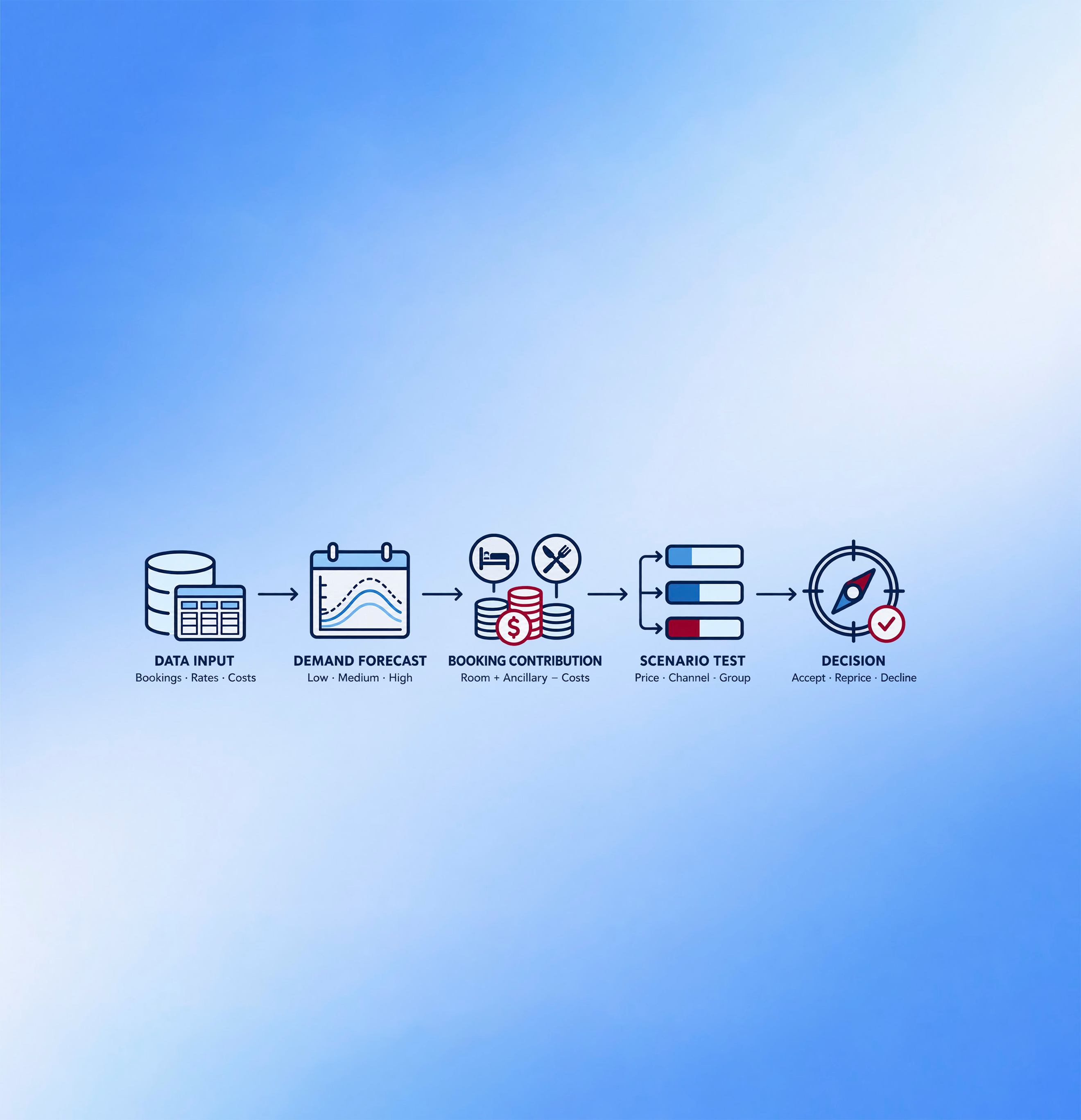
This project explores how an upscale hotel can increase the real value of each booking without compromising guest experience. It moves beyond
occupancy and room rate by analysing demand patterns, booking channels, acquisition costs and ancillary spending. The findings support an Excel revenue management tool that compares booking contribution, recommends pricing and channel actions, and evaluates group enquiries
under different demand scenarios. Historical backtesting and management review help assess whether the model can support practical hotel decisions.
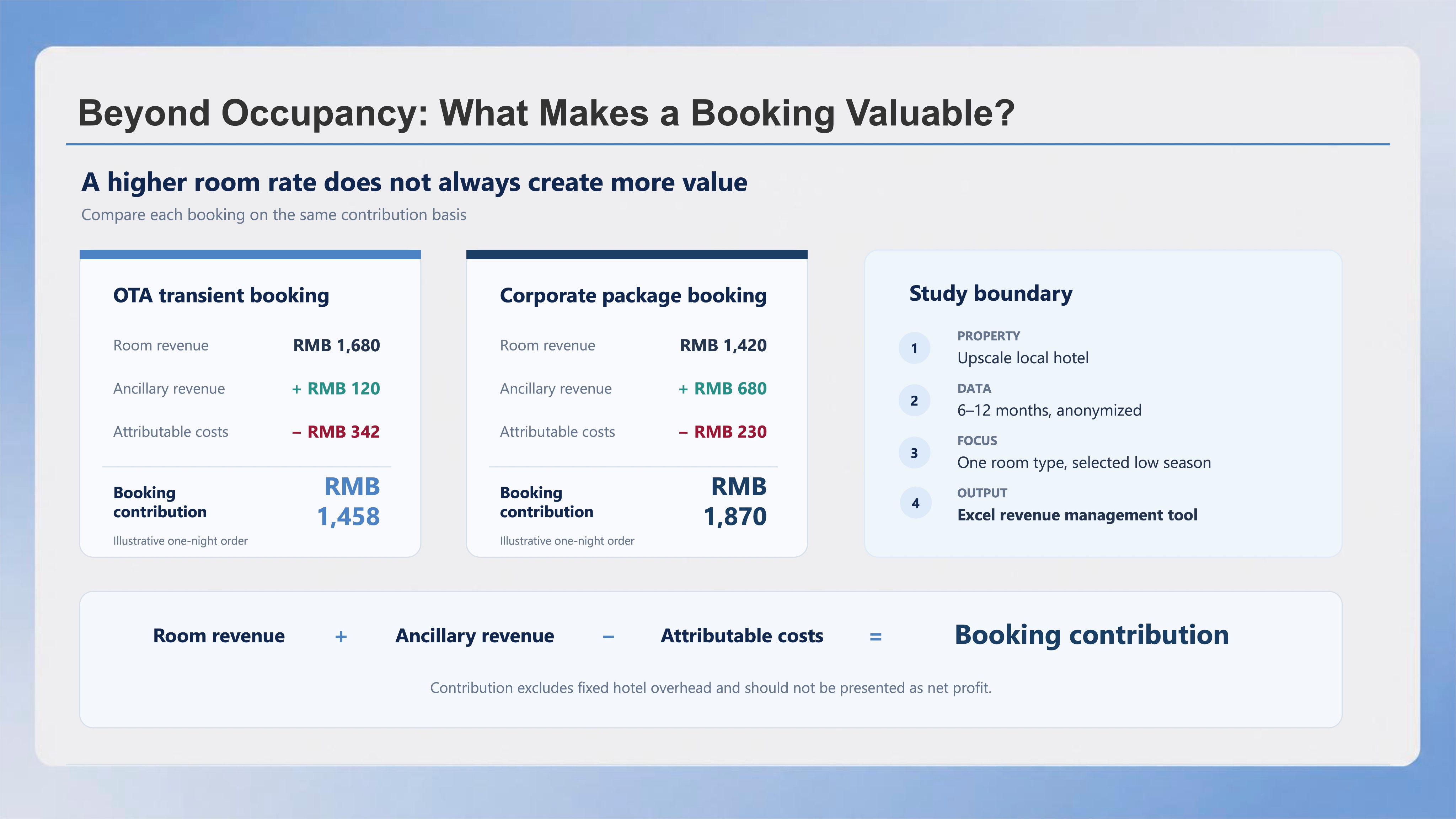
Beyond Occupancy: What Makes a Booking Valuable?
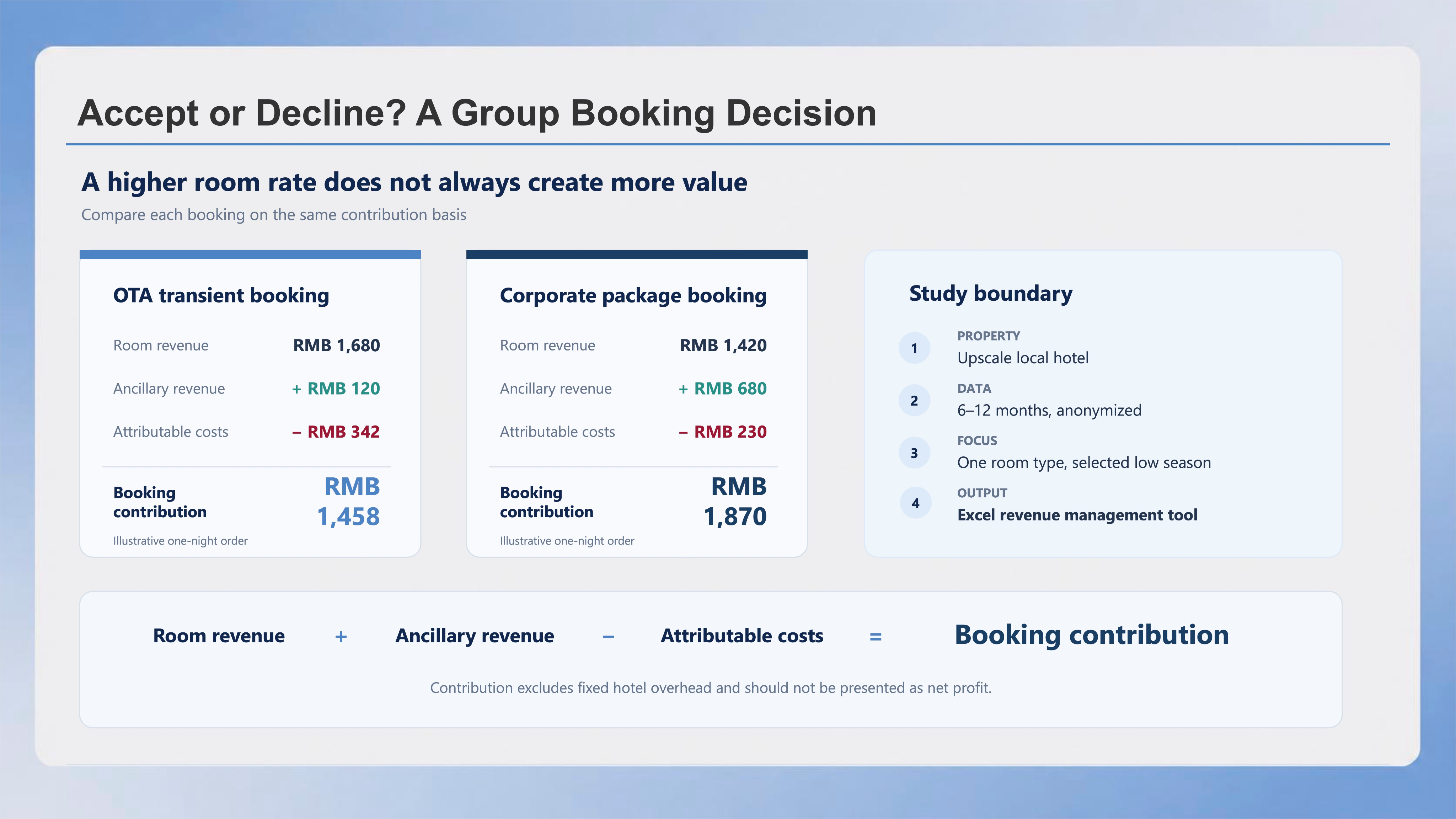
This page introduces the hotel context and asks whether higher occupancy always produces better financial results. Two example bookings show how room revenue, ancillary spending and attributable costs combine to create total booking contribution.
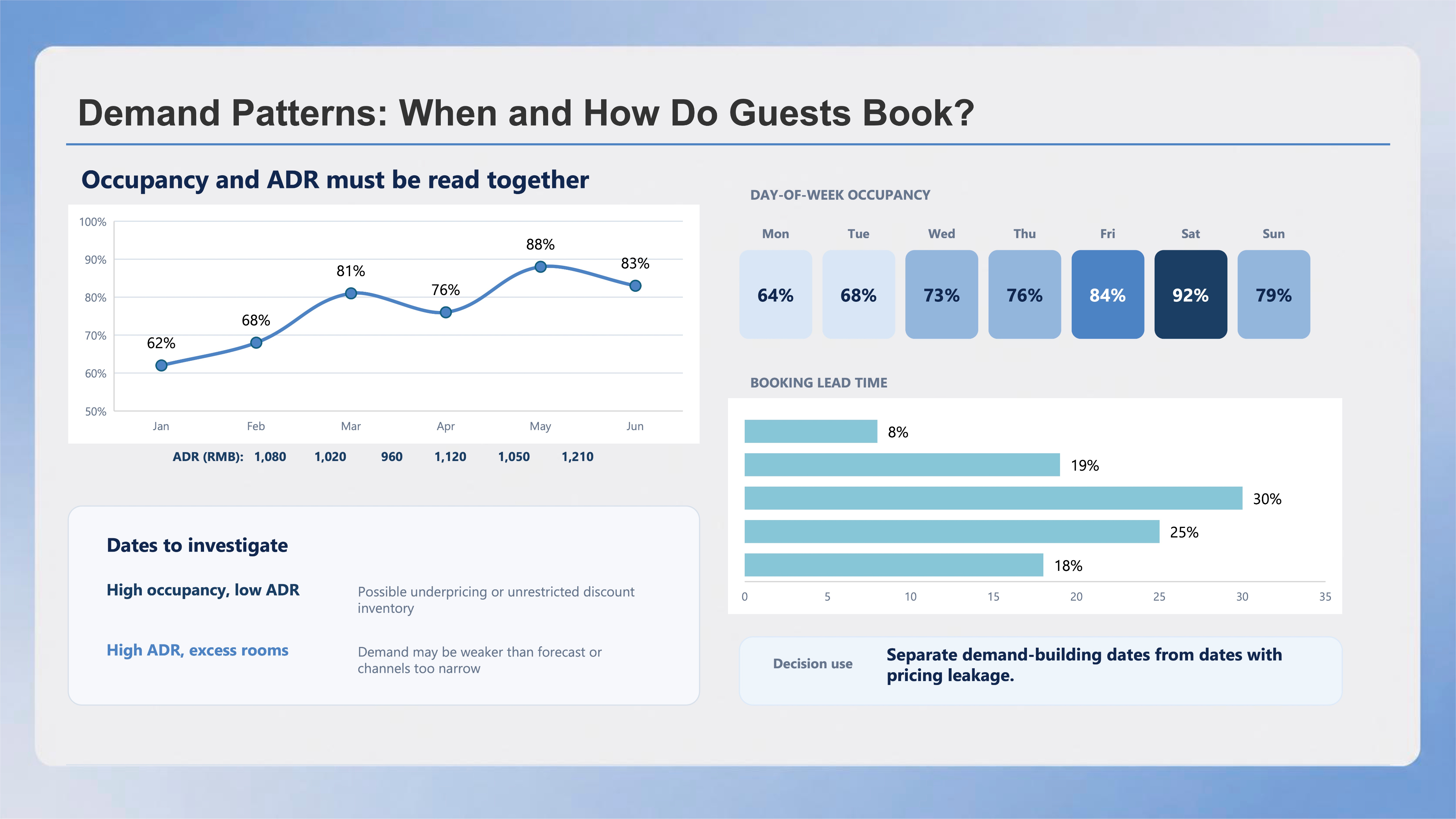
Demand Patterns: When and How Do Guests Book?
This page examines occupancy, ADR, weekday performance and booking lead time. It identifies dates that may require stronger demand generation and dates where the hotel may be selling rooms below their potential value.
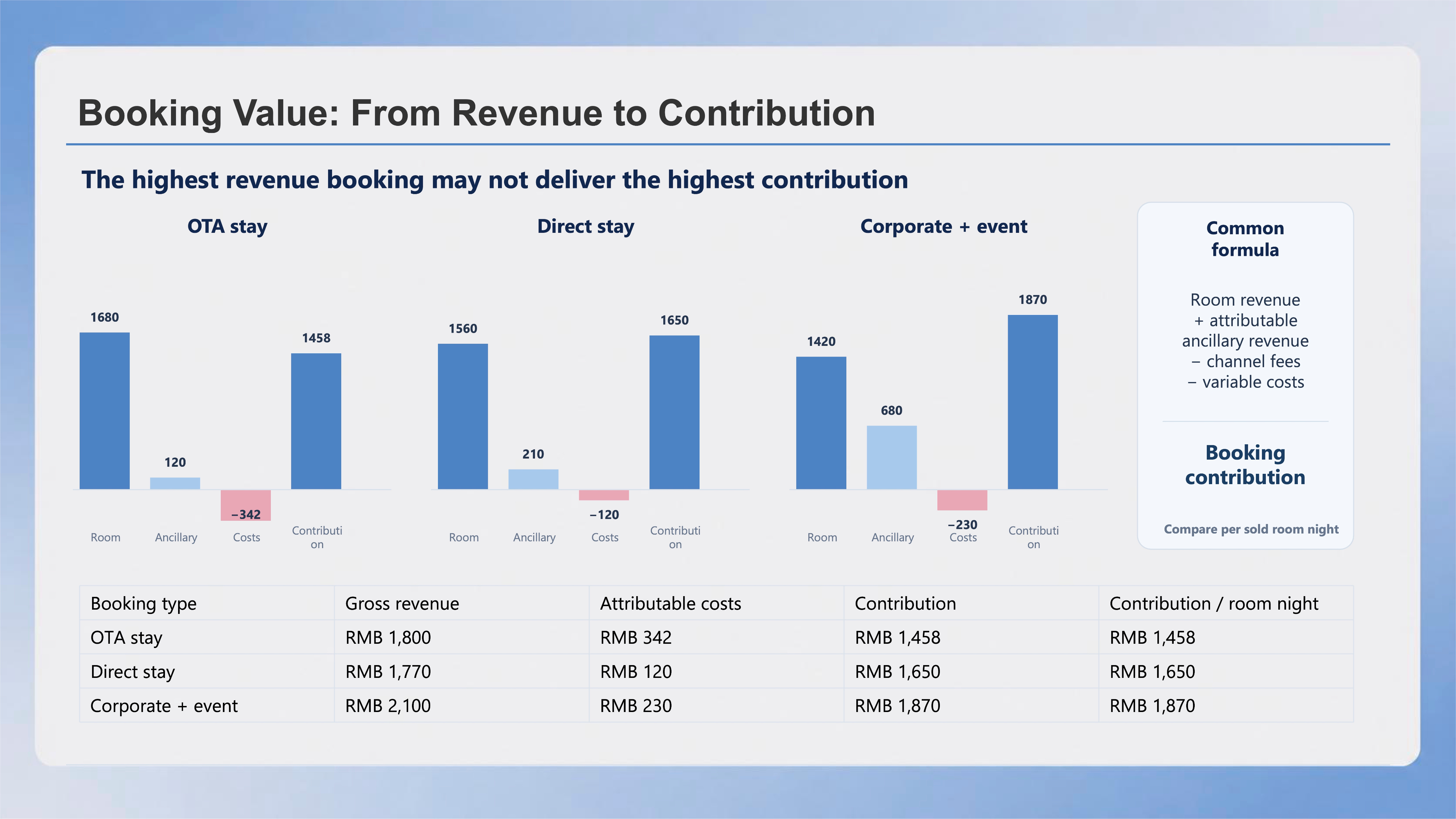
Booking Value: From Revenue to Contribution
This page compares OTA, direct and corporate bookings using a consistent contribution formula. The analysis distinguishes gross revenue from actual booking value and compares contribution per sold room night.
Decision Rules: Turning Data into Action
This page explains how the Excel model converts booking pace, remaining inventory, historical performance and channel costs into demand scenarios. It then provides pricing, promotion and channel recommendations within management-approved limits.
Accept or Decline? A Group Booking Decision
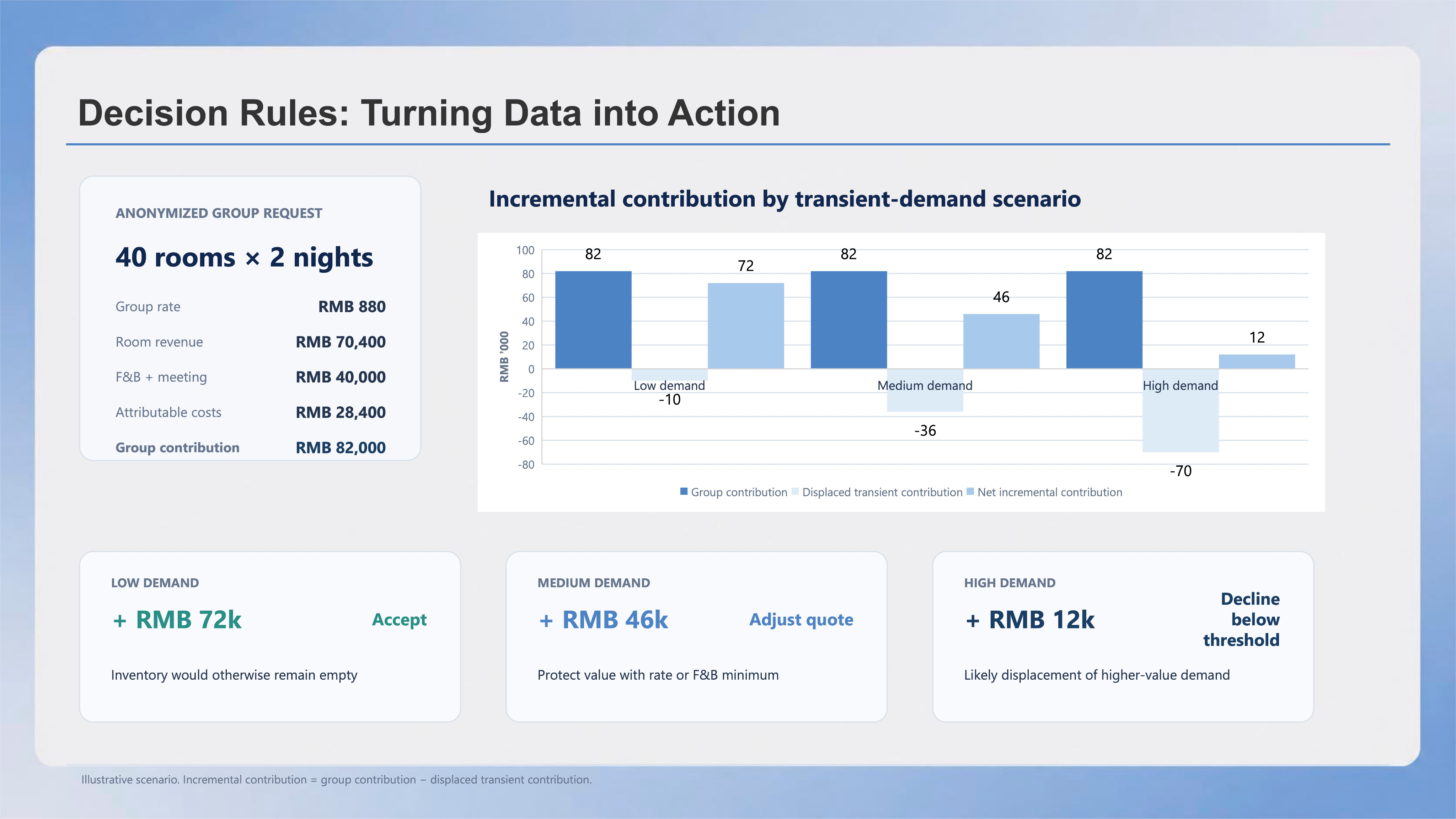
This page evaluates an anonymous group enquiry by combining room, catering and meeting contribution. Low, medium and high transient-demand scenarios reveal the opportunity cost of accepting the group and support an accept, reprice or decline decision.
Validation: Does the Model Improve Decisions?
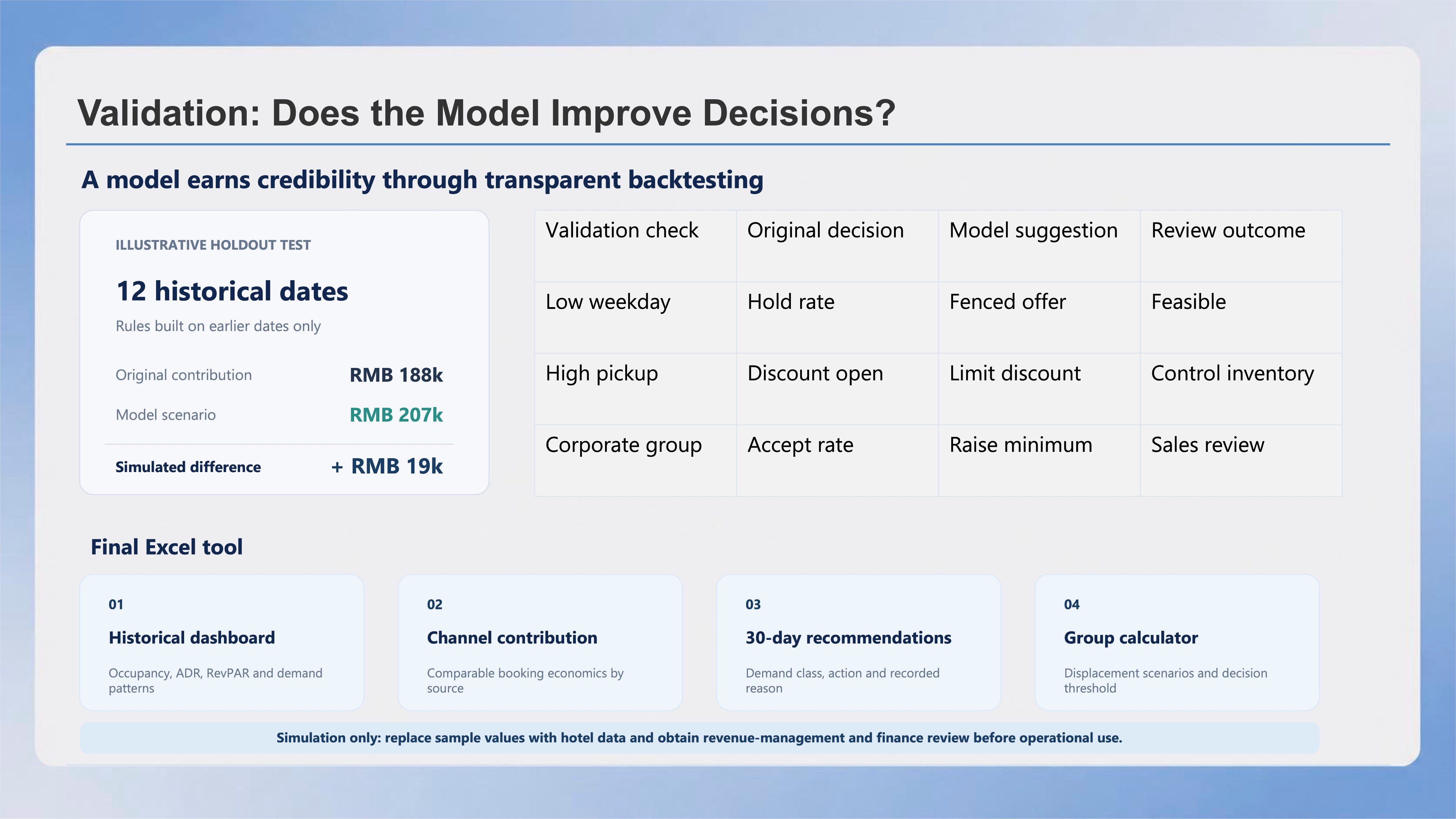
This page tests the model against historical dates that were not used to build the rules. It compares original decisions with model recommendations and presents the final Excel tool, its review process and its practical limitations.
Next project

2026 FAYE
Value Beyond Occupancy
A Hotel Revenue Management Study
ROLE
Independent Revenue Management Researcher
Financial Analyst
DURATION
January 2026 – June 2026
SKILLS
Demand Pattern Analysis
Pricing Strategy
OUTPUT
Booking-contribution framework
Pricing and channel recommendations
Project Overview
This project explores how an upscale hotel can increase the real value of each booking without compromising guest experience. It moves beyond
occupancy and room rate by analysing demand patterns, booking channels, acquisition costs and ancillary spending. The findings support an Excel revenue management tool that compares booking contribution, recommends pricing and channel actions, and evaluates group enquiries
under different demand scenarios. Historical backtesting and management review help assess whether the model can support practical hotel decisions.
Beyond Occupancy: What Makes a Booking Valuable?
This page introduces the hotel context and asks whether higher occupancy always produces better financial results. Two example bookings show how room revenue, ancillary spending and attributable costs combine to create total booking contribution.
Demand Patterns: When and How Do Guests Book?
This page examines occupancy, ADR, weekday performance and booking lead time. It identifies dates that may require stronger demand generation and dates where the hotel may be selling rooms below their potential value.
Booking Value: From Revenue to Contribution
This page compares OTA, direct and corporate bookings using a consistent contribution formula. The analysis distinguishes gross revenue from actual booking value and compares contribution per sold room night.
Decision Rules: Turning Data into Action
This page explains how the Excel model converts booking pace, remaining inventory, historical performance and channel costs into demand scenarios. It then provides pricing, promotion and channel recommendations within management-approved limits.
Accept or Decline? A Group Booking Decision
This page evaluates an anonymous group enquiry by combining room, catering and meeting contribution. Low, medium and high transient-demand scenarios reveal the opportunity cost of accepting the group and support an accept, reprice or decline decision.
Validation: Does the Model Improve Decisions?
This page tests the model against historical dates that were not used to build the rules. It compares original decisions with model recommendations and presents the final Excel tool, its review process and its practical limitations.
Next project
2026 FAYE